USAID DEC
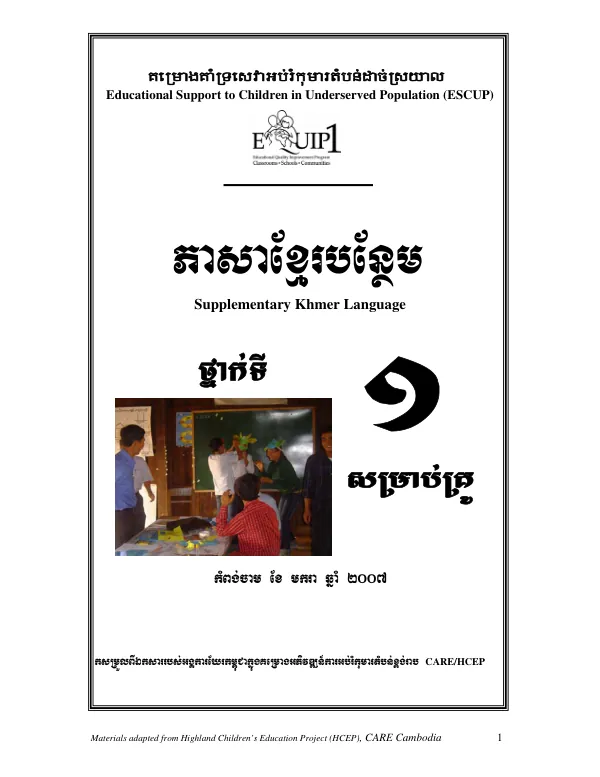
Educational Support to Children in Underserved Population Supplementary Khmer Language
Sign inCARE
Educational Support to Children in Underserved Population Supplementary Khmer Language
The Highland Children's Education Project (HCEP) in Cambodia aimed to provide educational support to children in underserved populations.
89 pages
Sign in to readA free account is required to download.
Abstract
The project was implemented in collaboration with CARE Cambodia and focused on improving access to quality education for disadvantaged children. The project's educational support program included supplementary Khmer language materials, which were adapted from the HCEP. These materials were designed to support children's learning in Khmer language and literacy skills. The program also emphasized the importance of community involvement and participation in education. The project's methodology involved working with local communities to identify their needs and develop strategies to address them. The project team conducted assessments and evaluations to monitor progress and make adjustments as needed. The project's implementation was divided into several phases, each with specific objectives and activities. The project's geographic focus was on rural areas in Cambodia, where access to education was limited. The project team worked with local authorities, schools, and communities to develop and implement educational programs that were tailored to the needs of the local population. The project's timeframes were not explicitly stated, but it appears to have been implemented over several years. The project's recommendations and conclusions were based on the findings of the assessments and evaluations conducted during the project. The project's key findings included the importance of community involvement and participation in education, the need for tailored educational programs that address the specific needs of the local population, and the importance of monitoring and evaluation to ensure the effectiveness of the project. The project's implementation details included the development and distribution of supplementary Khmer language materials, the training of teachers and community members, and the establishment of community-based educational programs. The project also involved the use of local languages and cultural practices to make education more accessible and relevant to the local population. The project's recommendations included the need for continued support and resources to sustain the project's efforts, the importance of building on the project's successes and lessons learned, and the need for further research and evaluation to inform future educational initiatives in Cambodia. Overall, the Highland Children's Education Project in Cambodia demonstrated the importance of community-based educational initiatives in improving access to quality education for disadvantaged children. The project's focus on local languages and cultural practices, community involvement, and tailored educational programs made it an effective and sustainable approach to addressing the educational needs of rural communities in Cambodia.