USAID DEC
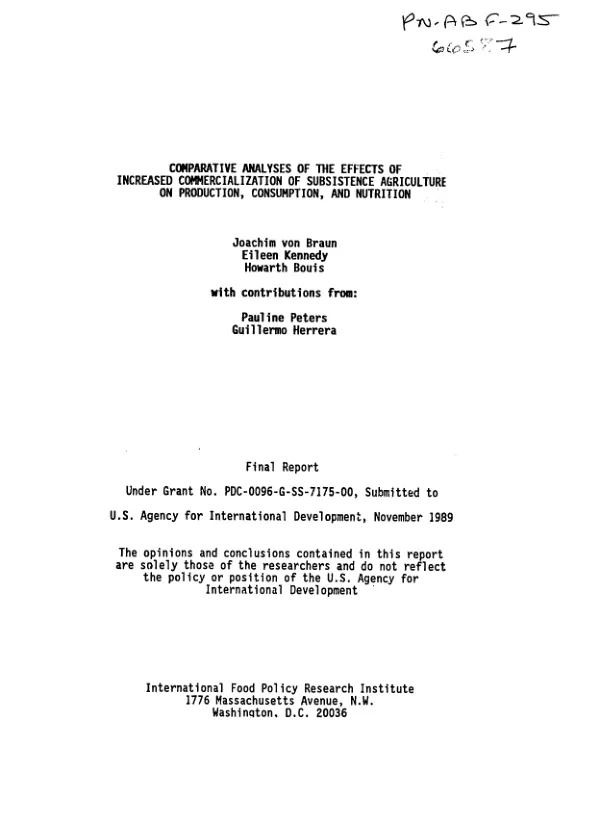
Effects of agricultural commercialization on land tenure, household resource allocation, and nutrition in the Philippines
Sign inINTERNATIONAL FOOD POLICY RESEARCH INSTITUTE (IFPRI)
Effects of agricultural commercialization on land tenure, household resource allocation, and nutrition in the Philippines
Agricultural commercialization is often blamed as a cause of malnutrition since it diverts food resources away from local consumption.
Bouis, Howarth E.; Haddad, Lawrence J. · 1990
Sign in to readA free account is required to download.
Abstract
On the other hand, proponents claim that cash crops actually improve nutrition levels by raising incomes through overall economic growth. This study presents a detailed analysis of the effects of agricultural commercialization in the Philippine province of Bukidnon, an area dominated by semi- subsistence corn production until the establishment of a sugar mill in 1977. Smallholder landowners and renters who made the transition to sugar production have earned substantially higher profits than corn producers (an average of $225 per ha per year for sugar compared with $100 for corn), although this was in part due to declining corn yields. Surprisingly, however, increased incomes for sugar producers have not translated into improved nutritional status, especially for pre-schoolers. Instead, households have purchased more expensive foods and allotted them primarily to adults, who were already meeting recommended calorie intakes. Recommendations are presented for production and nutrition policies aimed at enhancing the beneficial factors of commercialization while minimizing its harmful effects.
Connected topics
Related documents