ABT ASSOCIATES
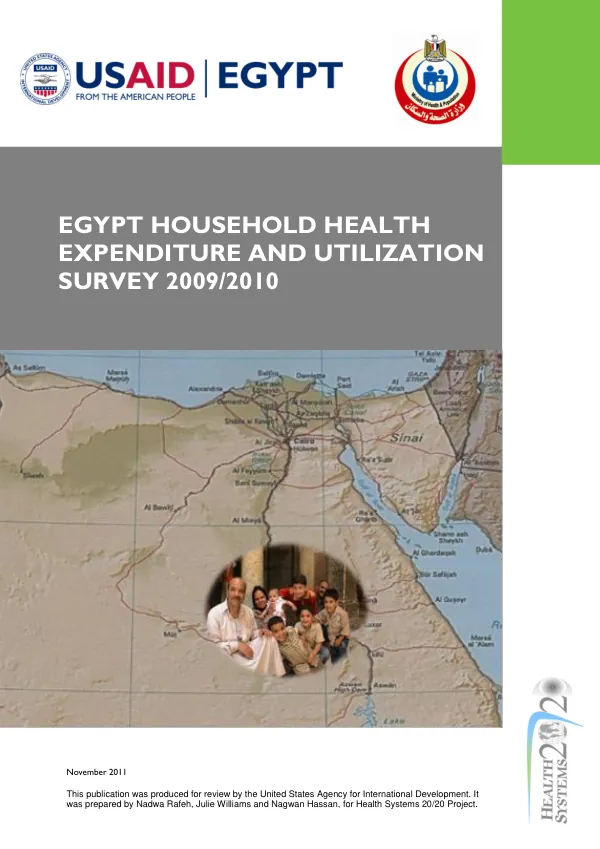
Egypt Household Health Expenditure and Utilization Survey 2009/2010
The Health Systems 20/20 cooperative agreement, funded by the U.S.
2011 · 233 pages
Sign in to readA free account is required to download.
Abstract
Agency for International Development (USAID) for the period 2006-2011, aimed to strengthen health systems in USAID-supported countries. The agreement helped address health system barriers to the use of life-saving priority health services through integrated approaches to improving financing, governance, and operations, and building sustainable capacity of local institutions. The Egypt Household Health Expenditure and Utilization Survey 2009/2010 was conducted to assess the health status and service utilization profile of the Egyptian population. The survey aimed to provide data on health care expenditures, utilization patterns, and health insurance coverage in Egypt. The survey methodology involved a multi-stage sampling design, with a sample of 12,000 households selected from 26 governorates across Egypt. The survey found that the majority of the Egyptian population lived in rural areas, with a higher proportion of the population residing in urban areas. The population distribution according to socioeconomic indicators showed that the majority of the population had a low level of education, with a significant proportion of the population having no education. The wealth distribution showed that the majority of the population had a low level of wealth, with a significant proportion of the population living below the poverty line. The survey found that the majority of the population had visited a health care provider in the past 12 months, with a higher proportion of the population visiting outpatient facilities. The most common reasons for visiting a health care provider were for acute illnesses, followed by chronic illnesses and dental diseases. The survey also found that the majority of the population had made inpatient visits, with a higher proportion of the population making visits to public hospitals. The survey found that the majority of the population had health insurance coverage, with a higher proportion of the population having private insurance coverage. The survey also found that the majority of the population had chosen to visit private facilities for outpatient care, while a higher proportion of the population had chosen to visit public facilities for inpatient care. The survey found that the majority of the population was satisfied with the quality of care received, with a higher proportion of the population expressing satisfaction with outpatient care. The survey also found that the majority of the population had reported that they had not used health care services due to cost, with a higher proportion of the population reporting that they had not used services due to lack of insurance coverage. The survey found that the majority of the population had reported that they had experienced a gap in health care services, with a higher proportion of the population reporting that they had experienced a gap in outpatient services. The survey also found that the majority of the population had reported that they had experienced a gap in inpatient services, with a higher proportion of the population reporting that they had experienced a gap in public hospitals.
Related documents