USAID DEC
eHealth Pilot in Bangladesh
The eHealth Pilot in Bangladesh was implemented in June 2013, with the primary objective of improving maternal and child health through the use of technology.
2013 · 7 pages
Sign in to readA free account is required to download.
Abstract
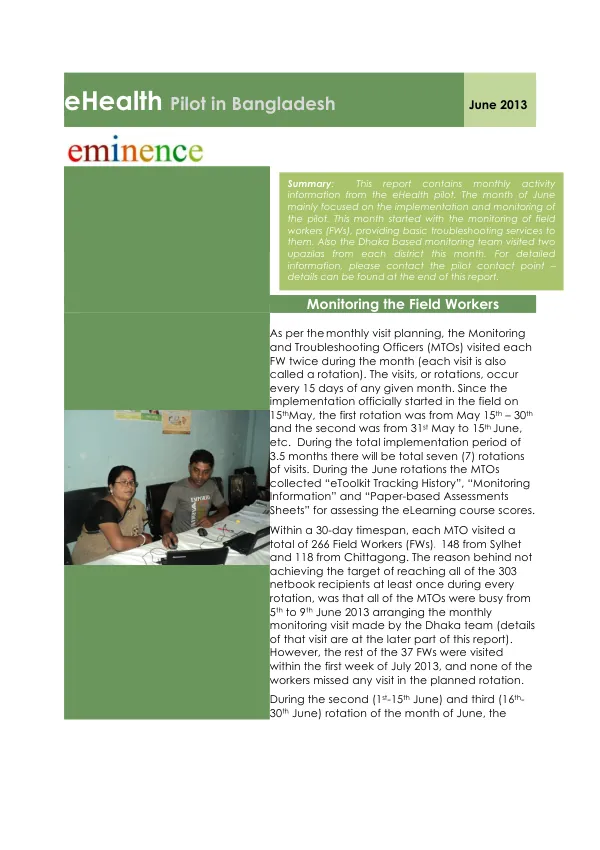
The pilot focused on the use of netbooks and the eToolkit, an online platform providing health education and training materials for field workers (FWs). Monitoring and Troubleshooting Officers (MTOs) visited each FW twice a month, with a total of seven rotations planned over the 3.5-month implementation period. During the second and third rotations in June, the MTOs collected eLearning course assessments from 266 FWs, with the majority completing all eight courses and scoring 100% marks. The most popular courses were Family Planning and Nutrition, with the section on IUD video and IYCF and child positioning being particularly well-received. Basic troubleshooting services were provided to FWs in Chittagong and Sylhet, with the majority of problems being resolved over the phone. The most common issues reported were eToolkit icon missing on desktop, screen not appearing properly, and netbook not charging. In some cases, FWs experienced charging problems due to unreliable electricity in their homes, and carrying the netbooks during the rainy season made some FWs nervous about potential damage. The monthly monitoring visit took place on June 7th and 8th, 2013, with the Bangladesh Knowledge Management Initiative (BKMI) team visiting four pre-selected upazilas from both Sylhet and Chittagong pilot districts. The visit aimed to gather qualitative information from FWs and mothers in the community. The FWs expressed satisfaction with the eToolkit content, citing its effectiveness in helping them recall knowledge on maternal child health, nutrition, and family planning. They also suggested that more videos and picture-based materials would be helpful for health education and would reduce their counseling time efforts. The FWs were enthusiastic about using the netbooks, with nearly all expressing improved social status and enjoying the benefits of using the device in their community and among their peers. However, some FWs reported charging problems and carrying the netbooks during the rainy season made them nervous about potential damage. The clients appreciated the netbook as a tool for counseling, with some showing intention to change behavior towards improved health practices. Key challenges faced during the month included the strained relationship between HAs and FWAs at the field level, the screen size and sound quality of the netbooks being problematic while doing group counseling, and some FWs' supervisors creating extra administrative processes due to professional jealousy. The next steps of the pilot will focus on addressing these challenges and further improving the use of technology to enhance maternal and child health in Bangladesh.
Related documents