USAID DEC
eHealth Pilot in Bangladesh
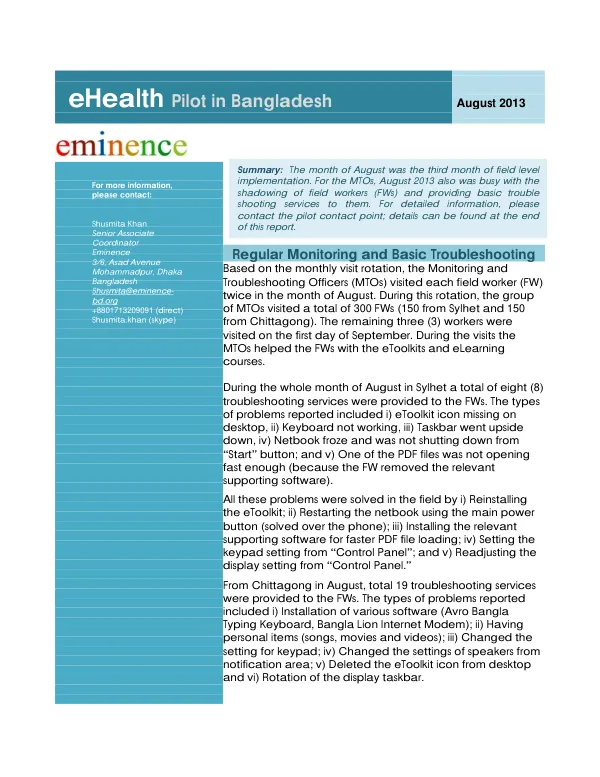
The eHealth Pilot in Bangladesh began in August 2013 with a focus on regular monitoring and basic troubleshooting.
2013 · 2 pages
Sign in to readA free account is required to download.
Abstract
Monitoring and Troubleshooting Officers (MTOs) visited each field worker (FW) twice in August, covering a total of 300 FWs from Sylhet and Chittagong. The MTOs provided assistance with eToolkits and eLearning courses during these visits. In Sylhet, a total of eight troubleshooting services were provided to FWs in August. The problems reported included issues with the eToolkit icon, keyboard functionality, and netbook freezing. These problems were resolved by reinstalling the eToolkit, restarting the netbook, installing supporting software, and adjusting display settings. In Chittagong, a total of 19 troubleshooting services were provided, addressing issues with software installation, personal items, keypad settings, and display rotation. The MTOs also encountered problems with netbooks, including issues with the operating system. Two netbooks required repair, which was covered by the manufacturer's warranty. The FWs were provided with backup netbooks to ensure continuity of counseling activities while the repaired netbooks were returned. Key challenges faced during this month included the increased use of netbooks for personal purposes, particularly among Health Assistants. This diversion from intended use hindered the effectiveness of the pilot. To address this issue, the pilot will focus on implementing measures to prevent personal use of netbooks. The next steps for the pilot include September monthly visits and a post-assessment. The post-assessment will provide an opportunity to evaluate the progress of the pilot and identify areas for improvement. The assessment will also inform the development of strategies to address the challenges faced during the pilot.
Related documents