CREATIVE ASSOCIATES INTERNATIONAL INC.
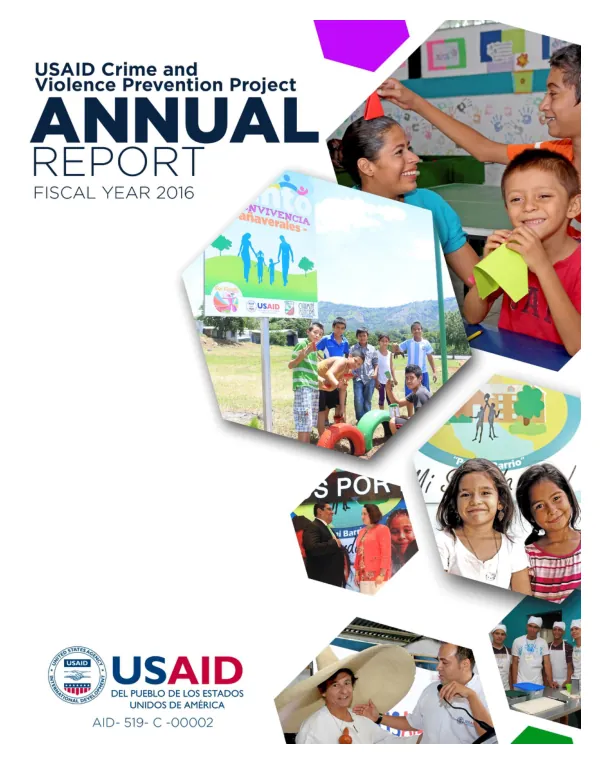
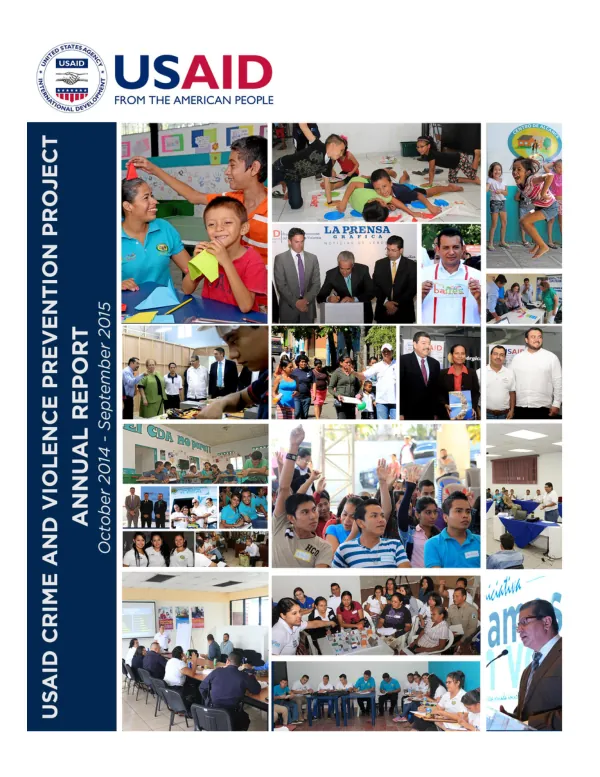
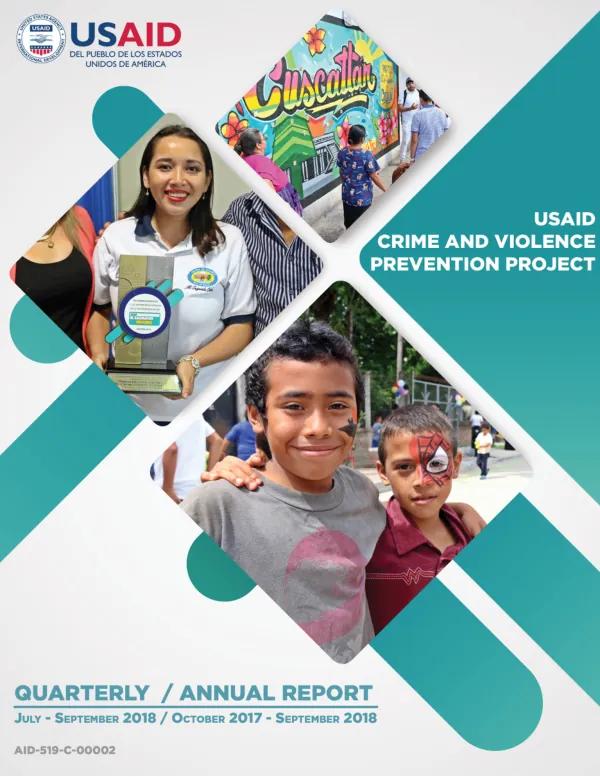
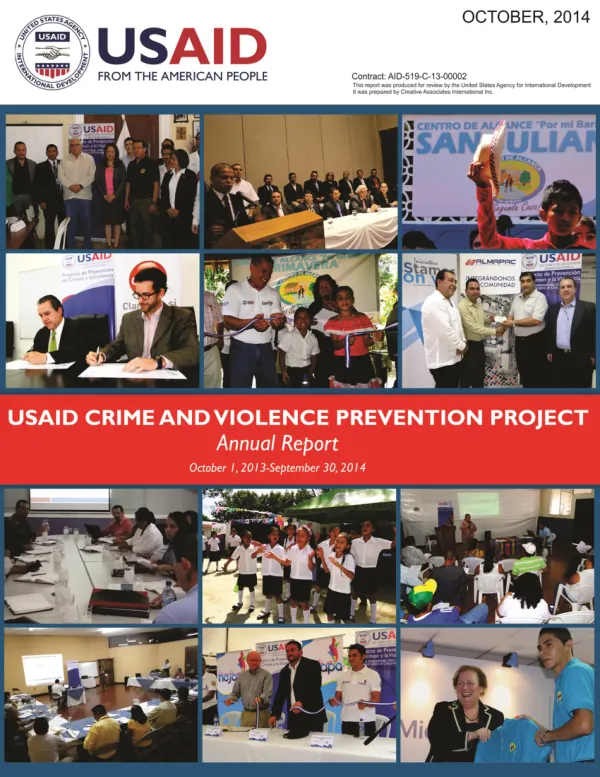
El Salvador Crime and Violence Prevention Project (CVPP) Annual Report FY 2014
The Crime and Violence Prevention Project (CVPP) in El Salvador aimed to increase citizen safety in 55 at-risk municipalities.
2014 · 126 pages
Sign in to readA free account is required to download.
Abstract
The project, implemented from March 2013 to March 2018, had a five-year duration and was funded by the United States Agency for International Development (USAID). The project's objective was to build ownership among national government, local government, and citizens in addressing crime and violence prevention at the community level. The project was divided into three components: Component 1, which aimed to increase the Government of El Salvador's (GOES) capacity to prevent violence and crime on a national scale; Component 2, which focused on municipal-led, community-based crime and violence prevention; and Component 3, which explored innovative crime and violence prevention opportunities. Component 1 involved improving GOES's ability to implement the National Strategy for Violence Prevention (ENPV) and the National Policy for Justice, Public Security, and Social Coexistence. This included supporting emerging laws and policies and establishing Municipal Crime Prevention Observatories. Component 2 focused on selecting municipalities and establishing new Municipal Crime and Violence Prevention Committees, developing municipal leaders' and community members' capacity for prevention, planning, implementation, and analysis, and strengthening vocational skills and employment opportunities. Component 3 involved identifying, systematizing, publishing, and disseminating innovative municipal-led, community-based crime and violence prevention best practices. The project also worked closely with the Ministry of Justice and Public Security (MJSP) to carry out municipal diagnostics, design new policies, and train personnel in crime and violence prevention. During the reporting period, the country underwent a peaceful transfer of power, and the new administration faced challenges in addressing security and economic issues. According to polls, 46.8% of the general population disapproved of the president's overall performance during his first 100 days in office, while 40% approved. The poll results were attributed to people's feelings regarding security and the economy. The National Civilian Police (PNC) reported a rise in homicides from 2013 to 2014, with 13 homicides committed every day. Although homicides dropped to 11 per day from June to September, people felt that the security situation had not improved. A report by the United Nations Children's Fund (UNICEF) found that El Salvador had the highest homicide levels for boys, girls, and adolescents 0-19 years of age, highlighting the need for urgent action to address violence against children. In response to these challenges, the administration launched a Community Police program and a National Citizen Security Council, and worked with international organizations to establish a trust fund to finance security and prevention activities. The project continued to work towards its objectives, seeking to assist women and young females through municipal and community programming that aims to prevent acts of violence against these special groups.
Related documents