USAID DEC
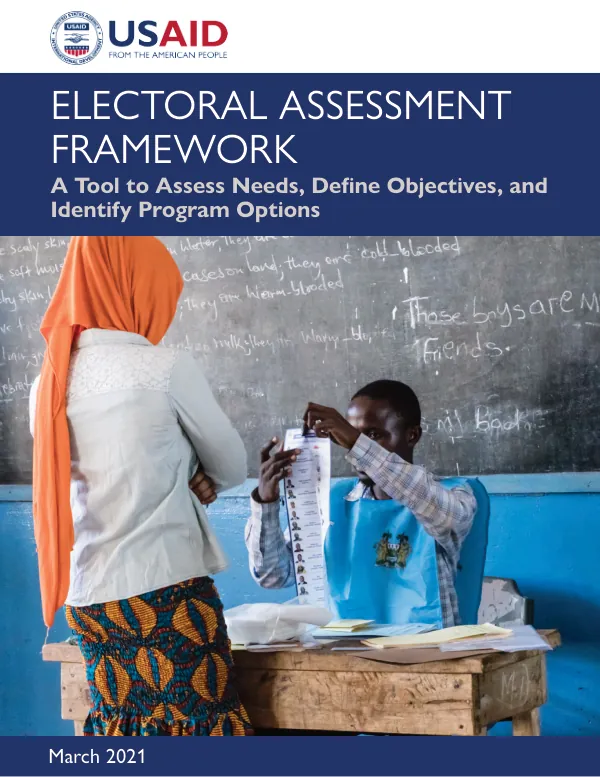
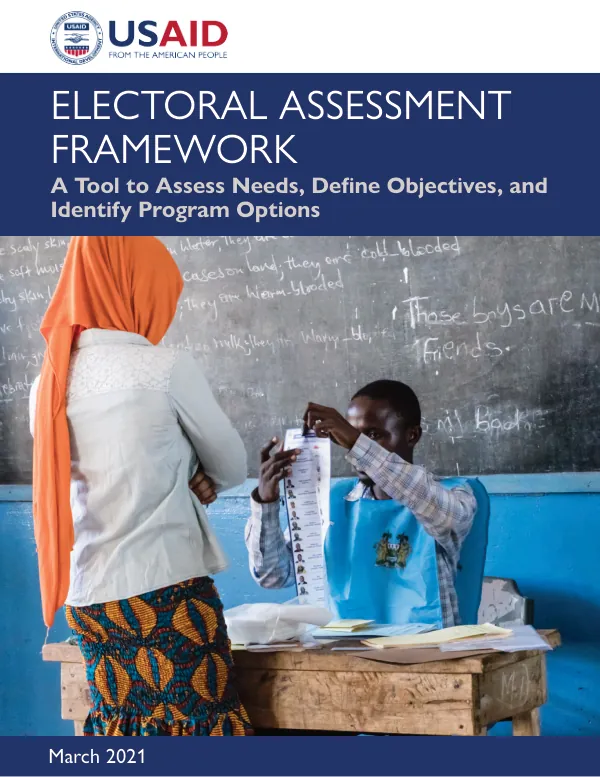
Electoral Assessment Framework: A Tool to Assess Needs, Define Objectives, and Identify Program Options
Sign inTHE CLOUDBURST GROUP
Electoral Assessment Framework: A Tool to Assess Needs, Define Objectives, and Identify Program Options
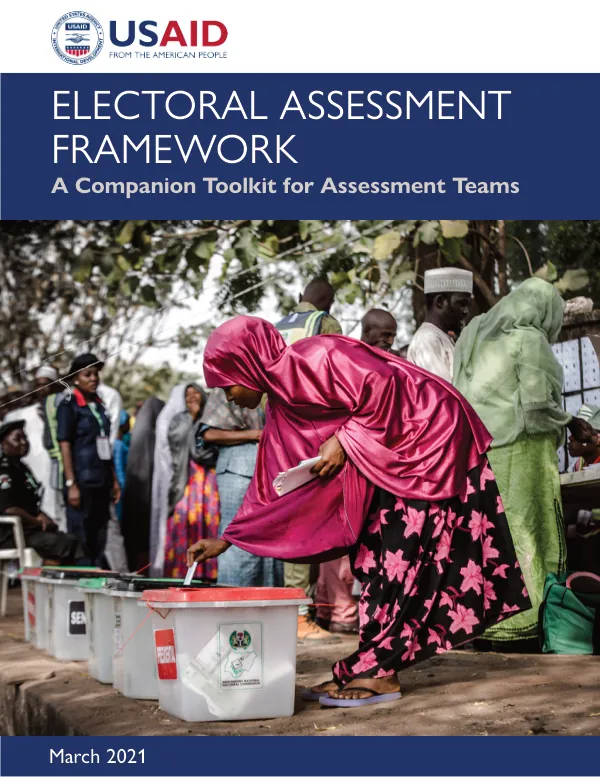
The Electoral Assessment Framework: A Tool to Assess Needs, Define Objectives, and Identify Program Options is a comprehensive guide developed by the United States Agency for International Development (USAID) to support electoral processes in countries.
2021 · 117 pages
Sign in to readA free account is required to download.
Abstract
The framework is designed to help USAID and other stakeholders assess electoral needs, define objectives, and identify program options to address these needs. The framework is based on the electoral cycle approach, which considers the entire electoral process from the pre-election period to the post-election period. This approach recognizes that electoral processes are complex and multifaceted, involving various stakeholders, institutions, and activities. The framework identifies key components of the electoral cycle, including the legal framework, election management, political parties, voter education, election observation, media ecosystem, electoral security, and electoral justice. The framework provides a structured approach to conducting an electoral assessment, which involves assessing the country context, the electoral context, and defining a strategy and identifying program options. The country context assessment includes examining the regime type, political system, foundational factors, international dynamics, and conflict and security environment. The electoral context assessment involves evaluating the legal framework, election management, political parties, voter education, election observation, media ecosystem, electoral security, and electoral justice. The framework also provides guidance on defining objectives and developing an electoral assistance strategy, which involves prioritizing electoral problems to be addressed, considering USG priorities and programming, mapping and coordinating with other donors, and considering resources. The framework identifies key program options, including legal framework and electoral reform, election management, political party development, voter education and information, election observation, media ecosystem, electoral security and conflict prevention, electoral justice, and post-election and political transitions. The framework is designed to be a flexible and adaptable tool that can be used in a variety of contexts and settings. It is intended to support USAID and other stakeholders in their efforts to promote democratic elections and strengthen electoral processes in countries. The framework was developed by a team of authors from USAID's Democracy, Human Rights, and Governance (DRG) Center, including Assia Ivantcheva, Michael McNulty, and Carol Sahley, and Ellen Seats from Cloudburst. The authors acknowledge the contributions of many colleagues and partners who provided input and suggestions on the framework. The framework is organized into three parts: Framework Purpose, Methodology, and Approaches; Conducting an Electoral Assessment; and Defining a Strategy and Identifying Program Options. The framework includes annexes, including international principles and obligations for democratic elections, an assessment report template, and references and additional resources. Overall, the Electoral Assessment Framework is a valuable resource for USAID and other stakeholders seeking to promote democratic elections and strengthen electoral processes in countries. Its structured approach and comprehensive guidance make it an essential tool for electoral assessments and program design.
Related documents