USAID DEC
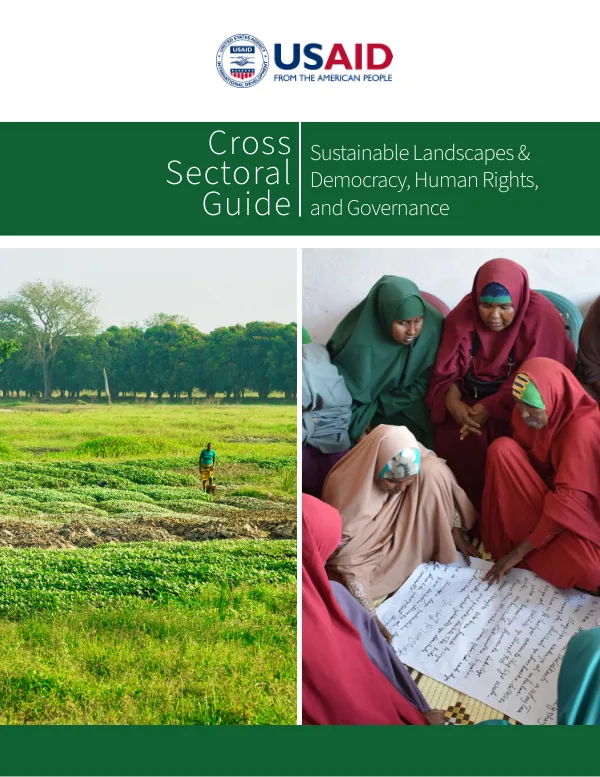
Cross Sectoral Guide: Sustainable Landscapes & Democracy, Human Rights, and Governance
Sign inCENTER FOR INTERNATIONAL FORESTRY AND RESEARCH
Cross Sectoral Guide: Sustainable Landscapes & Democracy, Human Rights, and Governance
Sustainable landscapes and democracy, human rights, and governance are critical and interdependent global development objectives.
2021 · 80 pages
Sign in to readA free account is required to download.
Abstract
Mitigating climate change and strengthening democracy, government effectiveness, and human rights are essential for achieving improved development outcomes. Deforestation and land degradation, which drive greenhouse gas emissions, are often linked to actions such as illegal and unsustainable logging, commercial agricultural expansion, clearing of forests, and burning wood as fuel and to make charcoal in forests and mangroves. Climate change mitigation is a complex issue that involves both technical and political economy aspects. Improving human rights, reducing corruption and impunity, and enforcing the rule of law can enhance mitigation outcomes. Integrated approaches are better equipped to address the realities of political interest group competition, corruption, and limitations to the effective rule of law, as well as to mobilize wider constituencies for more sustainable landscapes. Furthermore, bringing citizens and communities together around a shared goal of improving natural resource management can foster more participatory, inclusive, transparent, and accountable governance. The integration of sustainable landscapes and democracy, human rights, and governance offers numerous benefits, including improved effectiveness and sustainability of interventions, more participatory democratic governance processes, and enhanced progress on partner countries' climate change mitigation efforts. However, development practitioners often have a varied level of awareness of the benefits and approaches to achieve integration. This guide aims to help development practitioners integrate sustainable landscapes and democracy, human rights, and governance approaches and activities, in support of improved development outcomes. The guide is structured around the USAID Program Cycle, recognizing that concepts and tools introduced at one stage can apply throughout the cycle. The three case studies build from interviews with USAID and project staff and resource materials that illustrate different types of approaches at various stages in the cycle. Section 1 reviews key concepts and definitions that inform the sustainable landscapes and democracy, human rights, and governance subject areas in the USAID context, providing a foundation for mutual understanding between the two subject areas. Key benefits of integrating sustainable landscapes and democracy, human rights, and governance include improved effectiveness and sustainability of interventions, more participatory democratic governance processes, and enhanced progress on partner countries' climate change mitigation efforts. Development practitioners can achieve these benefits by adopting integrated approaches that address the complexities of political interest group competition, corruption, and limitations to the effective rule of law. By bringing citizens and communities together around a shared goal of improving natural resource management, development practitioners can foster more participatory, inclusive, transparent, and accountable governance. The guide is intended mainly for USAID staff and implementing partners, particularly those with responsibility for sustainable landscapes and democracy, human rights, and governance activities. However, it is also useful for any development professionals seeking sustainable, equitable, and scalable climate and citizen action. By providing a comprehensive framework for integrating sustainable landscapes and democracy, human rights, and governance, this guide aims to support development practitioners in achieving improved development outcomes.
Related documents