ICF
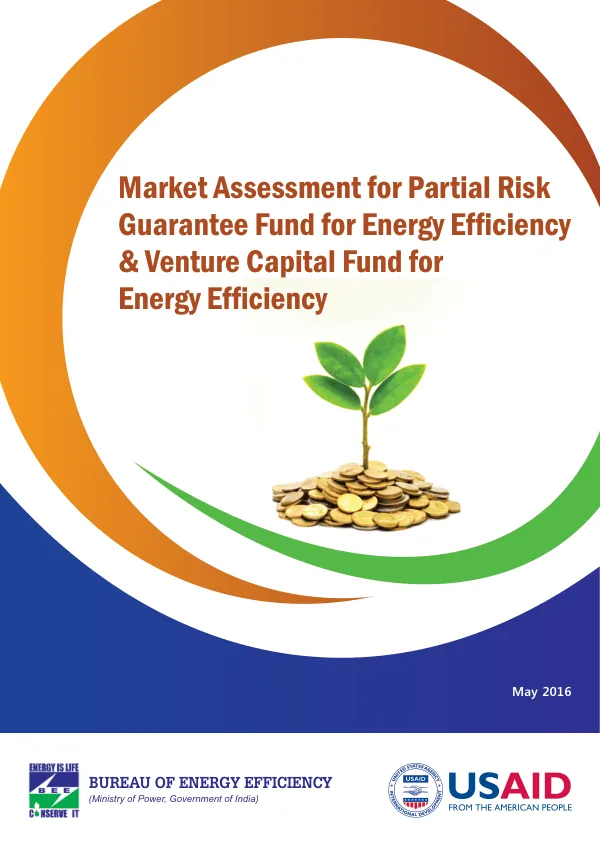
Energy Efficiency Opportunity Study for Telangana, India
The agricultural development initiative in Telangana began in 2018 with funding from USAID's Energy Efficiency for Clean Development Program.
2016 · 18 pages
Sign in to readA free account is required to download.
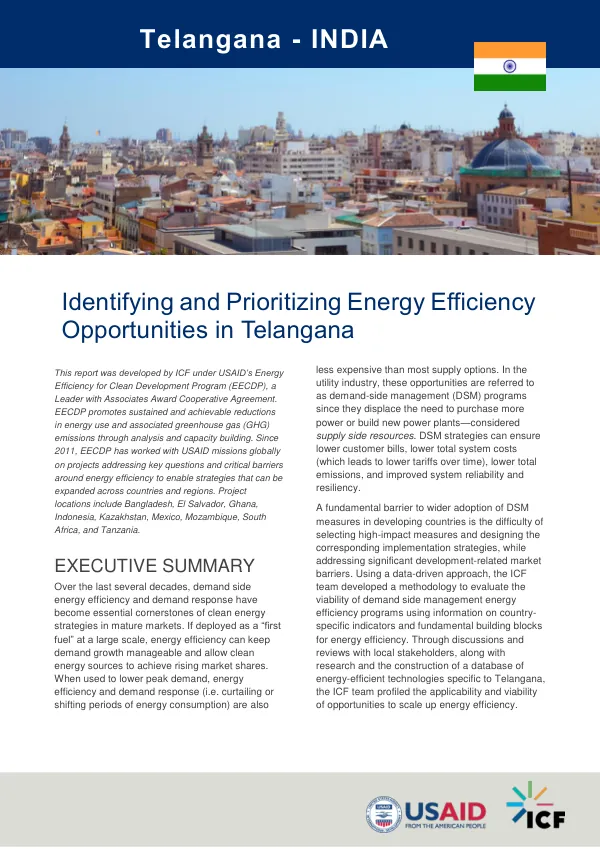
Abstract
The program aimed to promote sustained and achievable reductions in energy use and associated greenhouse gas (GHG) emissions through analysis and capacity building. Since 2018, the program has worked with USAID missions worldwide on projects addressing key questions and critical barriers around energy use and emissions. The program identified the top ten energy efficiency opportunities in Telangana, which amount to a potential energy saving of 33,257 GWh in 2018. The top ten energy efficiency opportunities include Residential Lighting, Residential Fans, Industrial Lighting, and Industrial Lighting, which were assessed to be the most cost-effective and have the highest likelihood of success. The program also identified ten programs that present investment opportunities to cost-effectively scale up energy efficiency. The program used a rapid assessment methodology developed by ICF for identifying energy efficiency programs. The methodology considers three sets of data: cost and savings information, country-specific indicators, and market readiness and enabling environment. The program also used a software tool, the USAID Opportunity Assessment Tool, which uses Microsoft Excel to create a simple way to record information collected for each data type and identify energy efficiency programs with the highest likelihood of success. The program held meetings with key stakeholders in November 2016 and January 2017 to discuss energy efficiency opportunities, financing avenues, and efficiency-related initiatives. The program also conducted research into energy consumption at the sector- and end-user levels to ensure that the savings associated with measures were properly compared against total consumption. The program identified the following key findings: * The top ten energy efficiency opportunities in Telangana amount to a potential energy saving of 33,257 GWh in 2018. * The top ten energy efficiency opportunities include Residential Lighting, Residential Fans, Industrial Lighting, and Industrial Lighting, which were assessed to be the most cost-effective and have the highest likelihood of success. * The program used a rapid assessment methodology developed by ICF for identifying energy efficiency programs. * The program used a software tool, the USAID Opportunity Assessment Tool, which uses Microsoft Excel to create a simple way to record information collected for each data type and identify energy efficiency programs with the highest likelihood of success. The program's conclusions are as follows: The program's recommendations are as follows: * The program recommends that the government of Telangana invest in the top ten energy efficiency opportunities identified in the program. * The program recommends that the government of Telangana use the USAID Opportunity Assessment Tool to identify energy efficiency programs with the highest likelihood of success. * The program recommends that the government of Telangana conduct research into energy consumption at the sector- and end-user levels to ensure that the savings associated with measures are properly compared against total consumption.