USAID
Energy Efficiency Project
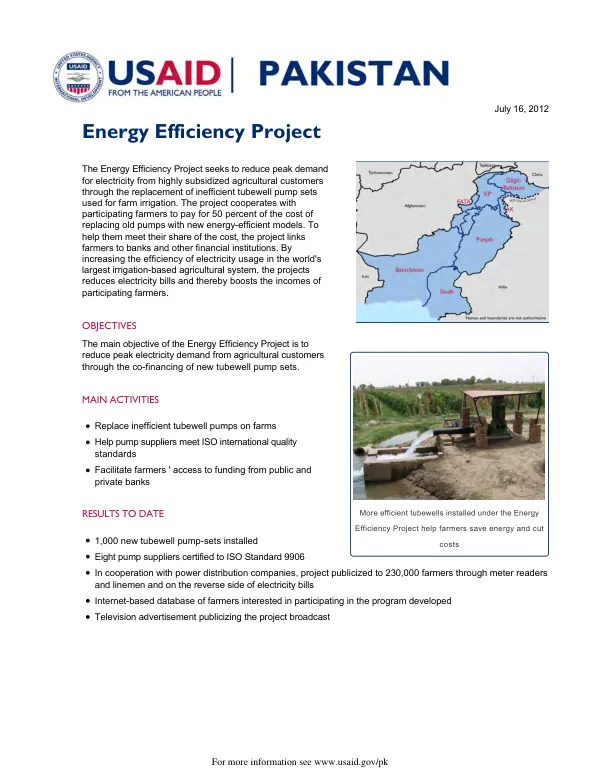
The Energy Efficiency Project in Pakistan aims to reduce peak electricity demand from agricultural customers through the replacement of inefficient tubewell pump sets with new energy-efficient models.
2012 · 1 pages
Sign in to readA free account is required to download.
Abstract
The project cooperates with participating farmers to pay for 50 percent of the cost of replacing old pumps with new ones. To help farmers meet their share of the cost, the project links them to banks and other financial institutions. The main objective of the Energy Efficiency Project is to reduce peak electricity demand from agricultural customers through the co-financing of new tubewell pump sets. The project's main activities include replacing inefficient tubewell pumps on farms, helping pump suppliers meet ISO international quality standards, and facilitating farmers' access to funding from public and private banks. As of the current reporting period, the project has achieved significant results. Over 1,000 new tubewell pump sets have been installed, and eight pump suppliers have been certified to ISO Standard 9906. In cooperation with power distribution companies, the project has publicized its benefits to 230,000 farmers through meter readers and linemen, as well as on the reverse side of electricity bills. An internet-based database of farmers interested in participating in the program has also been developed. The project's efforts have been further amplified through a television advertisement publicizing the project, which has been broadcast to a wide audience. By increasing the efficiency of electricity usage in the world's largest irrigation-based agricultural system, the project reduces electricity bills and thereby boosts the incomes of participating farmers. The project's success has been demonstrated through its ability to reach a large number of farmers and facilitate access to funding for the replacement of inefficient tubewell pumps. The project's geographic focus is on the agricultural sector in Pakistan, with a specific emphasis on reducing peak electricity demand from highly subsidized agricultural customers. The project's timeframes are not explicitly stated, but the results reported suggest that the project has been ongoing for at least several years. The project's recommendations for future implementation are not explicitly stated, but the project's success suggests that similar initiatives could be effective in other regions with similar agricultural systems.
Related documents