ADVANCED ENGINEERING ASSOCIATES INTERNATIONAL, INC. /SGGA
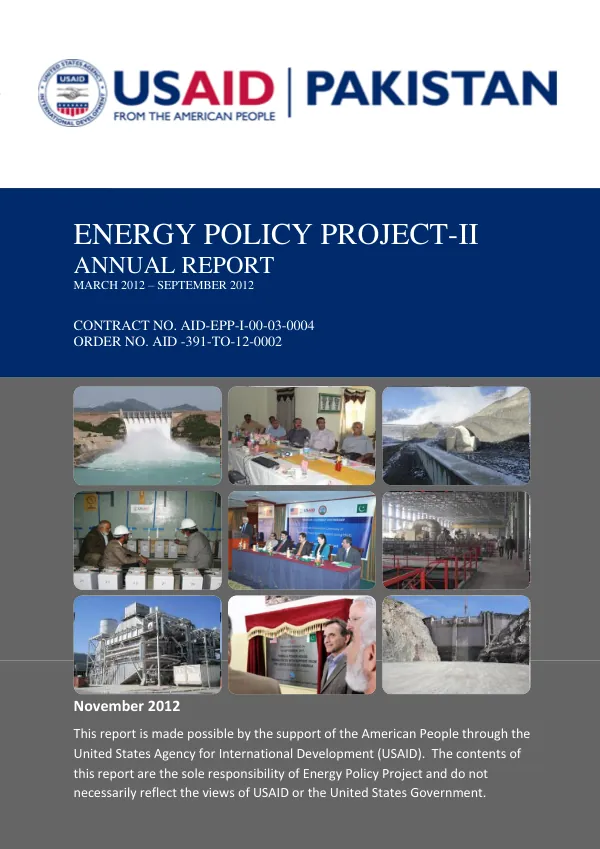
Energy Policy Project-II--Annual Report: March – September 2012
The Energy Policy Project-II, a multiyear USAID-funded initiative, aims to increase power generation, decrease losses, and increase cost recovery in Pakistan's power sector.
2012 · 52 pages
Sign in to readA free account is required to download.
Abstract
The project is designed to support the joint goals of the U.S. Government and the Government of Pakistan for Pakistan's energy sector. The general framework for EPP activities is guided by several documents, including the USG Energy Strategy for Pakistan, the GOP's Power Sector Reform Program, and the Integrated Energy Sector Recovery Report and Plan of the Friends of a Democratic Pakistan. EPP is structured into three interrelated sets of program activities. The first component involves monitoring and supporting Pakistani counterpart management in the implementation of approved and funded Signature Energy Projects and activities. The second component focuses on supporting policy reform and providing advice and support to the Ministry of Water and Power, Ministry of Petroleum and Natural Resources, Ministry of Finance, and Planning Commission in the implementation of the Power Sector Reform Program. The third component involves conducting due diligence for new projects being considered for USG support. Under Component 1, EPP is providing monitoring and implementation support for six signature power generation projects. These projects include the Tarbela Hydropower Plant, Gomal Zam Multipurpose Dam Project, and several thermal power plants. The project has achieved significant milestones, including the completion of rehabilitation work at the Tarbela Hydropower Plant and the initiation of work on the Gomal Zam Multipurpose Dam Project. Component 2 of the project focuses on policy reform and support to the Ministry of Water and Power, Ministry of Petroleum and Natural Resources, Ministry of Finance, and Planning Commission. EPP has provided technical assistance to these entities and has helped to apply new technology to improve the efficiency of the power sector. The project has also supported the development of policies and regulations to promote the use of renewable energy sources. Component 3 of the project involves conducting due diligence for new projects being considered for USG support. EPP has evaluated several projects, including the Mangla and Kurram Tangi projects, and has provided recommendations for their implementation. The project has also supported the development of a comprehensive plan for the power sector, which includes strategies for increasing power generation, reducing losses, and improving cost recovery. The project has achieved significant results, including the completion of rehabilitation work at the Tarbela Hydropower Plant and the initiation of work on the Gomal Zam Multipurpose Dam Project. The project has also supported the development of policies and regulations to promote the use of renewable energy sources. Additionally, EPP has provided technical assistance to the Ministry of Water and Power, Ministry of Petroleum and Natural Resources, Ministry of Finance, and Planning Commission, and has helped to apply new technology to improve the efficiency of the power sector. The project has also supported the development of a comprehensive plan for the power sector, which includes strategies for increasing power generation, reducing losses, and improving cost recovery. The plan aims to increase the share of renewable energy sources in the power mix and to promote the use of energy-efficient technologies. The project has also supported the development of policies and regulations to promote the use of energy-efficient technologies and to reduce energy losses in the power sector. Overall, the Energy Policy Project-II has made significant progress in achieving its objectives and has contributed to the development of a more efficient and sustainable power sector in Pakistan. The project has provided technical assistance to the Ministry of Water and Power, Ministry of Petroleum and Natural Resources, Ministry of Finance, and Planning Commission, and has helped to apply new technology to improve the efficiency of the power sector. The project has also supported the development of policies and regulations to promote the use of renewable energy sources and to reduce energy losses in the power sector.
Related documents