GOVERNMENT OF TAJIKISTAN
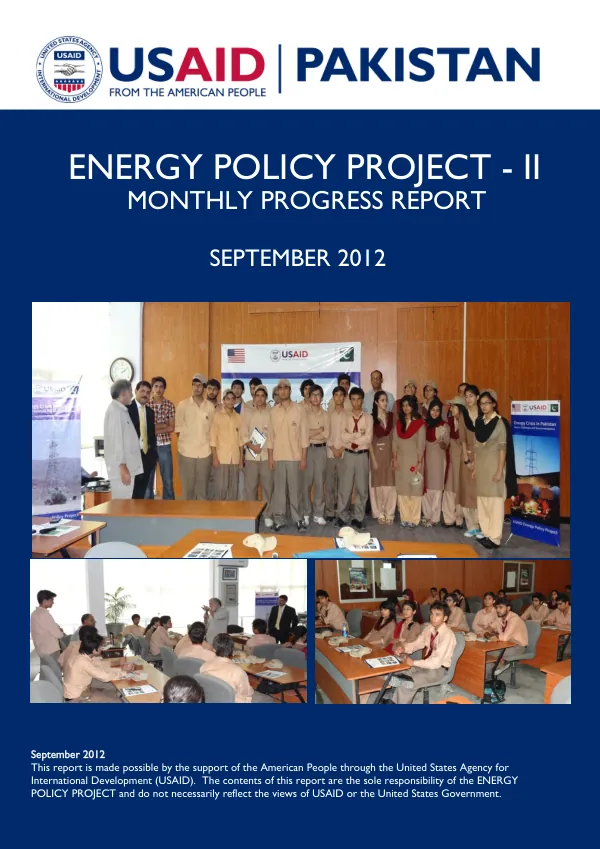
ENERGY POLICY PROJECT - II MONTHLY PROGRESS REPORT SEPTEMBER 2012
The Energy Policy Project (EPP) supports the jointly agreed upon interests of USAID and the Government of Pakistan in power generation and transmission and related policy reform activities.
2012 · 29 pages
Sign in to readA free account is required to download.
Abstract
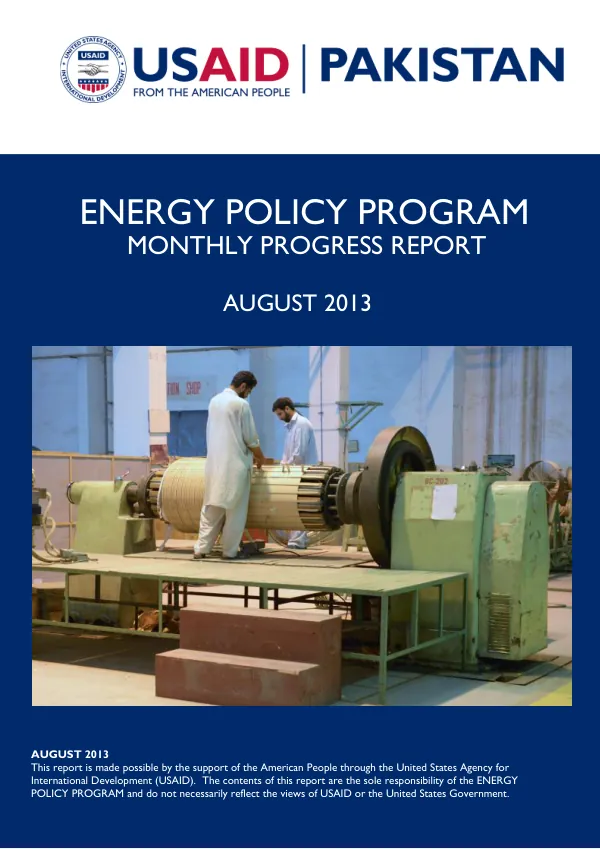
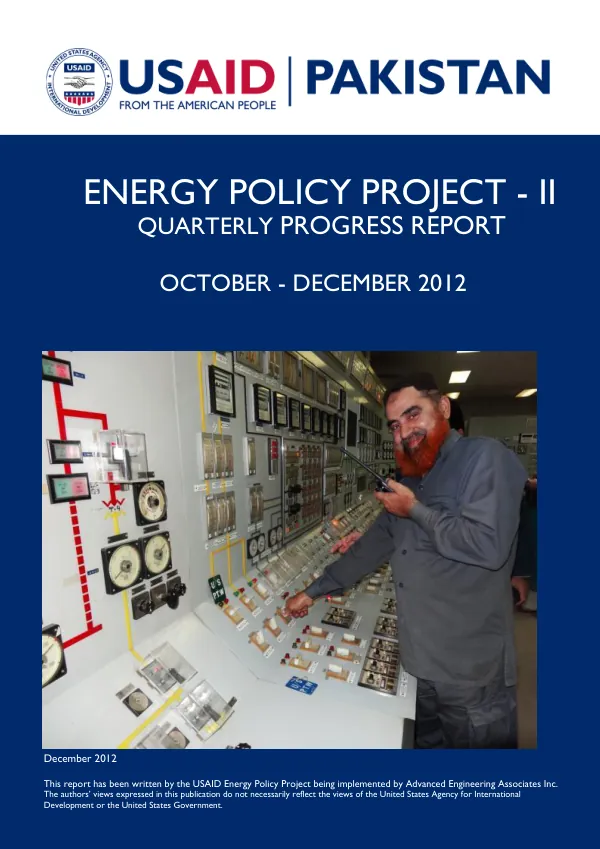
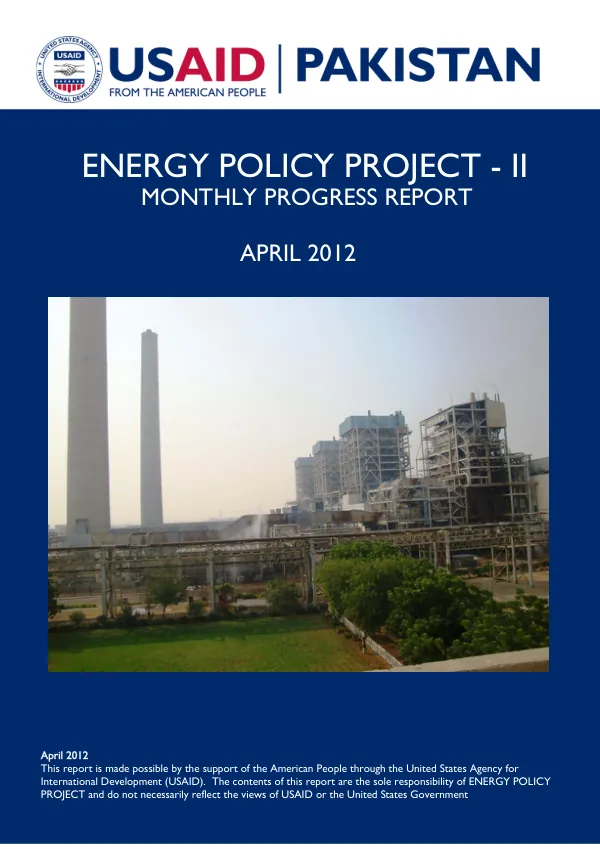
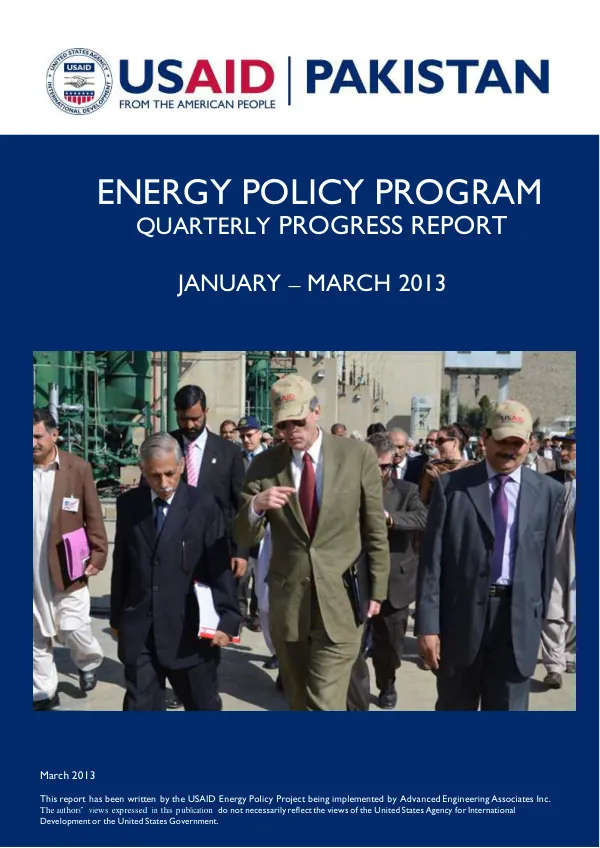
Current key activities include providing monitoring and implementation support to the following six signature energy projects, announced by Secretary of State Hillary Clinton. These projects include rehabilitation of three thermal power plants (Muzaffargarh, Guddu, and Jamshoro) and one hydropower plant (Tarbela dam), and construction of two new multipurpose dams (Gomal Zam Dam and Satpara Dam). Total USG funding for these projects is $136.731 million, with estimated gains in available generating capacity up to 863 MW. As of September 2012, 439 MW have been added to Pakistan's national grid. EPP is also providing technical support to the Ministry of Water and Power (MWP) to identify and select new generation and transmission projects. Examples include potential imports of electricity from the Central Asian Republics to Pakistan through Afghanistan; providing analytical support for projects such as Step 1 & II Due Diligence for Kurram Tangi and Mangla Dam Projects; and issues related to these projects. In addition, EPP is supporting generation and transmission-related studies and policy reform activities assigned by USAID. These include developing GENCO and NTDC business plans; developing policies/procedures for the National Power Control Center; and advisory services at MWP and the Planning Commission (Energy Wing), Ministry of Finance (MOF), and Ministry of Petroleum and Natural Resources (MPNR). The EPP is providing monitoring and implementation support for the six signature projects announced by Secretary of State Hillary Clinton. These projects include rehabilitation of three thermal power plants (Muzaffargarh, Guddu, and Jamshoro) and one hydropower plant (Tarbela dam); and construction of two new multipurpose dams (Gomal Zam Dam and Satpara Dam). Total USG funding for these projects is $136.731 million, with estimated gains in available generating capacity up to 863 MW. As of September 2012, 439 MW have been added to Pakistan's national grid. The rehabilitation of Tarbela Hydropower Plant under FARA has made significant progress. During the month of September, the installation of six drainage and dewatering pumps was completed. EPP experts physically inspected the installed six high-capacity station drainage and dewatering pumps for Units 1-10 and reviewed their shipping documents. It was observed that one low-capacity tank dewatering pump was not procured, which was reported to WAPDA/Tarbela. In this regard, a meeting was held on September 12, 2012, with USAID and WAPDA, and it was agreed that WAPDA will procure the remaining pump before invoicing for $400,000 as per the FARA. The rehabilitation/repair work to date has resulted in the restoration of 128 MWs at Tarbela Hydropower plant. Replacement of generator windings has been completed at units 1, 3, and 4, and spare seals & guides and pumps installed. The remaining replacement/repair work, which will increase the reliability and sustainability of the power plant, but not support restoration of additional megawatts, includes replacing the Electromechanical governors with digital governors, replacing the main transformers, and replacing the main circuit breakers. The Energy Policy Project is also providing support to implementing partners in designing work schedules, adherence, and compliance with agreement terms and conditions, opening of accounts, reimbursement of invoices, ensuring environmental compliance with EMMPs, and supporting resolution of issues during implementation. The project is also compiling monitoring and tracking reports (financial disbursements and technical progress).
Related documents