ICF
Engageons-nous pour mettre fin au mariage des enfants au Mali
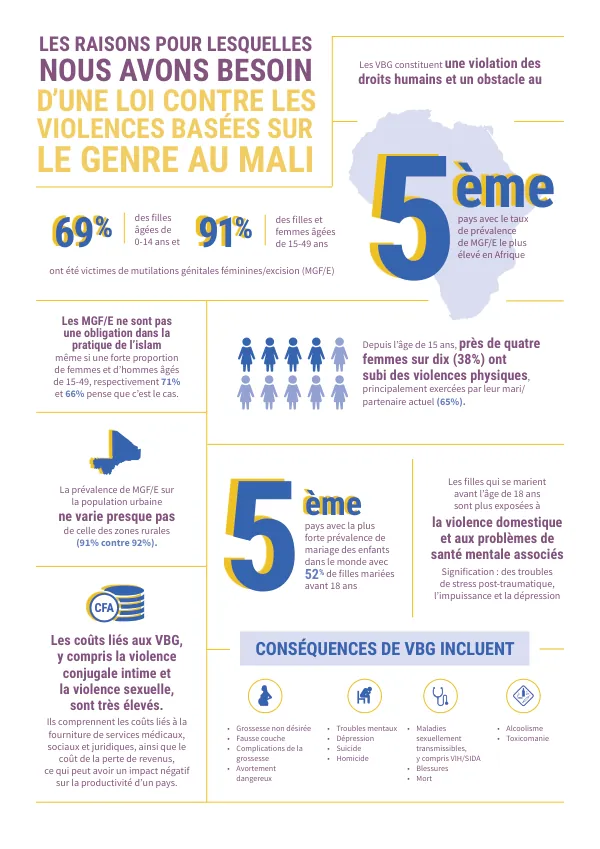
The country with the highest prevalence of child marriage in the world is Mali, where 52% of girls are married before the age of 18.
2018 · 2 pages
Sign in to readA free account is required to download.
Abstract
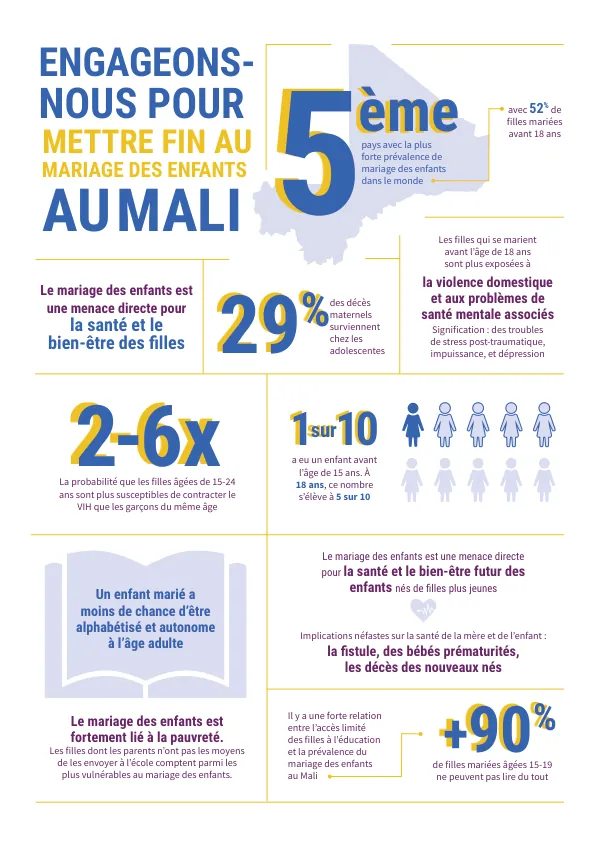
Child marriage poses a direct threat to the health and well-being of girls, as well as the future health and well-being of children born to younger girls. Girls aged 15-24 are more likely to contract HIV than boys of the same age, with a 2-6 times higher probability. Child marriage exposes girls to a range of negative health outcomes, including post-traumatic stress disorder, impotence, and depression, as well as domestic violence and associated mental health problems. Maternal deaths occur at a rate of 29% among adolescent girls, with implications for the health of both the mother and child. These include fistula, premature births, and infant mortality. Girls who have given birth before the age of 15 are more likely to have had a child by the age of 18, with 5 out of 10 girls in this situation. There is a strong correlation between limited access to education for girls and the prevalence of child marriage in Mali. Girls who are married between the ages of 15-19 are more likely to be illiterate, with over 90% unable to read. Child marriage is also closely linked to poverty, with girls from families who cannot afford to send them to school being among the most vulnerable to early marriage. The Malian government has existing commitments to address child marriage, including investing in girls' education and ensuring they remain in school until the age of 18. Girls with higher levels of education are less exposed to early marriage. Promoting gender equality within families, between women and men, girls and boys, is also a key strategy. This includes promoting the role of fathers and mothers as responsible for the child, as well as the participation of men, particularly fathers, religious leaders, and community leaders in the fight against child marriage. The government has also committed to harmonizing laws on marriage, setting the minimum age for marriage at 18 years or older for both boys and girls. Developing and implementing national strategies and action plans to end child marriage is also a priority. The Malian government has participated in the African Union's Campaign to End Child Marriage in Africa, launched in 2014 and concretized by a national launch in October 2015. This campaign is aligned with international conventions, including the Convention on the Rights of the Child, the Protocol to the African Charter on Human and Peoples' Rights on the Rights of Women in Africa, and the Convention on the Elimination of All Forms of Discrimination Against Women.