GEORGETOWN UNIVERSITY
Engendering Industries Fact Sheet
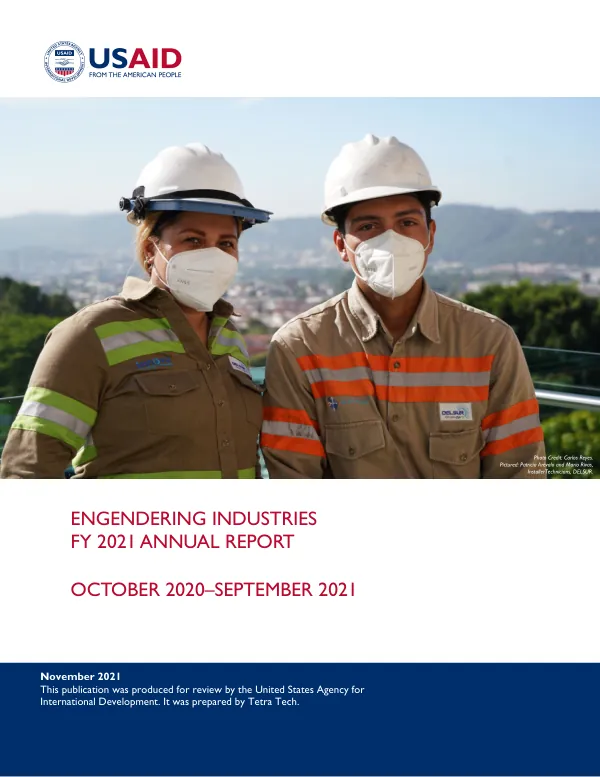
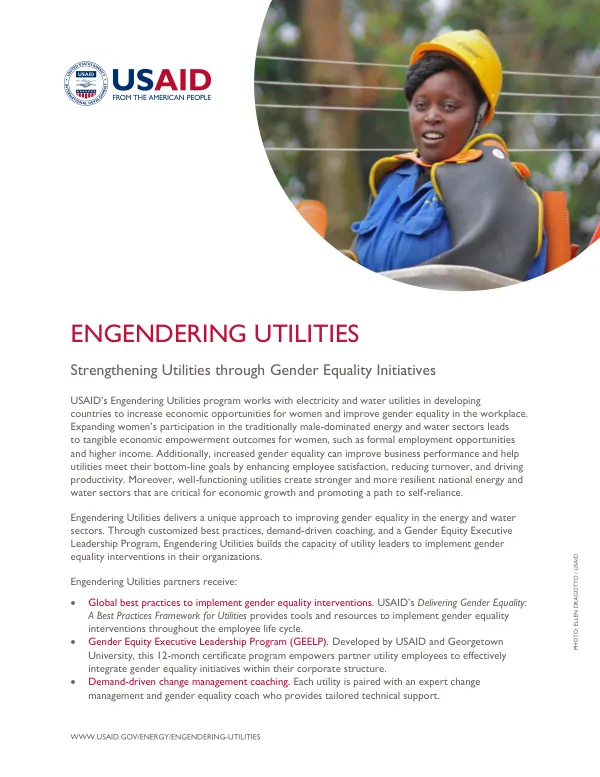
The Engendering Industries program, implemented by USAID, aims to increase workforce gender equality in male-dominated sectors worldwide.
2024 · 4 pages
Sign in to readA free account is required to download.
Abstract
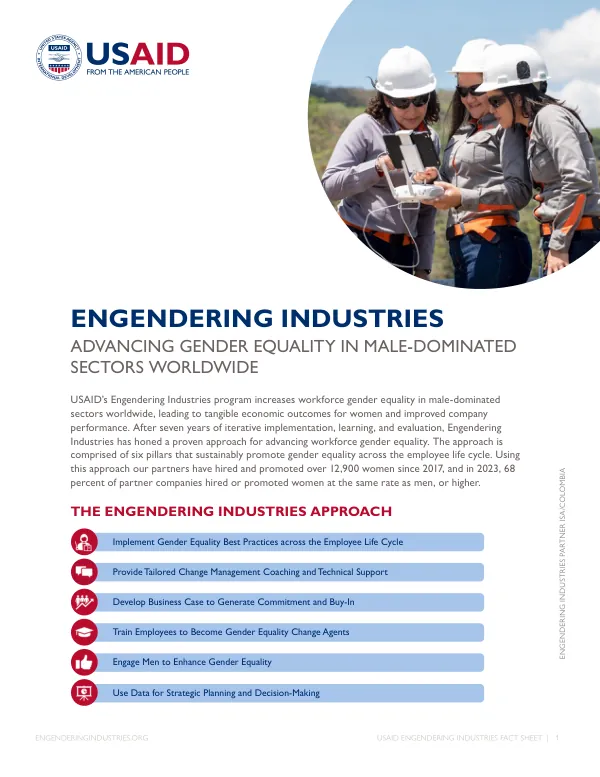
This initiative has been in operation for seven years, during which time it has developed a proven approach for advancing workforce gender equality. The approach consists of six pillars that sustainably promote gender equality across the employee life cycle. The six pillars of the Engendering Industries approach include implementing gender equality best practices across the employee life cycle, providing tailored change management coaching and technical support, developing a business case to generate commitment and buy-in, training employees to become gender equality change agents, engaging men to enhance gender equality, and using data for strategic planning and decision-making. These pillars have been effective in promoting gender equality, with over 12,900 women hired and promoted by partner companies since 2017. One of the key tools used by Engendering Industries is the Delivering Gender Equality: A Best Practices Framework for Male-Dominated Industries. This framework is a curated compilation of actions, resources, and tools that companies can use to improve gender equality at each phase of the employee life cycle. The framework is based on the latest global data, evidence, research, and best practices for sustainably advancing gender equality in male-dominated industries. Engendering Industries has also implemented several programs to support its goals, including the Engendering Industries Intensive Program, the Engendering Industries Accelerated Program, men's engagement workshops, and the Self-Empowerment and Equity for Change (SEE Change) Initiative. The Engendering Industries Intensive Program is a two-year program that provides public- and private-sector partners with intensive gender and change-management coaching to implement gender equality interventions at their organizations. The program has been successful, with 75 percent of participating companies crediting gender equality for improved business performance. The Engendering Industries Accelerated Program is a one-year program that rapidly develops the skills, systems, and structures companies need to increase gender equality in the workplace. The program consists of corporate gender equality assessments, an academic course delivered by the Engendering Industries team, and 12 months of change management coaching to implement gender equality initiatives at participating companies. Men's engagement workshops are also an important part of the Engendering Industries program, raising awareness of the important role men play in changing corporate culture and fostering healthy masculinity. The Self-Empowerment and Equity for Change (SEE Change) Initiative is a program that empowers women around the world through evidence-based personal agency trainings. The program supports women to realize their leadership potential, foster self-reliance, and achieve their personal and professional goals. SEE Change has program tracks for entrepreneurs, employees, and sales agents, and has a proven track record of advancing personal empowerment, gender equality, and business growth in multiple countries and contexts worldwide. Engendering Industries also manages the Women in African Power Network (WiAP), which supports the participation and advancement of women in Africa's energy sector. WiAP members gain access to professional growth opportunities through webinars, networking, job opportunities, and newsletters. Members' work is also featured across the network, raising the profile of women working across the power sector in Africa. The Engendering Industries program has had a significant impact on workforce gender equality, with 68 percent of partners promoting women at the same rate as men or higher in 2023. The program has also hired 6,600 women, promoted 6,300 women, and enrolled 6,600 young women and girls in internships and trainee programs. Additionally, 75 percent of partners report improved business performance, and 13 partners have explicitly linked increased gender equality to decreased revenue loss.