JOHNS HOPKINS UNIVERSITY
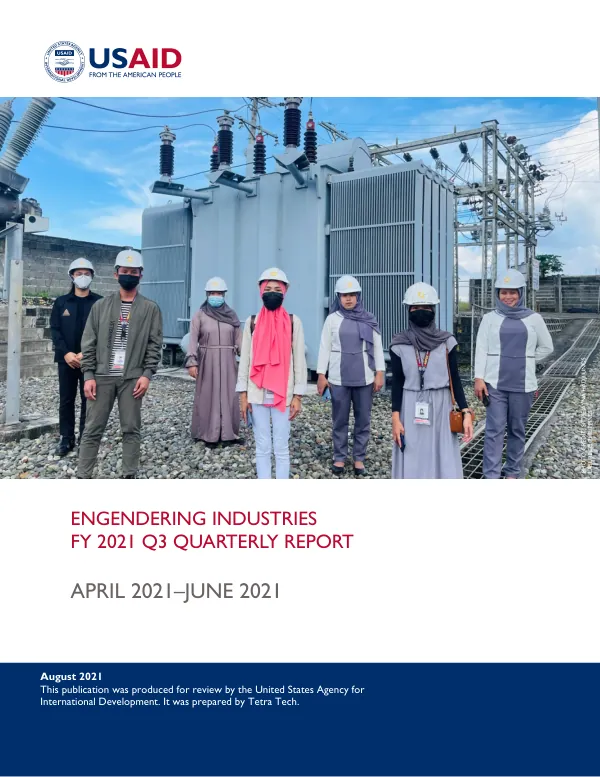
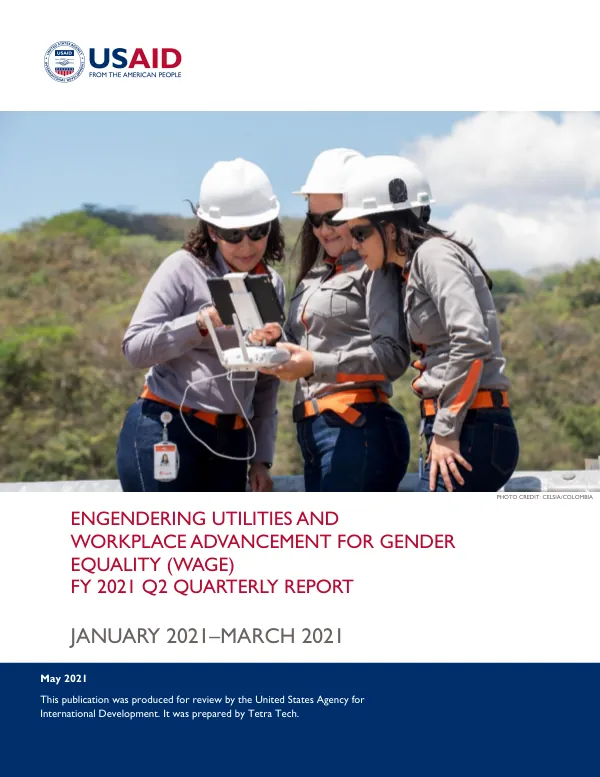
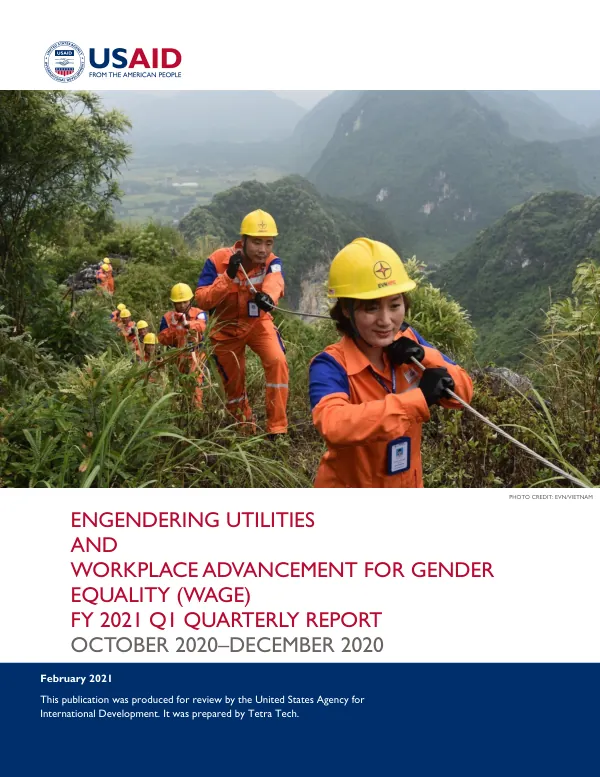
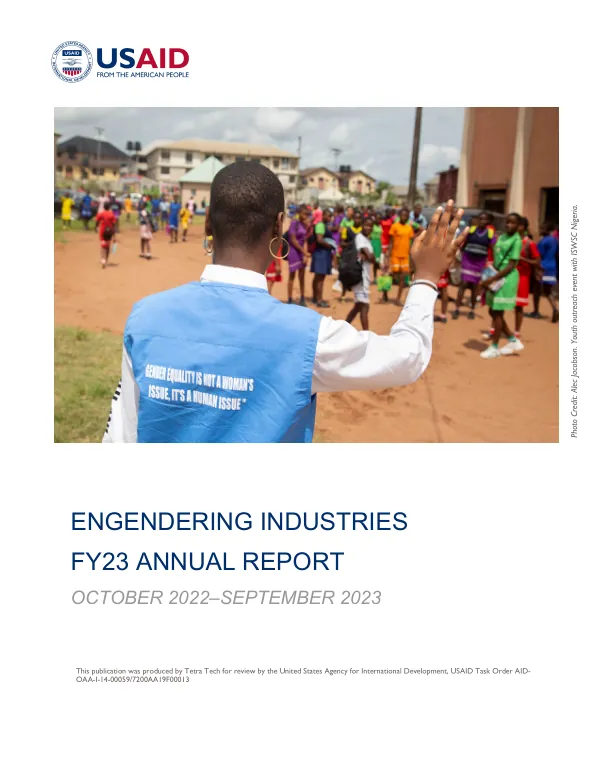
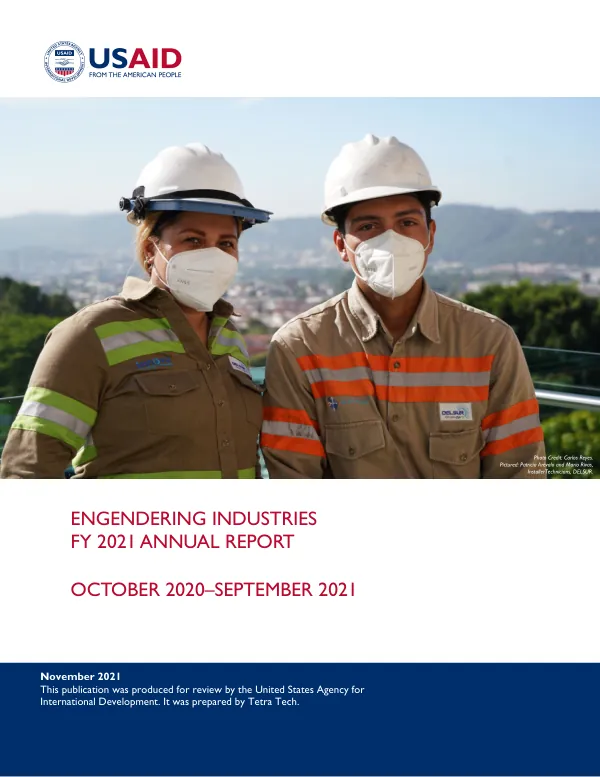
FY21 Annual Report: Engendering Industries
Engendering Industries implemented the Intensive Program for 41 partners in FY 2021, focusing on gender equality and workforce development.
2021 · 63 pages
Sign in to readA free account is required to download.
Abstract
The program received 13 applications for the Partner Support Fund, awarding 12 grants between $10,000-$50,000 to support partners in undertaking activities outlined in their gender equality action plans. Partners such as IBEDC (Nigeria), DELSUR (El Salvador), KOSTT (Kosovo), and EKEDC (Nigeria) began implementing their grants. The Workforce Gender Equality Industries Accelerated Program finalized the curriculum and formalized partnerships with four institutions globally to embed the program in their course offerings. These partners are KenGen in Kenya, Fulbright University in Vietnam, Los Andes University in Colombia, and Lagos Business School in Nigeria. Engendering Industries trained 35 partner faculty and staff through a Training of Trainers (ToT) approach, which took place from May to July 2021. Pilot programs in Kenya and Vietnam launched in August and September 2021, respectively. Under the SURE program, virtual coaching support continued for all 17 program partners of Cohort 1 and 2. Coaching support to Cohort 1 focused on implementing new initiatives such as male engagement, while Cohort 2 coaching support focused on implementing GEELP capstone project activities and identifying new strategic priorities. Under the WAGE program, virtual coaching calls commenced for Cohort 3 focusing on completion of onboarding activities such as group discussions, integration of GEELP course learnings, and development of GEELP capstone projects. In FY 2021, the 41 Engendering Industries Intensive program partners implemented a total of 270 gender equality activities across the 12 ELC phases. Partners trained a total of 753 women and 943 men on gender equality and 31,291 women on technical and soft skills topics to advance their careers. Partners hired 1,330 new women and promoted 1,639 women. In addition, 990 young women and girls participated in internships or trainee programs offered by partners. The Self-Empowerment and Equity for Change Initiative continued to advance during Year 2, with SEE Change developing a learning management platform on "Canvas" and designing a new Global Trainer Community. SEE Change also developed a three-hour module for the Accelerated Program on agency-based empowerment and implemented ToT workshops with Rwanda WIRE project and EDM in Mozambique. The Women Powering Africa program piloted an 11-week, virtual capacity building consultancy to support the sustainability of four women's energy networks in East Africa. WiAP continues collaborating with the Sustainable Energy for All (SEforALL), Lean in Energy, IFC's Energy2Equal, and the Cyrus R. Vance Center for International Justice. Under the WiAP partnership with Lean in Energy, five WiAP members continue their participation in the six-month Lean in Energy mentoring program. Engendering Industries collaborated with Promundo to develop a five-day male engagement course targeting male and female mid- to senior-level managers at workplaces within male-dominated industries. The project finalized the curriculum and began plans to pilot the material with two partners (IBEDC in Nigeria and BRPL (BSES Rajdhani Power Limited) in India) in the coming year. Monitoring, Evaluation, and Learning (MEL) systems and processes were strengthened in Year 2 with revisions made to the MEL Plan and the data collection and validation process streamlined by fully shifting to web-based data collection and management tools. Baseline data collection for Cohort 3 was completed, and Cohort 4 has begun data collection using improved web-based scorecard tools in SurveyCTO. The MEL and Research Manager supported the Workforce Gender Equality Accelerated Program with the design and implementation of various MEL tools needed to track participant registration and monitor and evaluate the success of the pilot.