USAID DEC
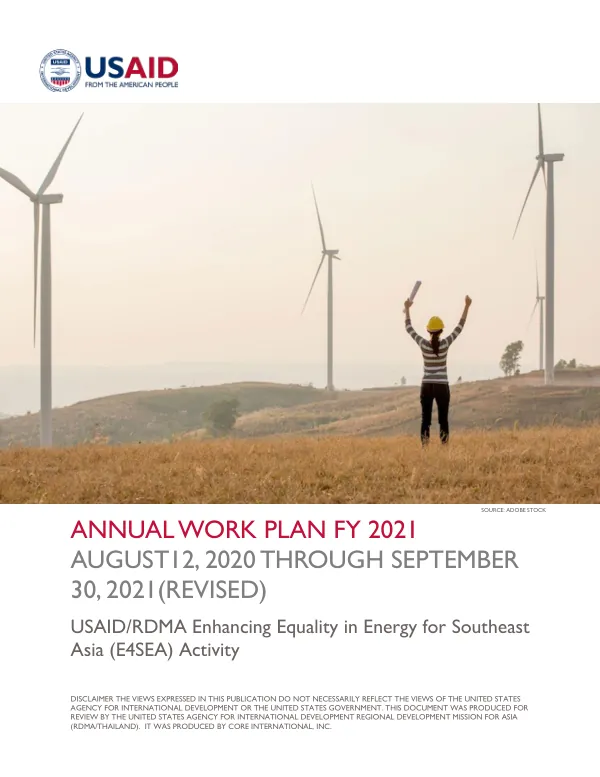
Enhancing Equality in Energy for Southeast Asia (E4SEA) Activity Year 3 Annual Work Plan
Sign inCORE INTERNATIONAL, INC.
Enhancing Equality in Energy for Southeast Asia (E4SEA) Activity Year 3 Annual Work Plan
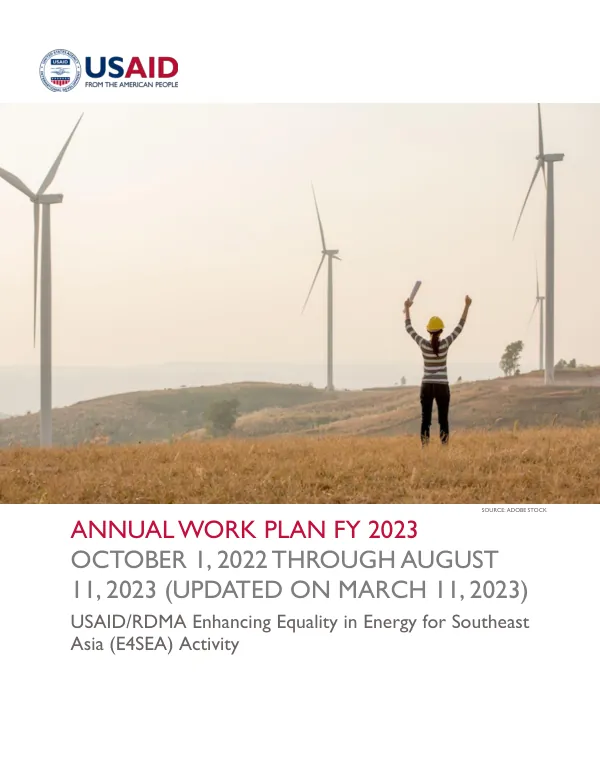
The Enhancing Equality in Energy for Southeast Asia (E4SEA) Activity is a USAID-funded initiative aimed at improving gender equality in the Southeast Asia energy sector workforce.
2023 · 74 pages
Sign in to readA free account is required to download.
Abstract
Launched in 2020, the Activity is part of the Asia Enhancing Development and Growth through Energy (Asia EDGE) initiative, a U.S. government-wide program launched in July 2018 as a key component of the Administration's Indo-Pacific strategy. The E4SEA Activity focuses on enhancing USAID's energy outcomes by improving gender equality in the Southeast Asia energy sector workforce, which supports both a sustainable and secure energy sector and overall women's empowerment. The Activity is implemented by CORE International and its subcontractors, with the goal of increasing opportunities for women in the energy sector and promoting a more inclusive and equitable workforce. The Activity's objectives are aligned with the Asia EDGE initiative's goals, which include promoting economic growth, improving energy security, and enhancing regional cooperation. The E4SEA Activity's objectives are to identify core challenges to gender equality in the energy sector in Southeast Asia, increase the number of women and girls pursuing careers in the energy sector, increase the recruitment, retention, and promotion of women in the energy sector workplace, increase mentorship and leadership opportunities for women in the energy sector, and enhance communication, collaboration, and learning. The Activity's work plan for year three (3) outlines the interventions and tasks to be completed from October 1, 2022 to August 11, 2023. The work plan includes a range of activities, including the implementation of a robust regional energy internship program aimed at increasing opportunities for women to enter the energy sector, a regional energy mentorship program to enhance opportunities for retention and promotion of women to positions of management and leadership, and a range of training and capacity-building activities for energy sector professionals. The E4SEA Activity has made significant progress in its first two years, with a substantial impact in terms of reducing unconscious bias, accelerating gender-responsive approaches to recruitment, retention, and promotions, and increasing opportunities for women in the energy sector. The Activity's partners, including the energy industry and tertiary educational institutions, have expressed enthusiasm for the program's goals and objectives, and are committed to working together to achieve them. The Activity's work plan for year three reflects the additional funding obligation of $660,000, which is less than a third of the requested amount. Despite this reduction, the Activity remains committed to achieving its objectives and is focused on implementing high-impact interventions that can be successfully implemented within the remaining budget and timeframe. The E4SEA Activity is having a significant impact in the region, and its work is expected to continue to contribute to the promotion of gender equality and social inclusion in the energy sector in Southeast Asia. The Activity's Monitoring and Evaluation (M&E) framework is designed to track progress towards its objectives and ensure that the interventions are effective in achieving the desired outcomes. The framework includes a range of indicators, including the number of women and girls pursuing careers in the energy sector, the recruitment, retention, and promotion of women in the energy sector workplace, and the level of mentorship and leadership opportunities for women in the energy sector. The E4SEA Activity is committed to being a solid catalyst for Gender Equality and Social Inclusion (GESI) and change in the mindset in the region through implementing innovative, proven, and impactful interventions in collaboration with the Activity's regional partners. The Activity's work is expected to continue to contribute to the promotion of gender equality and social inclusion in the energy sector in Southeast Asia, and to support the development of a more inclusive and equitable workforce.