USAID DEC
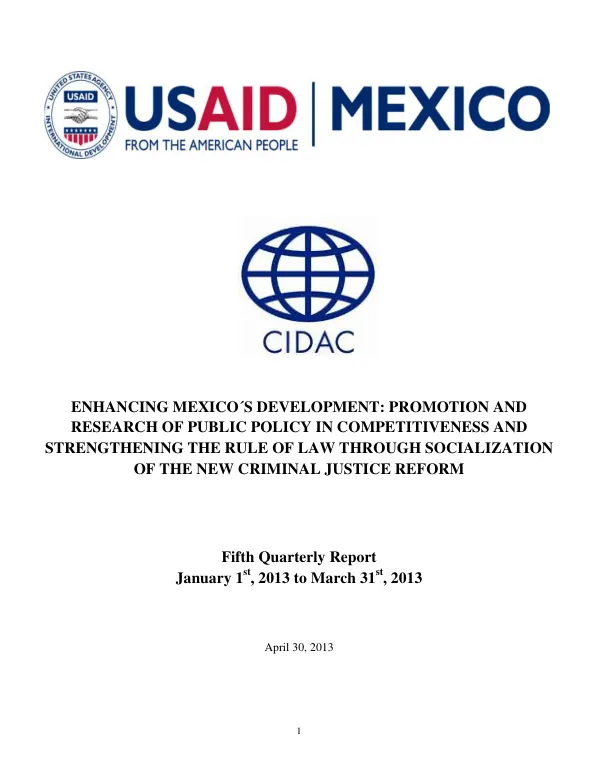
Enhancing Mexico's Development: Promotion and Research of Public Policy in Competitiveness and Strengthening the Rule of Law through Socialization of the New Criminal Justice Reform
Sign inUSAID DEC
Enhancing Mexico's Development: Promotion and Research of Public Policy in Competitiveness and Strengthening the Rule of Law through Socialization of the New Criminal Justice Reform
The "Human Capital: Reducing the Gap Between Supply and Demand to Increase Mexico's Productive Potential" project aims to address the human capital crisis in Mexico by identifying the job skills most required by the main economic sectors of each state and Mexico City.
2013 · 102 pages
Sign in to readA free account is required to download.
Abstract
The project involves conducting in-depth interviews with companies across the country to gather information on the skills being adequately and sub-adequately supplied by university programs. This information is then used to create public informational resources to help families and high school students choose university programs that align with real local needs. The project's second year will focus on piloting the provision of training in certain skills in two Mexican municipalities in the north of the country. The goal is to monitor whether this change leads to an increase in employment of trainees in the short term. The project's findings have been promoted through extensive media appearances, citations, interviews, and private presentations, contributing to a change in the general conception of higher education in Mexico from a focus on "degrees" and "professions" to one of "competencies" that are acquirable in many ways and at various times during an individual's productive life. During the fifth quarter, CIDAC completed and printed the final report and a brief guide on how to choose an undergraduate program and university. The project team also developed the majority of a website, where the information is already publicly available, and organized a major launch event attended by over 250 people from government, universities, business, and society at large. The event received coverage from five media outlets, and the project team conducted an intensive post-launch series of over 86 interviews, media appearances, and private presentations. The project's main findings from 1,556 interviews at 499 companies countrywide are contained in the final report. The report identifies the job skills most required by the main economic sectors of each state and Mexico City, noting which skills are being adequately and sub-adequately supplied by university programs. This information is used to create public informational resources to help families and high school students choose university programs that align with real local needs. The project's accomplishments during the fifth quarter include the completion of the final report, the development of a brief guide on how to choose an undergraduate program and university, and the launch of a website where the information is already publicly available. The project team also conducted an intensive post-launch series of over 86 interviews, media appearances, and private presentations. The project's findings have been promoted through extensive media appearances, citations, interviews, and private presentations, contributing to a change in the general conception of higher education in Mexico from a focus on "degrees" and "professions" to one of "competencies" that are acquirable in many ways and at various times during an individual's productive life. The project's accomplishments during the fifth quarter demonstrate the project's progress in achieving its objectives and contributing to a change in the general conception of higher education in Mexico. The project's findings have been promoted through extensive media appearances, citations, interviews, and private presentations, and the project's second year will focus on piloting the provision of training in certain skills in two Mexican municipalities in the north of the country.
Related documents