USAID DEC
Epidemiology of Malaria in Kenya
Malaria in Pregnancy is a significant public health concern in Kenya, with infection posing risks to both the mother and the fetus.
2013 · 1 pages
Sign in to readA free account is required to download.
Abstract
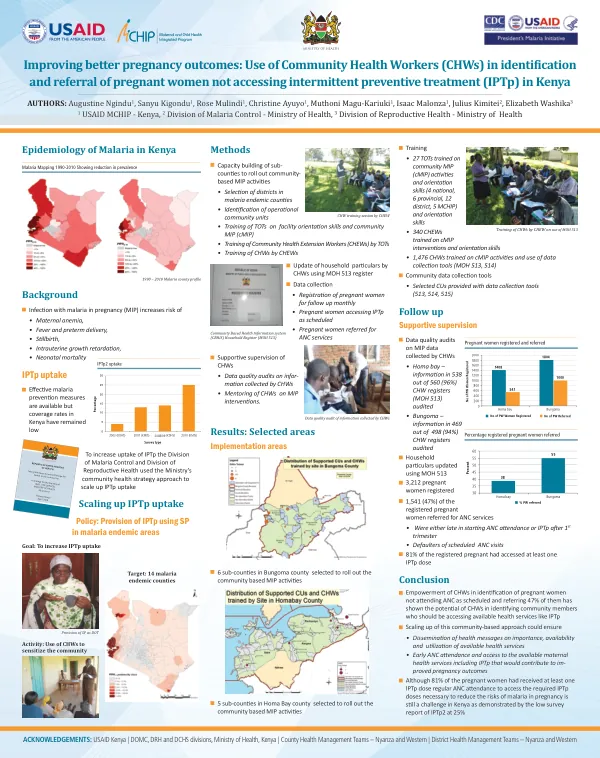
Infection with malaria in pregnancy (MIP) increases the risk of maternal anemia, fever, preterm delivery, stillbirth, intrauterine growth retardation, and neonatal mortality. To address this issue, the Division of Malaria Control and the Division of Reproductive Health collaborated to scale up the uptake of intermittent preventive treatment in pregnancy (IPTp) using sulfadoxine-pyrimethamine (SP). The initiative aimed to increase IPTp coverage in malaria-endemic areas through a community-based approach. Capacity building of sub-counties was conducted to roll out community-based MIP activities, and districts in malaria-endemic counties were selected for the program. Training of trainers (TOTs) on facility orientation skills and community MIP (cMIP) activities was provided, followed by training of Community Health Extension Workers (CHEWs) and Community Health Workers (CHWs). The program focused on six sub-counties in Bungoma and five sub-counties in Homa Bay counties. A total of 27 TOTs were trained, 340 CHEWs, and 1,476 CHWs. Community data collection tools, including the MOH 513 register, were provided to selected community units. Supportive supervision and data quality audits were conducted to ensure the accuracy of the data collected by CHWs. The results of the program showed that 3,212 pregnant women were registered, and 1,541 (47%) of them were referred for antenatal care (ANC) services. Of the registered pregnant women, 81% had accessed at least one IPTp dose. However, regular ANC attendance to access the required IPTp doses necessary to reduce the risks of malaria in pregnancy remains a challenge in Kenya, as demonstrated by the low survey report of IPTp2 at 25%. The use of Community Health Workers (CHWs) in identifying pregnant women not attending ANC as scheduled and referring them has shown the potential of CHWs in identifying community members who should be accessing available health services like IPTp. Scaling up this community-based approach could ensure dissemination of health messages on the importance, availability, and utilization of available health services, leading to improved pregnancy outcomes.