ICF
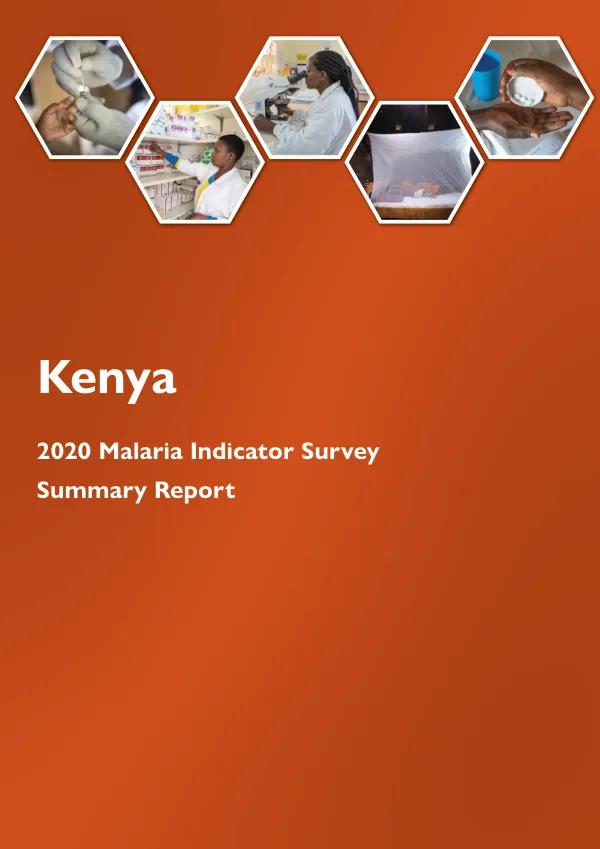
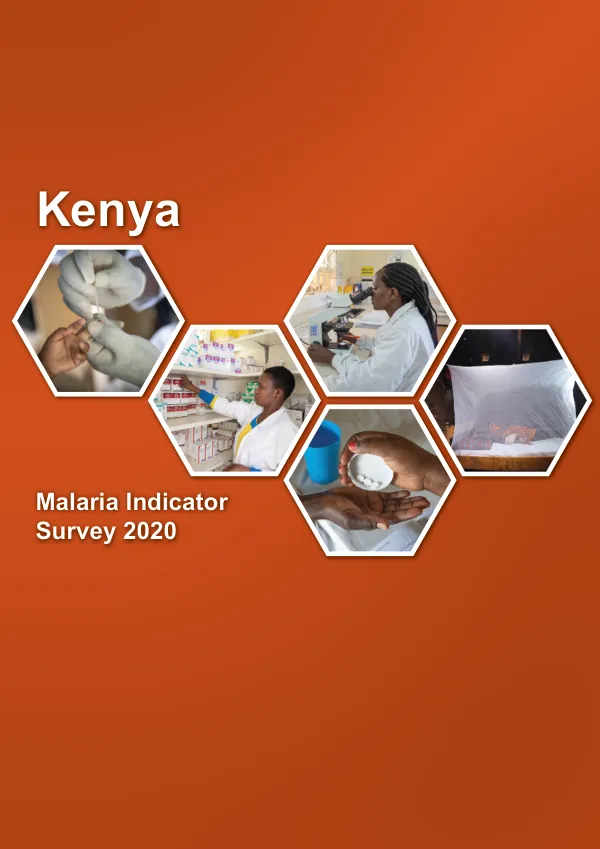
Kenya Malaria Indicator Survey 2020 Final Report
The 2020 Kenya Malaria Indicator Survey (2020 KMIS) was implemented by the Ministry of Health (MOH) Division of National Malaria Programme (DNMP) and the Kenya National Bureau of Statistics (KNBS).
2021 · 183 pages
Sign in to readA free account is required to download.
Abstract
Financial support for the survey was provided by the United States Agency for International Development (USAID) through the President's Malaria Initiative (PMI) and by the Government of Kenya with Global Fund support. ICF provided technical assistance through The DHS Program, a USAID-funded project offering support and technical assistance in the implementation of population and health surveys in countries worldwide. The survey aimed to assess the malaria burden in Kenya, monitor progress towards the goals of the Kenya Malaria Strategy 2019-2023, and provide data for decision-making. The survey was conducted in all 47 counties of Kenya, with a sample of 8,000 households and 30,000 individuals. The survey used a multi-stage cluster sampling design, with a stratification of urban and rural areas. The survey collected data on various indicators, including malaria prevalence, anaemia, and malaria testing. The survey also collected data on household characteristics, such as drinking water sources, sanitation, and housing characteristics. Additionally, the survey collected data on women's background characteristics, educational attainment, literacy, and exposure to mass media. The survey found that 44% of children under the age of five had slept under an insecticide-treated net (ITN) the night before the survey, while 63% of pregnant women had slept under an ITN. However, the survey also found that 21% of households did not have access to ITNs, and 15% of households did not use ITNs due to various reasons, including cost and lack of awareness. The survey also found that 34% of children under the age of five had fever in the two weeks preceding the survey, and 44% of these children received treatment for fever. However, the survey also found that 21% of children under the age of five did not receive treatment for fever due to various reasons, including lack of access to healthcare services. The survey concluded that malaria remains a significant public health problem in Kenya, with a high burden of malaria in children under the age of five. The survey recommended that the Government of Kenya scale up efforts to control malaria, including increasing access to ITNs, improving healthcare services, and enhancing awareness and education on malaria prevention and treatment. The survey also recommended that the Government of Kenya strengthen its malaria surveillance system, including improving data collection and analysis, and enhancing collaboration with international partners to control malaria. The survey further recommended that the Government of Kenya prioritize the needs of vulnerable populations, including children under the age of five and pregnant women, in its malaria control efforts. The survey's findings and recommendations are intended to inform the development of effective malaria control strategies in Kenya, and to contribute to the achievement of the goals of the Kenya Malaria Strategy 2019-2023.