UNICEF
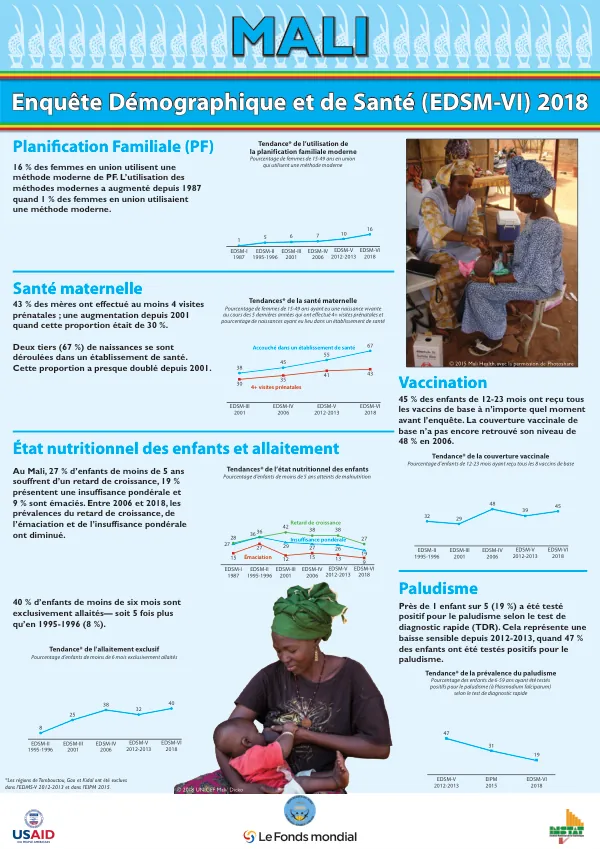
État nutritionnel des enfants et allaitement
In Mali, 45% of children aged 12-23 months have received all basic vaccines at any point before the survey.
2018 · 1 pages
Sign in to readA free account is required to download.
Abstract
The coverage of basic vaccination has not yet regained its level of 48% in 2006. Vaccination rates in Mali are lower than desired, with 40% of children under six months being exclusively breastfed, a significant increase from 8% in 1995-1996. Approximately one in five children (19%) has tested positive for malaria using the rapid diagnostic test (RDT), representing a notable decrease since 2012-2013, when 47% of children tested positive for malaria. Malnutrition among children in Mali is a pressing concern, with 27% of children under five years old suffering from stunting, 19% presenting underweight status, and 9% being wasted. Between 2006 and 2018, the prevalence of stunting, wasting, and underweight status has decreased. The nutritional status of children in Mali has shown a downward trend, with 16% of women in union using modern family planning methods. The use of modern family planning methods has increased since 1987, when 1% of women in union used a modern method. The percentage of children aged 12-23 months who have received all basic vaccines has shown a steady increase, from 8% in 1995-1996 to 40% in 2018. The percentage of children under six months who are exclusively breastfed has also increased, from 8% in 1995-1996 to 40% in 2018. Maternal health in Mali has improved, with 43% of mothers having attended at least four prenatal visits, a significant increase from 30% in 2001. Two-thirds (67%) of births have taken place in a health facility, nearly doubling since 2001.