WORLD HEALTH ORGANIZATION
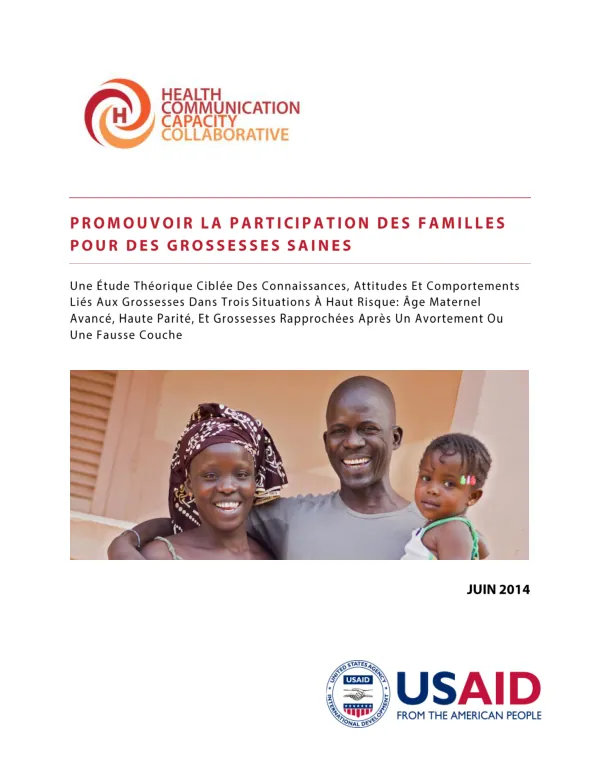
Étude sur les grossesses à haut risque et les grossesses à haute parité en Afrique
The study on high-risk pregnancies, including advanced maternal age (AMA), high parity (HP), and pregnancies after abortion or miscarriage (PA/PM), aimed to identify existing research and interventions focused on these high-risk pregnancies.
2014 · 29 pages
Sign in to readA free account is required to download.
Abstract
Data on maternal and fetal health indicate that AMA is associated with an increased likelihood of several maternal and fetal complications, including preterm birth, stillbirth, low or high birth weight, fetal distress, maternal hemorrhage, maternal mortality, and certain congenital malformations. Research has shown that AMA is linked to a higher risk of maternal and fetal complications, with studies suggesting that women over 35 years old are more likely to experience these issues. A study by Kenny et al. (2013) found that AMA is associated with an increased risk of preterm birth, while another study by Astolfi and Zonta (1999) found a link between AMA and low birth weight. Additionally, research by Rajmohan et al. (2013) and Walfish et al. (2009) has identified AMA as a risk factor for maternal hemorrhage and maternal mortality. The study also examined the perceptions of risk among women and their families, as well as their attitudes towards family planning and the use of contraceptive methods. The research found that women and their families often have a desire for larger families, which can lead to a higher risk of high-risk pregnancies. The study also identified a lack of awareness and understanding of the risks associated with high-risk pregnancies, as well as a lack of access to family planning services and contraceptive methods. The study used a mixed-methods approach, combining both quantitative and qualitative data to examine the variables associated with high-risk pregnancies. The research identified several demographic, biomedical, and behavioral variables that are linked to an increased risk of high-risk pregnancies, including education level, socioeconomic status, antecedents, and the failure of contraceptive methods. The study also found that behavioral variables, such as the refusal to adopt a contraceptive method or the discontinuation of contraceptive use, are often linked to social or contextual factors, such as family size, spousal approval of family planning, remarriage, and the desire for a male child. The study's findings highlight the need for further research and interventions to address the high-risk pregnancies, particularly among women and their families who are at risk of experiencing these complications. The research suggests that a comprehensive approach to family planning and reproductive health is necessary to reduce the risk of high-risk pregnancies and improve maternal and fetal outcomes.
Related documents