JOHNS HOPKINS UNIVERSITY
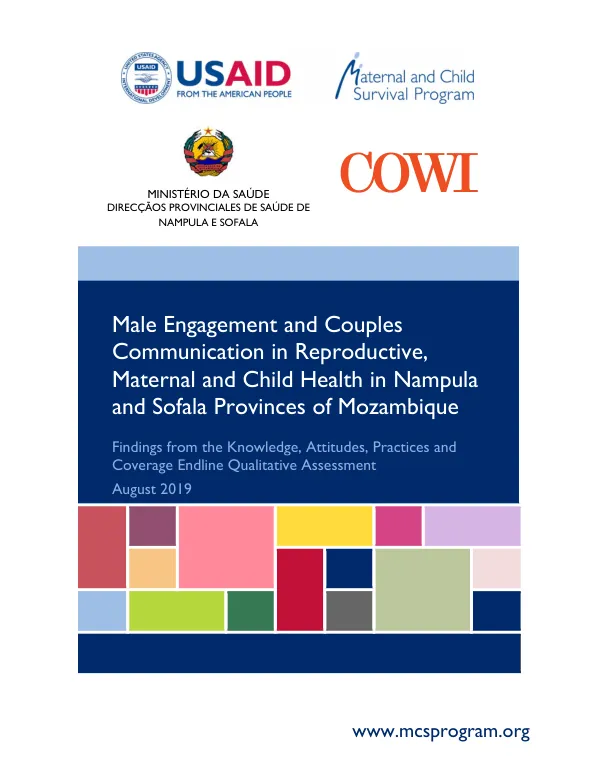
Male Engagement and Couples Communication in RMNCH in Mozambique
The Maternal and Child Survival Program (MCSP) is a global initiative focused on preventing child and maternal deaths in 25 high-priority countries.
2019 · 38 pages
Sign in to readA free account is required to download.
Abstract
In Mozambique, MCSP implemented activities in two focus provinces, Nampula and Sofala, with the goal of introducing and supporting high-impact, sustainable reproductive, maternal, newborn and child health (RMNCH) interventions. The program is a $560 million, 5-year cooperative agreement funded by the United States Agency for International Development (USAID). In Mozambique, MCSP conducted a quantitative baseline assessment in October-November 2016, which included a gender module. The findings from this assessment were used to refine gender interventions during two years of project implementation. In November-December 2018, MCSP Mozambique conducted endline studies, including a qualitative male engagement study. The objectives of this study were to evaluate the feasibility and acceptability of male engagement interventions that encouraged couples' communication aimed at increasing antenatal care (ANC) attendance, joint birth preparedness and complication readiness (BPCR) plans, institutional birth, and use of modern Family Planning (FP). The qualitative male engagement study included 197 participants in two districts, eight communities, and two health facilities in Nampula and Sofala provinces. The study aimed to explore how decisions between couples are made and what may influence their decisions about seeking RMNCH services. For the purposes of this study, male engagement and male participation were defined as men taking an active role in protecting and promoting the health and wellbeing of themselves, their partners, and children. The study found that male engagement in RMNCH services is crucial for improving health outcomes. Men play a significant role in decision-making about having children, and their involvement in ANC attendance and BPCR plans can increase the likelihood of couples seeking RMNCH services. The study also highlighted the importance of couples' communication in making decisions about seeking RMNCH services. Men who were more involved in decision-making and communication with their partners were more likely to support their partners in seeking RMNCH services. The study recommended that male engagement interventions should be integrated into RMNCH programs to improve health outcomes. The interventions should focus on encouraging couples' communication, increasing men's involvement in decision-making, and promoting joint BPCR plans. The study also suggested that health facilities should provide a supportive environment for men to engage in RMNCH services, and that community-based programs should be implemented to promote male engagement in RMNCH services.
Related documents