BANYAN GLOBAL
Evidence Summary: Advancing Women’s Economic Empowerment
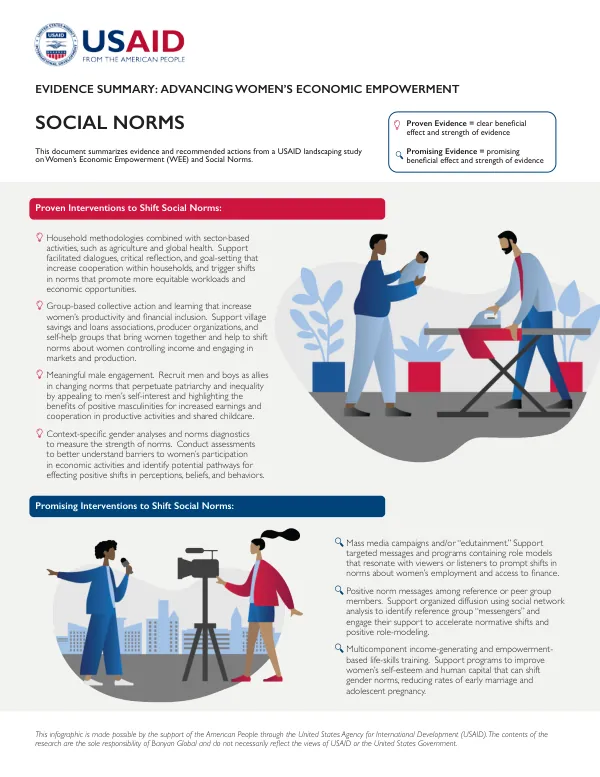
Household methodologies combined with sector-based activities, such as agriculture and global health, have been identified as a promising approach to shift social norms.
2022 · 1 pages
Sign in to readA free account is required to download.
Abstract
This approach facilitates dialogues, critical reflection, and goal-setting that increase cooperation within households and trigger shifts in norms that promote more equitable workloads and economic opportunities. By combining household and sector-based activities, individuals can work together to address common challenges and develop more equitable solutions. Group-based collective action and learning have also been recognized as a key strategy for shifting social norms. This approach increases women's productivity and financial inclusion by supporting village savings and loans associations, producer organizations, and self-help groups. These groups bring women together and help to shift norms about women controlling income and engaging in markets and production. By working together, women can develop new skills, access new resources, and build confidence in their ability to participate in economic activities. Meaningful male engagement is another critical component of shifting social norms. Recruiting men and boys as allies in changing norms that perpetuate patriarchy and inequality can be an effective way to promote positive masculinities and increase cooperation in productive activities and shared childcare. By appealing to men's self-interest and highlighting the benefits of positive masculinities, individuals can work together to develop more equitable solutions and promote social change. Context-specific gender analyses and norms diagnostics are essential for understanding the strength of social norms and identifying potential pathways for effecting positive shifts in perceptions, beliefs, and behaviors. These assessments can help to better understand barriers to women's participation in economic activities and identify potential pathways for promoting social change. By conducting these analyses, individuals can develop targeted interventions that address specific social norms and promote more equitable outcomes. Multicomponent income-generating and empowerment-based life-skills training have also been recognized as a promising approach to shifting social norms. These programs improve women's self-esteem and human capital, reducing rates of early marriage and adolescent pregnancy. By providing women with the skills and resources they need to participate in economic activities, individuals can promote social change and develop more equitable solutions. Additionally, mass media campaigns and/or "edutainment" can be used to support targeted messages and programs containing role models that resonate with viewers or listeners, prompting shifts in norms about women's employment and access to finance.