BANYAN GLOBAL
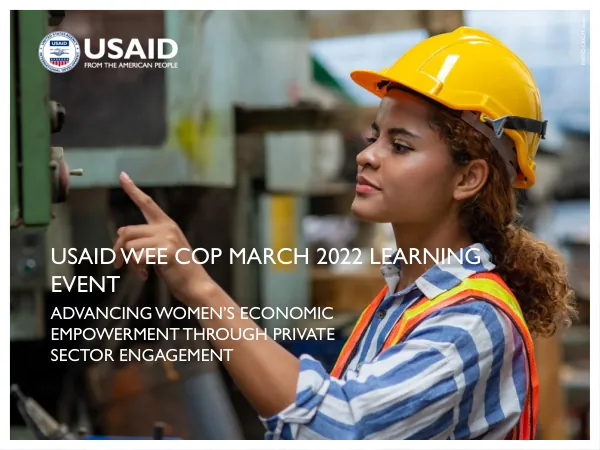
USAID WEE Cop March 2022 Learning Event
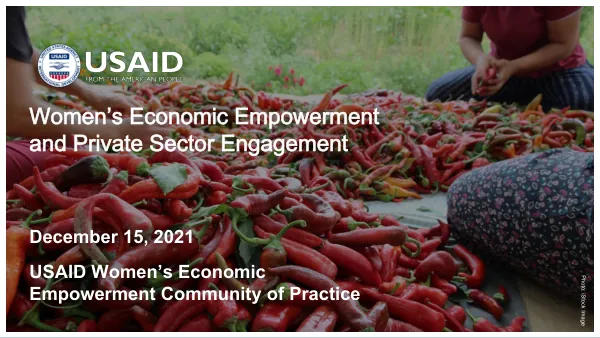
The USAID Women's Economic Empowerment Community of Practice (WEE CoP) convened a learning event in March 2022 to advance women's economic empowerment through private sector engagement.
2022 · 24 pages
Sign in to readA free account is required to download.
Abstract
The event brought together experts from various organizations, including USAID, Banyan Global, and Unilever, to share key findings and recommendations on women's economic empowerment and private sector engagement. Research has shown that companies invest in increasing women's equitable participation due to several drivers. One key driver is improving performance, as companies recognize that attracting the best talent, innovation, and increased productivity can lead to overall growth and improved financial performance. Additionally, companies are motivated to address gender inequity in leadership, operations, and supply chains to mitigate risks related to reputation, compliance, and productivity. Another driver is managing risk, as companies respond to social, economic, and political events by staying relevant to consumers, responding to employees' desire for purpose, and reflecting leaders' personal goals. Furthermore, companies are driven to do the right thing, as they recognize the importance of aligning their business practices with their values and contributing to positive social and economic outcomes. The research also highlights that there is no universal business case for women's economic empowerment, as businesses are unique outcomes of their history, administrative structure, products, and socio-economic operating context. However, some generalizations can be made by industry, and companies can benefit from sharing best practices and learning from each other's experiences. The USAID WEE CoP aims to facilitate learning among its members and foster engagement opportunities to advance women's economic empowerment. With over 600 members, the community provides a platform for sharing evidence, facilitating learning, and promoting collaboration among stakeholders. The community's objectives include sharing key findings and recommendations from research on women's economic empowerment and private sector engagement, as well as encouraging participants to utilize this information to advance WEE within their respective organizations and activities. The research findings and recommendations presented at the learning event are intended to inform and support companies in their efforts to increase women's equitable participation in leadership, operations, and supply chains. By understanding the drivers of companies' investment in women's economic empowerment, organizations can develop effective strategies to promote gender equality and improve business outcomes.