USAID DEC
Exclusive Breastfeeding
HIV and infant feeding is a critical concern for pregnant women and their babies.
2011 · 2 pages
Sign in to readA free account is required to download.
Abstract
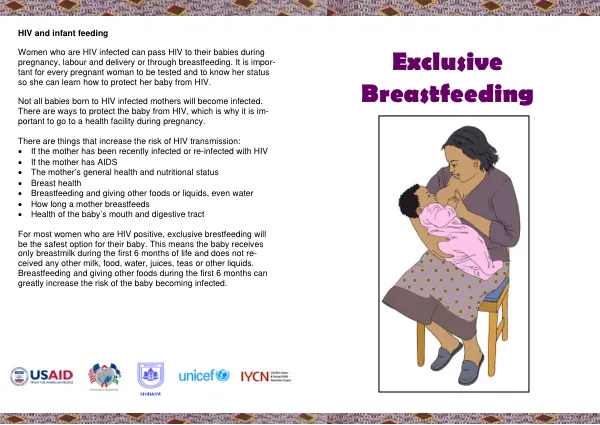
Women who are HIV infected can pass the virus to their babies during pregnancy, labor, delivery, or through breastfeeding. It is essential for every pregnant woman to be tested and know her HIV status to learn how to protect her baby from HIV. The risk of HIV transmission to the baby is increased by several factors, including the mother's recent infection or re-infection with HIV, the mother's AIDS status, general health and nutritional status, breast health, and the duration of breastfeeding. Exclusive breastfeeding, where the baby receives only breastmilk during the first six months of life, is the safest option for most HIV-positive women. This approach reduces the risk of HIV transmission to the baby and provides the baby with the perfect food for growth and development. Exclusive breastfeeding is crucial for the baby's health, as breastmilk contains all the necessary nutrients in proper amounts. It also helps prevent infections, stimulates the baby's immune system, and protects against common childhood illnesses. Additionally, breastfeeding supports the baby's growth and development and is easy for the baby to digest. For the mother, breastfeeding has several benefits, including protection from becoming pregnant again soon after giving birth, promotion of bonding between the mother and the baby, and help in the uterus returning to its normal position. Breastfeeding is also free, always available, and always at the right temperature for feeding, reducing the risk of breast and ovarian cancers. The benefits of breastfeeding extend to the family and community as well. Exclusive breastfeeding is available 24 hours a day, reduces the cost of medicines for sick babies, delays new pregnancies, reduces time lost from work, and makes more money available for other family needs. Overall, breastfeeding is a vital component of infant care, and its benefits are numerous for both the baby and the mother.
Related documents