USAID DEC
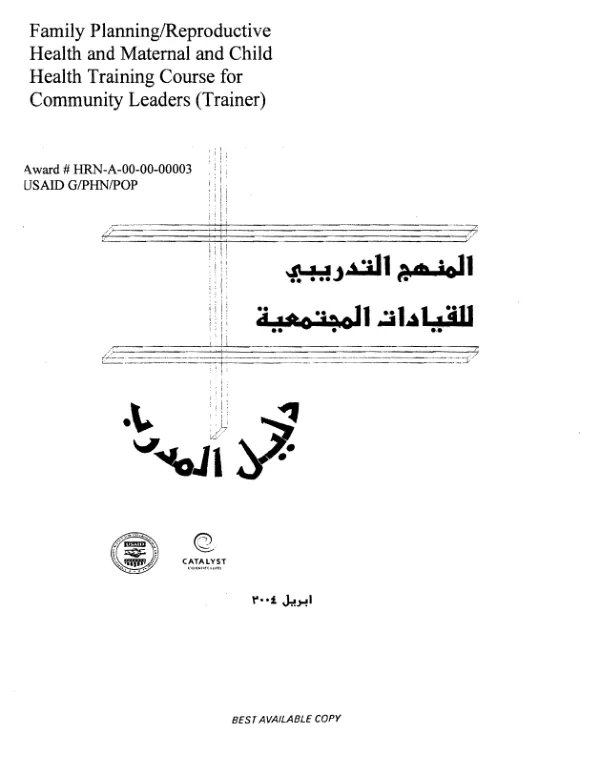
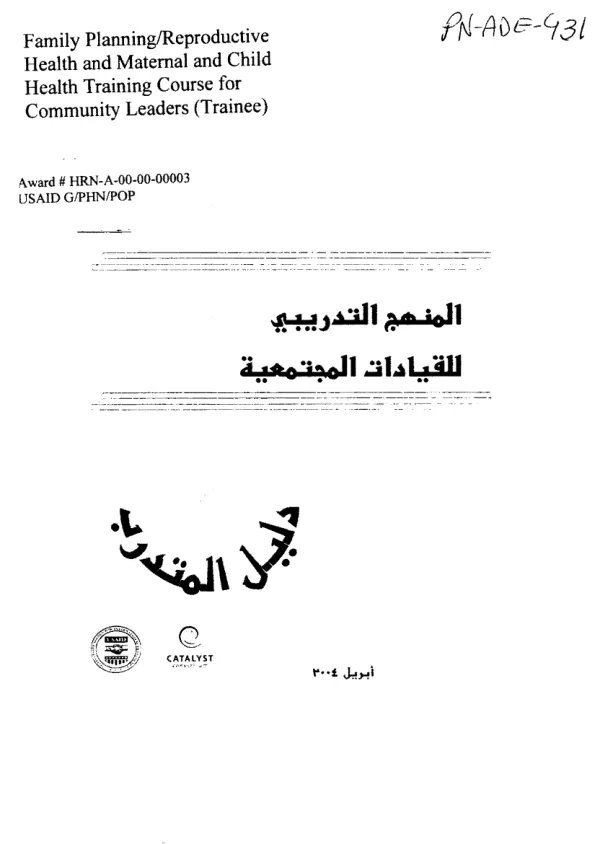
Family Planning and Reproductive Health and Maternal and Child Health Training Course for Community Leaders
Sign inUSAID
Family Planning and Reproductive Health and Maternal and Child Health Training Course for Community Leaders
The Family Planning, Reproductive Health and Maternal and Child Health Training Course for Community Leaders is a comprehensive training program designed to equip community leaders with the necessary knowledge and skills to provide effective family planning, reproductive health, and maternal and child health services.
88 pages
Sign in to readA free account is required to download.
Abstract
The training course is part of a larger initiative aimed at improving health outcomes in underserved communities. The training program focuses on a range of topics, including family planning methods, reproductive health, maternal and child health, and community-based health services. Trainees learn about the importance of family planning in reducing maternal and child mortality, as well as the role of community leaders in promoting healthy behaviors and providing access to health services. The training also covers topics such as gender equality, human rights, and community mobilization. The training course is designed to be highly interactive, with a mix of lectures, group discussions, and hands-on activities. Trainees participate in role-playing exercises, case studies, and group presentations to develop their communication and problem-solving skills. The training program also includes a field component, where trainees visit local health facilities and community-based organizations to gain practical experience and observe best practices. The training course is tailored to meet the specific needs of community leaders in underserved areas. Trainees come from a range of backgrounds, including community health workers, village leaders, and local government officials. The training program is designed to be flexible and adaptable, allowing trainees to apply the knowledge and skills they acquire to their specific contexts and communities. The training course is supported by a range of resources, including training manuals, educational materials, and technical assistance from experienced trainers and health professionals. The training program is part of a larger initiative aimed at improving health outcomes in underserved communities, and is expected to have a positive impact on the health and well-being of community members.