MCSP
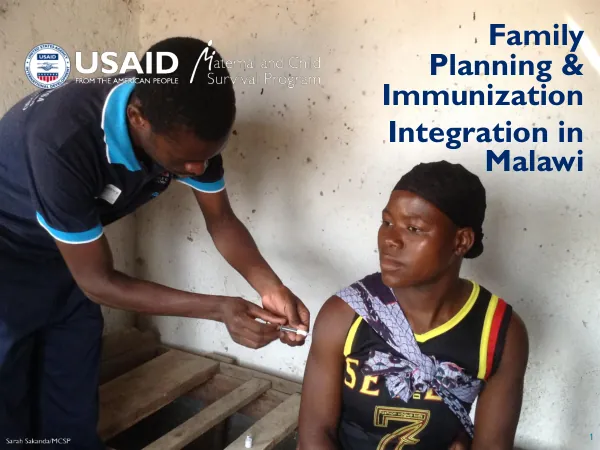
Family Planning & Immunization Integration in Malawi
The agricultural development initiative in Malawi began in 2016 with a focus on integrating family planning and immunization services.
2018 · 17 pages
Sign in to readA free account is required to download.
Abstract
The initiative aimed to improve service provision, utilization, and quality at health service sites in Dowa and Ntchisi districts. A total of 43 facilities and associated outreach platforms were saturated with the initiative, which included equipping health service providers with family planning knowledge and skills, engaging facility staff, and engaging community members through communication materials and tools. The study employed a mixed-methods approach, combining qualitative and quantitative data collection and analysis. Focus group discussions and in-depth interviews were conducted with mothers, fathers, and service providers to gather insights on the integration of family planning and immunization services. Secondary analysis of facility data and supervision reports was also conducted to assess the impact of the initiative. Preliminary results showed a continued increase in total contraceptive users in Dowa, with a notable shift in the use of family planning services from facilities to community-based services. The initiative also led to an increase in the number of new family planning users, with a significant proportion of these users being women-headed households. However, the study found no effect on immunization doses administered or dropout rates. The results also showed that the integration of family planning and immunization services led to improved service provision and utilization. The number of total family planning users increased over time, with a significant proportion of these users being new users. The study also found that the initiative led to improved quality of services, with service providers reporting increased confidence in providing family planning services. The study's findings suggest that the integration of family planning and immunization services can lead to improved service provision, utilization, and quality. The initiative's focus on equipping service providers with knowledge and skills, engaging community members, and using communication materials and tools appears to have been effective in improving the delivery of family planning services. However, further research is needed to fully understand the impact of the initiative and to identify areas for improvement. The study's results also highlight the importance of integrating family planning and immunization services in Malawi. The country's health system has been working to improve the delivery of family planning services, and the integration of these services with immunization services appears to have been an effective strategy. The study's findings suggest that this approach can be replicated in other settings, and that it has the potential to improve the delivery of family planning services and reduce the number of unintended pregnancies.