USAID DEC
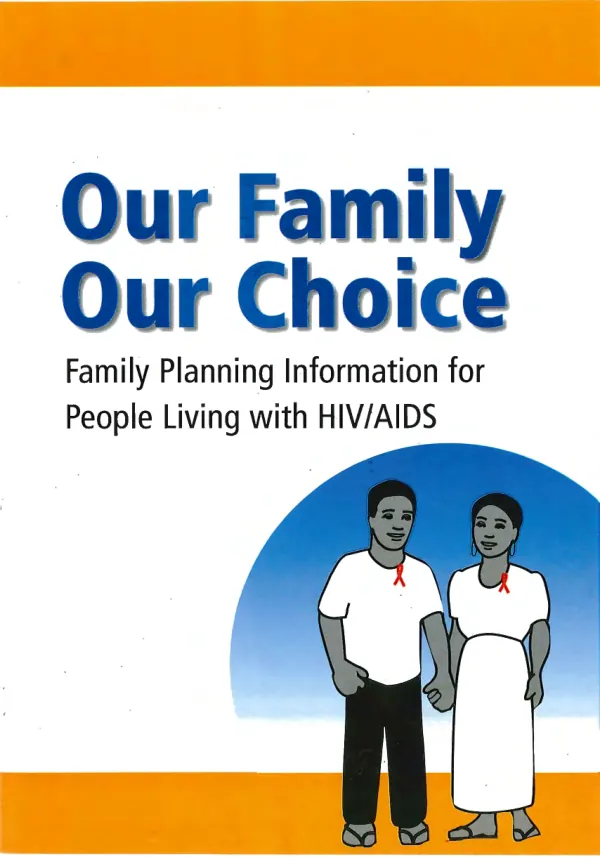
Family Planning Information for People Living with HIV/AIDS
Family planning is a crucial aspect of reproductive health, particularly for individuals living with HIV/AIDS.
2015 · 12 pages
Sign in to readA free account is required to download.
Abstract
The first step in planning a family is to know one's HIV status by getting tested. Couples in which one or both partners are HIV+ face the same fertility choices as any other couple, including having a child now, having a child later, or avoiding pregnancy altogether. However, if a woman is HIV+, pregnancy may be more difficult on her body, and there is a risk that her baby could be infected with HIV during pregnancy, delivery, or breastfeeding. Couples should discuss their choices with each other, with healthcare providers, and with people who have been through a similar experience. There is no right or wrong choice, and couples should make the decision together, supporting each other in that decision. For couples who wish to have a child now, an HIV+ woman and her partner can reduce the risk to the health of the mother and child by asking a doctor whether her body is strong enough to carry a pregnancy. If the doctor recommends she take antiretroviral (ARV) medicines, the couple should make sure the doctor understands that they wish to have a child in the future, as some ARV medicines are not recommended for pregnant women. Using a family planning method to delay pregnancy for at least 6 months to allow the medicines to work and make her well again is also recommended. Enrolling her in a Prevention of Mother to Child Transmission (PMTCT) program and following all the steps is also crucial. For couples who wish to have a child later, making sure an HIV+ woman's body is strong enough to carry a pregnancy is very important to protect the health of the mother and her child. Like any woman, an HIV+ woman should let her body recover from a pregnancy by waiting a few years before becoming pregnant again. Sometimes, she may also have to delay her first pregnancy until she is strong and her body is ready to have a baby. People living with HIV/AIDS can safely use many family planning methods to delay pregnancy, even if they are taking ARV medicines. None of the recommended family planning methods harm one's health or stop ARV medicines from working. Family planning methods that provide double protection, preventing pregnancy and protecting against sexually transmitted infections like HIV, include abstinence, condoms, and injectable Depo Provera. However, injectable Depo Provera is only effective for 3 months, and a new injection must be given every 3 months. The family planning (contraceptive) pill is also effective, but a woman must take it every day, or as directed by the instructions on the packet. The Jadelle implant is another option, which is two small, thin, and flexible rods inserted into a woman's upper arm to prevent pregnancy for up to 5 years. The Intrauterine Device (IUD) is also effective, but it is not recommended for women at high risk of sexually transmitted infections. For couples who wish to avoid pregnancy altogether, they can continue using the family planning methods described above or go for a more permanent method, such as vasectomy or female sterilization (tubal ligation). However, women who are HIV+ and not well or have developed AIDS need to get well again before they undergo sterilization. It is essential to talk to a healthcare provider for more information about the family planning options described here as well as PMTCT.
Related documents