JOHNS HOPKINS UNIVERSITY
Farmer-to-Farmer (FTF) Program Up-date
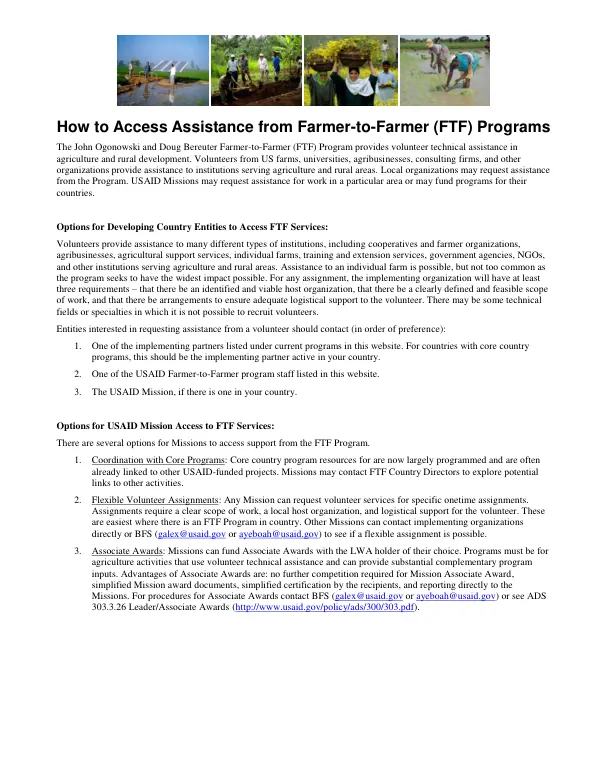
The John Ogonowski and Doug Bereuter Farmer-to-Farmer (FTF) Program provides volunteer technical assistance in agriculture and rural development.
2012 · 1 pages
Sign in to readA free account is required to download.
Abstract
Volunteers from US farms, universities, agribusinesses, consulting firms, and other organizations offer assistance to institutions serving agriculture and rural areas. Local organizations may request assistance from the Program, and USAID Missions may request assistance for work in a particular area or fund programs for their countries. Volunteers provide assistance to various types of institutions, including cooperatives and farmer organizations, agribusinesses, agricultural support services, individual farms, training and extension services, government agencies, NGOs, and other institutions serving agriculture and rural areas. Assistance to an individual farm is possible but not common, as the program seeks to have the widest impact possible. For any assignment, the implementing organization must have at least three requirements: an identified and viable host organization, a clearly defined and feasible scope of work, and arrangements to ensure adequate logistical support to the volunteer. Entities interested in requesting assistance from a volunteer should contact the implementing partners listed under current programs in the website, in order of preference. This includes contacting the implementing partner active in the country for countries with core country programs. Alternatively, entities can contact the USAID Farmer-to-Farmer program staff listed in the website or the USAID Mission, if there is one in the country. USAID Missions have several options for accessing support from the FTF Program. One option is coordination with core programs, where resources are now largely programmed and often linked to other USAID-funded projects. Missions can contact FTF Country Directors to explore potential links to other activities. Another option is flexible volunteer assignments, where any Mission can request volunteer services for specific one-time assignments. These assignments require a clear scope of work, a local host organization, and logistical support for the volunteer. Missions can also fund Associate Awards with the LWA holder of their choice, which provides advantages such as no further competition required, simplified award documents, and reporting directly to the Missions.
Related documents