CHEMONICS
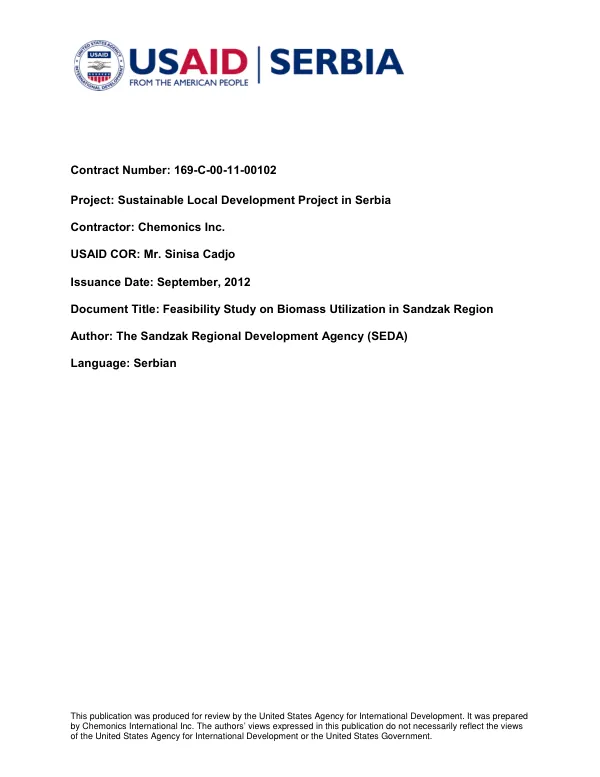
Feasibility Study on Biomass Utilization in Sandzak Region
The Sustainable Local Development Project in Serbia aimed to promote sustainable development in the Sandzak region through the utilization of biomass.
2012 · 115 pages
Sign in to readA free account is required to download.
Abstract
The project was implemented by the Sandzak Regional Development Agency (SEDA) in collaboration with the USAID and Chemonics International Inc. The study focused on the feasibility of biomass utilization in the Sandzak region, with a particular emphasis on the potential of wood biomass. The study identified several key challenges and opportunities for biomass utilization in the region. The Sandzak region has significant forest resources, with an estimated 1.2 million hectares of forest cover. However, the region's forest industry is facing significant challenges, including low productivity, outdated technology, and limited market access. The study highlighted the need for modernization and diversification of the forest industry to take advantage of the region's biomass resources. The study proposed several solutions to address the challenges and opportunities identified in the region. These included the development of a biomass-based energy sector, the establishment of a wood processing industry, and the promotion of sustainable forest management practices. The study also emphasized the importance of cooperation and coordination among stakeholders, including local authorities, private sector companies, and civil society organizations. The study provided a detailed analysis of the economic feasibility of biomass utilization in the Sandzak region. The analysis included a review of the current energy market, an assessment of the potential for biomass-based energy production, and an evaluation of the economic viability of various biomass-based energy technologies. The study also examined the potential for job creation and economic growth in the region through the development of a biomass-based energy sector. The study identified several key recommendations for the implementation of biomass utilization in the Sandzak region. These included the development of a comprehensive strategy for biomass utilization, the establishment of a biomass-based energy sector, and the promotion of sustainable forest management practices. The study also emphasized the need for cooperation and coordination among stakeholders to ensure the successful implementation of biomass utilization in the region. The study concluded that biomass utilization has the potential to contribute significantly to the economic development of the Sandzak region. The development of a biomass-based energy sector and the promotion of sustainable forest management practices can create new economic opportunities, generate employment, and improve the overall quality of life in the region. However, the successful implementation of biomass utilization will require careful planning, coordination, and cooperation among stakeholders. The study provided several appendices, including a detailed description of the methodology used, a list of abbreviations and acronyms, and a glossary of terms. The study also included several graphs and tables to illustrate the key findings and recommendations. The study's findings and recommendations have significant implications for the development of the Sandzak region. The study highlights the potential for biomass utilization to contribute to economic growth, job creation, and improved quality of life in the region. However, the successful implementation of biomass utilization will require careful planning, coordination, and cooperation among stakeholders.
Related documents