ACDI/VOCA
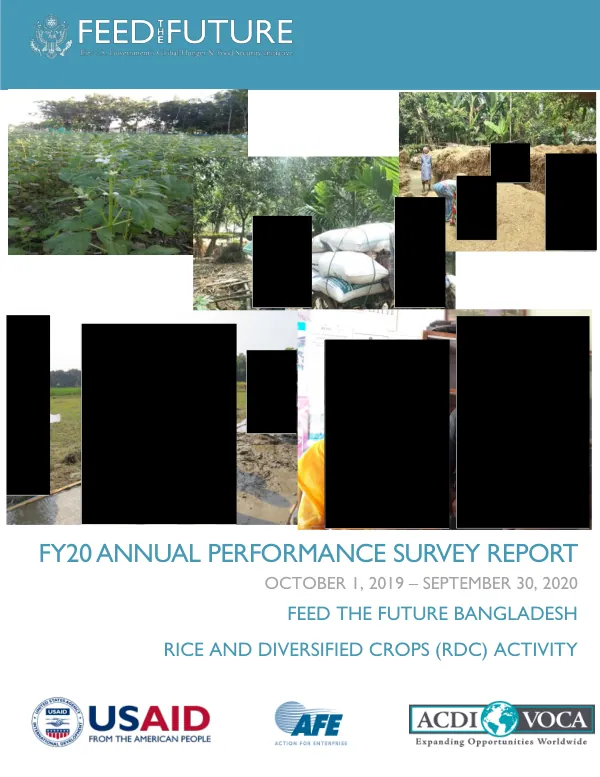
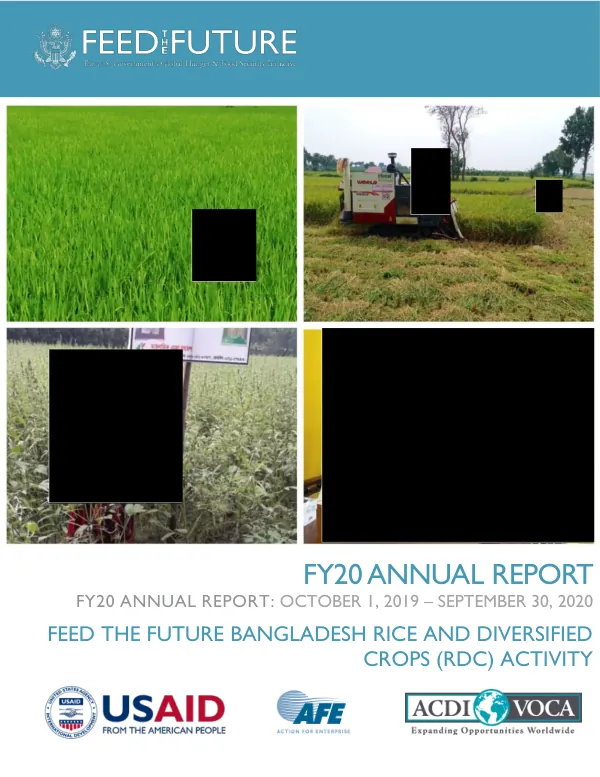
FY20 ANNUAL REPORT: OCTOBER 1, 2019 – SEPTEMBER 30, 2020
The USAID Feed the Future (FTF) Bangladesh Rice and Diversified Crops Activity (RDC) aims to increase incomes and improve food security and nutrition in 22 southern Bangladeshi districts.
2020 · 38 pages
Sign in to readA free account is required to download.
Abstract
The activity focuses on systemic market changes that promote a diversified farming system based on intensified rice production and the introduction of higher-value, nutrient-rich crops. Rice intensification will allow farming households to secure greater quantities of affordable rice, transition to profitable and diversified rice-based cropping patterns, and generate off-farm income opportunities. RDC's anticipated project results include 500,000 farmers in the FTF zone having access to new and improved products, services, and/or market channels. Additionally, there will be a 50% expansion of commercial outreach in the FTF zone of production and post-harvest-related inputs and services, as well as a 50% expansion of commercial procurement by collaborating companies in the FTF zone. In FY2018, RDC achieved 6,555 farmers with access to new and improved products, services, and/or market channels. By FY2019, this number increased to 57,755, and in FY2020, it reached 274,091. The cumulative total is 338,401 farmers. Private sector leverage also increased significantly, from $81,420 in FY2018 to $1,198,054 in FY2020, with a cumulative total of $1,828,826. USG grants also increased, from $104,254 in FY2018 to $325,437 in FY2020, with a cumulative total of $845,527. Private sector engagement was a key focus area for RDC in FY2020. Twenty-eight interventions were signed, including twelve interventions for COVID-19, contributing to a total of 60 interventions to date. The total resources spent on these interventions were $1,523,468.48, with RDC contributing $325,437 (21.36%) and leveraging private sector resources of $1,198,054 (78.64%), resulting in an investment ratio of $3.68 between USG and private partners. RDC's approach focuses on core market systems, including rice, maize, pulses (mungbean), and oil seeds (sesame, sunflower, groundnut, and mustard). The activity also supports mechanization, financial inclusion, information and communication technology (ICT), and environmental compliance. Additionally, RDC addresses COVID-19 impact and resilience, gender, food security, and environmental compliance. The activity aims to create scalable market system impacts that ultimately benefit rural households, with the added value of expanding opportunities for women and youth.
Related documents