USAID DEC
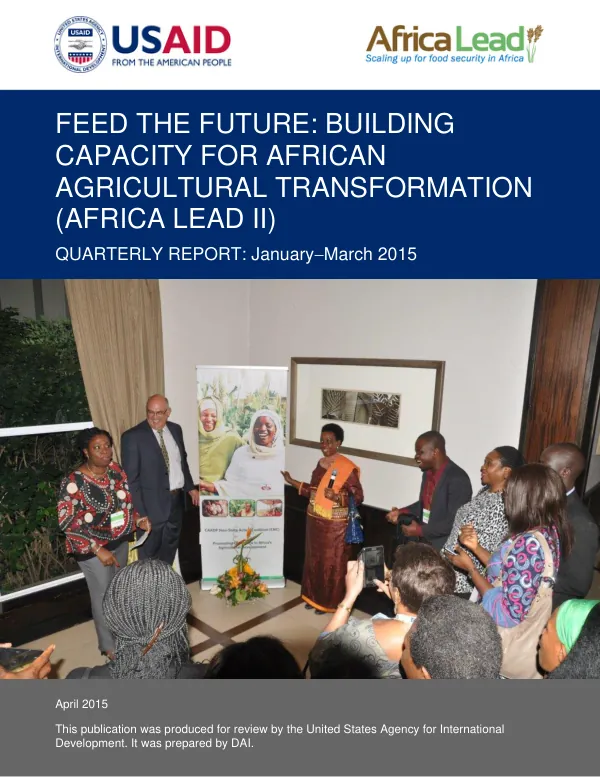
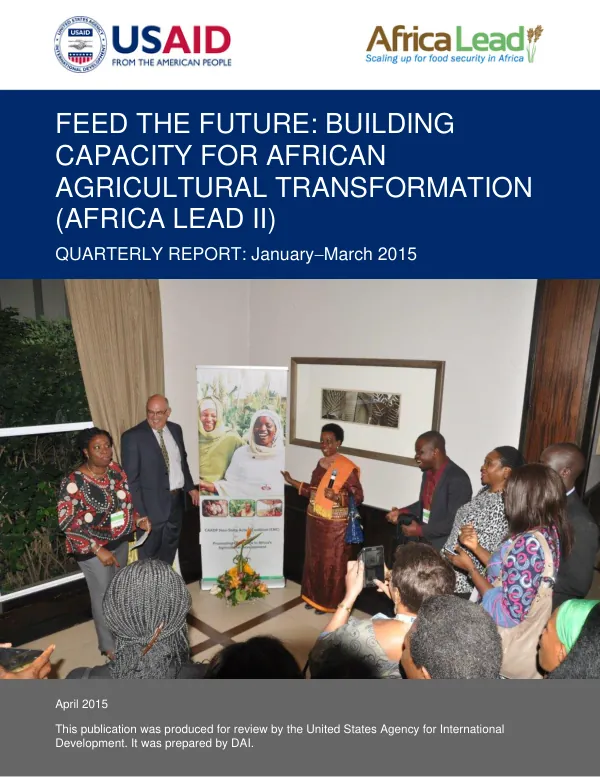
Feed the Future: Building Capacity for African Agricultural Transformation (Africa Lead II) Quarterly Report: January–March 2015
Sign inDAI
Feed the Future: Building Capacity for African Agricultural Transformation (Africa Lead II) Quarterly Report: January–March 2015
Africa Lead II, the Feed the Future: Building Capacity for African Agricultural Transformation Program, is a five-year Cooperative Agreement between USAID and a DAI-led Consortium.
2015 · 44 pages
Sign in to readA free account is required to download.
Abstract
The program aims to support and advance agricultural transformation in Africa as proposed by the African Union Comprehensive Africa Agriculture Development Program (CAADP). The program's purpose is to strengthen the capacity of African countries to manage and implement agricultural development programs, with a focus on improving food security, reducing poverty, and promoting economic growth. The program is structured into three components: Improving Institutional Capacity to Manage Agricultural Development, Strengthening Capacity to Manage and Implement the Policy Change and Alignment Process, and Promoting the Effective Inclusive Participation of Non-State Actors in the Policy Process. Component One focuses on improving the capacity of key food security institutions, providing customized leadership and management training, and supporting the creation of leadership curriculum in key agricultural and agribusiness tertiary training institutions. Component Two aims to strengthen the capacity of African countries to manage and implement the policy change and alignment process, including designing and delivering agriculture policy training workshops, strengthening institutional architecture for improved policy and evidence-based policy reform, and facilitating the adoption and improvement of mutual accountability frameworks and joint sector review processes. Component Three promotes the effective inclusive participation of non-state actors in the policy process, including identifying and selecting non-state actor counterparts to engage in the CAADP policy process, building the capacity of key non-state actor groups to support CAADP objectives, and facilitating non-state actor support to CAADP objectives. The program's quarterly report for January to March 2015 highlights several key accomplishments, including the completion of Task 0.1, which involved consulting with bilateral and regional USAID missions, and Task 0.2, which involved collaborating with food security organizations and programs. The report also highlights the progress made in Component One, including the provision of assistance to strengthen the performance of key institutions and the provision of customized leadership and management training. The program's results framework, annexed to the quarterly report, outlines the program's expected outcomes, outputs, and indicators. The framework highlights the program's focus on improving food security, reducing poverty, and promoting economic growth, as well as its commitment to strengthening the capacity of African countries to manage and implement agricultural development programs. The program's quarterly report also highlights the importance of knowledge management, learning, and communications, including the provision of buy-in services, program services, and monitoring and evaluation. The report emphasizes the need for effective communication and collaboration among stakeholders to achieve the program's objectives. Overall, the Africa Lead II program aims to support and advance agricultural transformation in Africa by strengthening the capacity of African countries to manage and implement agricultural development programs. The program's quarterly report highlights the progress made in the first quarter of 2015 and emphasizes the importance of continued collaboration and communication among stakeholders to achieve the program's objectives.