USAID DEC
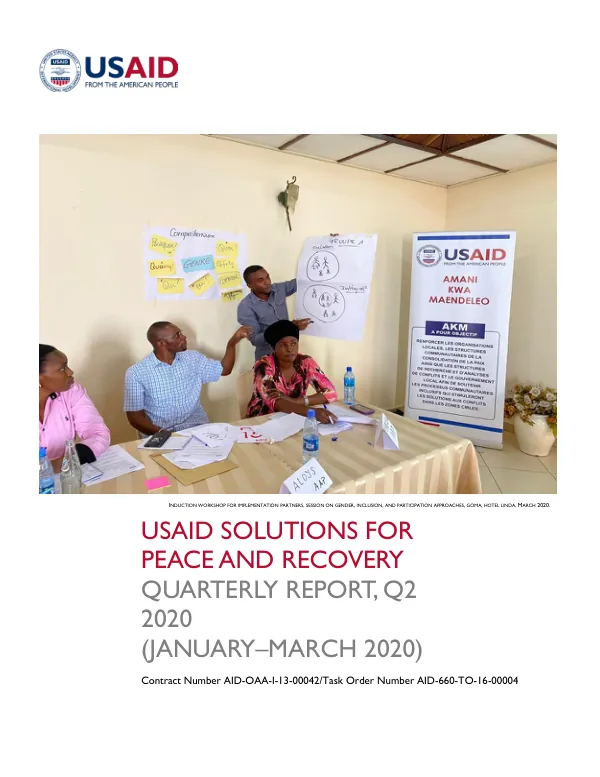
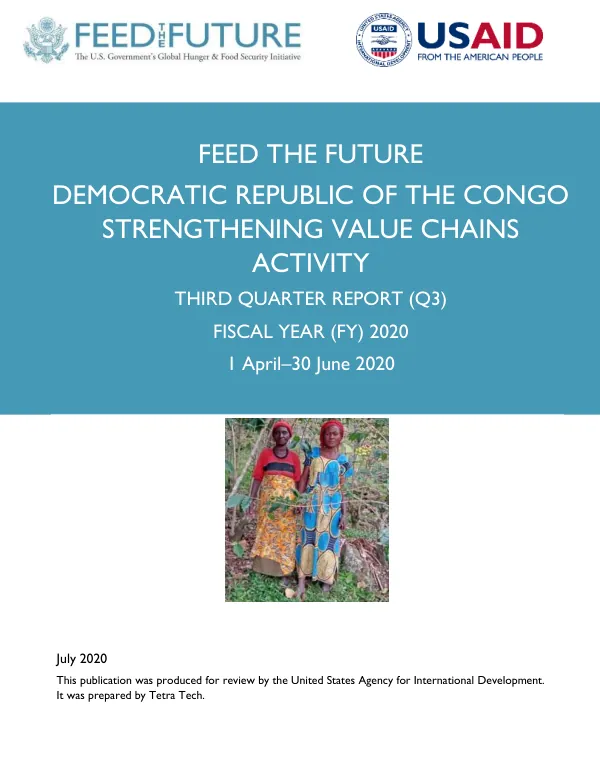
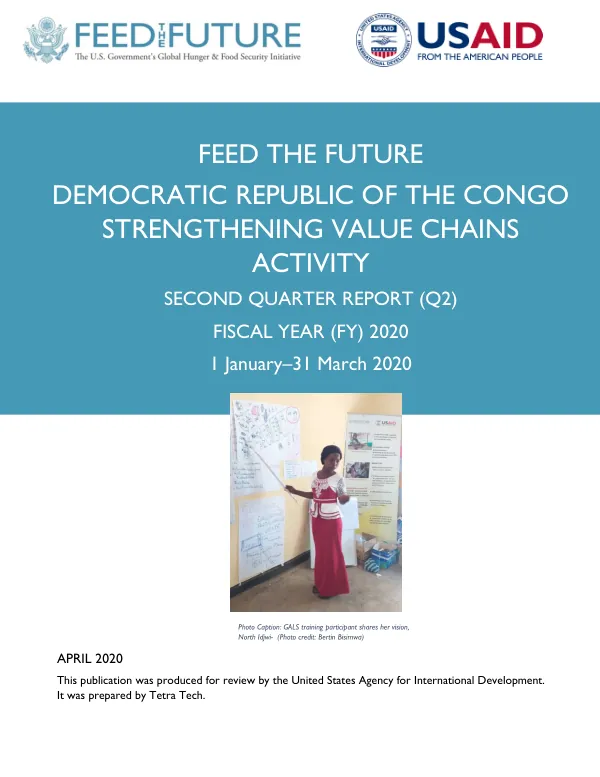
Feed the Future Democratic Republic of the Congo Strengthening Value Chains Activity, Second Quarter Report (Q2) Fiscal Year (FY) 2020: 1 January-31 March 2020
Sign inTETRA TECH
Feed the Future Democratic Republic of the Congo Strengthening Value Chains Activity, Second Quarter Report (Q2) Fiscal Year (FY) 2020: 1 January-31 March 2020
The Feed the Future DRC Strengthening Value Chains Activity began in 2018 with funding from the United States Agency for International Development (USAID).
2020 · 112 pages
Sign in to readA free account is required to download.
Abstract
The initiative aims to improve the competitiveness of the coffee and cocoa value chains in the Democratic Republic of the Congo (DRC). The activity is implemented by Tetra Tech ARD and focuses on four key components: building capacity of vertical and horizontal actors, enhancing coffee production, developing and implementing public-private partnerships, and access to finance. Capacity building efforts have been underway since the beginning of the activity, with a focus on training farmers and other stakeholders in sustainable agriculture practices. The Gender Action Learning System (GALS) has been implemented in several communities, with participants showing strong adoption rates for practices such as composting and crop rotation. Women-headed households have also demonstrated higher adoption rates for all practices except mechanical land preparation. In the coffee production component, the activity has focused on improving yields and quality through the use of best management practices. Demonstration plots established in 15 communities have shown yield improvements of 60% when applying the recommended practices. However, irrigation techniques have faced implementation barriers due to equipment costs. Public-private partnerships have been developed to improve the competitiveness of the coffee and cocoa value chains. The activity has worked with private sector actors to establish a coffee service provider, which has improved the quality and consistency of coffee exports. The activity has also worked with the private sector to develop a business development services program, which has provided training and technical assistance to smallholder farmers. Access to finance has been a key challenge for smallholder farmers in the DRC. The activity has worked with financial institutions to develop a program that provides financing to smallholder farmers for the purchase of inputs and other agricultural expenses. The program has been successful in increasing access to finance for smallholder farmers, with over 2,000 farmers receiving financing in the first year. The activity has also focused on environmental monitoring and mitigation. The Environmental Mitigation and Monitoring Plan (EMMP) has been implemented to reduce the environmental impact of the activity. The EMMP has included activities such as reforestation, soil conservation, and waste management. The activity has made significant progress in improving the competitiveness of the coffee and cocoa value chains in the DRC. The activity has improved yields and quality through the use of best management practices, developed public-private partnerships to improve the competitiveness of the value chains, and increased access to finance for smallholder farmers. The activity has also made significant progress in environmental monitoring and mitigation. The activity has also identified several challenges and potential solutions. One of the key challenges is the lack of access to finance for smallholder farmers. The activity has worked with financial institutions to develop a program that provides financing to smallholder farmers, but more needs to be done to increase access to finance for smallholder farmers. Another key challenge is the lack of infrastructure in rural areas. The activity has worked with the government and private sector to develop infrastructure such as roads and storage facilities, but more needs to be done to improve the infrastructure in rural areas. The activity has also identified several key findings and lessons learned. One of the key findings is the importance of building capacity of vertical and horizontal actors in the value chain. The activity has worked with farmers and other stakeholders to build their capacity in sustainable agriculture practices, and this has led to significant improvements in yields and quality. Another key finding is the importance of public-private partnerships in improving the competitiveness of the value chains. The activity has worked with private sector actors to develop public-private partnerships, and this has led to significant improvements in the quality and consistency of coffee exports. The activity has also identified several recommendations for future activities. One of the key recommendations is to continue building capacity of vertical and horizontal actors in the value chain. The activity should continue to work with farmers and other stakeholders to build their capacity in sustainable agriculture practices. Another key recommendation is to continue developing public-private partnerships to improve the competitiveness of the value chains. The activity should continue to work with private sector actors to develop public-private partnerships, and this should include activities such as business development services and market linkage facilitation. The activity has also recommended that more needs to be done to increase access to finance for smallholder farmers. The activity should continue to work with financial institutions to develop programs that provide financing to smallholder farmers, and this should include activities such as credit facilities and savings programs.