USAID
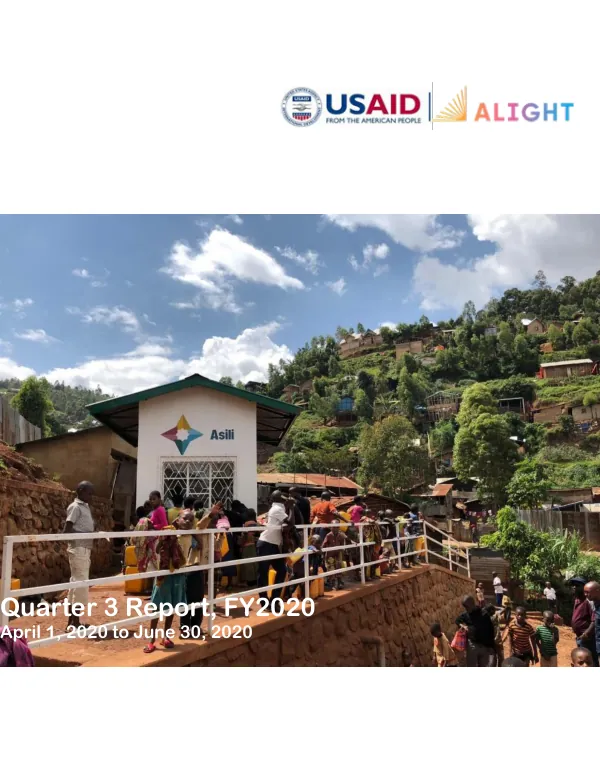
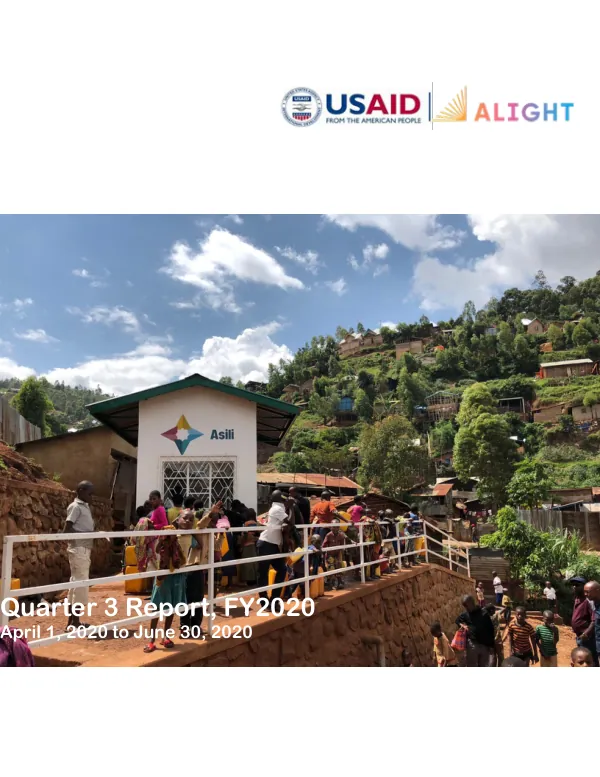
Quarter 3 Report, FY2020: Asili 2.0: Scaling for Sustainability in the Kivus
The agricultural development initiative in Asili 2.0 began in 2018 with funding from USAID's Global Development Alliance (GDA) cooperative agreement.
2020 · 14 pages
Sign in to readA free account is required to download.
Abstract
The project aims to create healthier, more resilient, economically empowered, and functional communities in South Kivu. The primary goal is to scale a sustainable social enterprise platform to provide bundled social services through a platform at scale. The project focuses on three key objectives: developing business models for the delivery of bundled social services, improving access to clean water and health services, and maintaining quality standards of clean water and health services. The project is divided into two phases: the first phase, which was implemented under the previous GDA, focused on building water, health, and agriculture business lines in four zones. The second phase, Asili 2.0, aims to build water and health business lines in six additional zones. The project is implemented in zones of approximately 25,000 people, with each zone having a health clinic and a water retail system. The health clinics provide primary health care services, and the water retail systems provide access to clean water. The project also aims to expand its services to include diagnostic services, dental health services, and scaling up clinic services to the health center level. The diagnostic center will provide PCR testing and laboratory services for COVID-19, as well as imaging services. The dental health clinic will provide basic oral health care services, including restorative dental care. The health center will provide a minimum package of care activities, including consultation, treatment, and maternity services. The project has made significant progress in the implementation of its objectives. The health care implementation in Zone 1 (Ciriri) and Zone 2 (Camp TV) is underway, with the consideration of alternative health services, including a diagnostic center, dental health clinic, and scaling up clinic services to the health center level. The project has also identified the need for a diagnostic center to improve the quality of care provided to its customers. The project has also made progress in the implementation of its business model, with the development of a unified brand, management tools, and practices. The project aims to ensure that its core business lines, healthcare and clean water sales, are demonstrating operational viability, with a goal of achieving $7,700/month of profit per zone. The project has also made progress in the implementation of its clean energy business line, with the completion of a pilot clean energy business line running. The project aims to expand its services to include clean energy services, which will provide a sustainable source of energy for the communities it serves.