GOVERNMENT OF GHANA
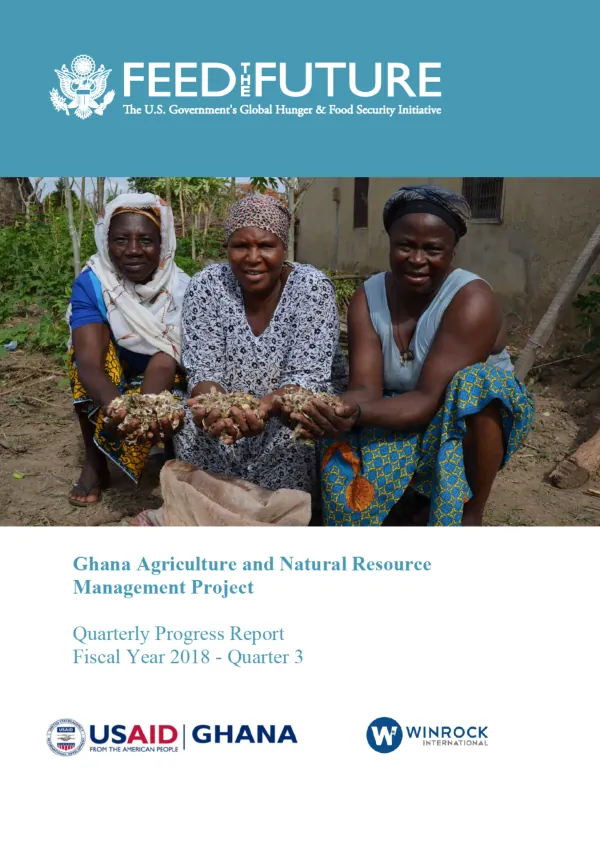
Feed the Future Ghana AgNRM Quarterly Progress Report (FY 2018|Quarter 3)
The Feed the Future Ghana Agriculture and Natural Resource Management (AgNRM) project is a five-year, $24,900,000 program that will run from May 2, 2016, to April 30, 2021.
2018 · 34 pages
Sign in to readA free account is required to download.
Abstract
It is the main vehicle within the United States Agency for International Development (USAID) Ghana's Feed the Future portfolio to address issues of environment and natural resource management (NRM) in northern Ghana. Winrock International implements AgNRM in partnership with the Nature Conservation Research Centre (NCRC) and the Center for Conflict Transformation and Peace Studies (CECOTAPS). The project supports USAID|Ghana's Development Objective 2 and the Ghana Feed the Future Multi-Year Strategy. Winrock's AgNRM approach builds on USAID's resilience strategy and its investments in the Feed the Future Zone of Influence (ZOI). Our approach focuses on mutually reinforcing, systemic changes that align with and augment the Government of Ghana's (GoG) Food and Agriculture Sector Development Policy, and the Nature, Wealth and Power (NWP) framework. Our conceptual model adds health as a fourth dimension to that framework, ensuring integration of food security and water systems and highlighting the importance of these factors to nutrition and resilience. The Winrock AgNRM team will achieve the project goal of poverty reduction through sustainable increases in wealth and nutrition from natural and non-traditional agriculture products by addressing environmental, agricultural, governance, and natural resource management (NRM) challenges. The AgNRM project interventions are expected to result in transformative change: adoption of improved practices, technologies, and behaviors; better functioning value chains and governance structures; more equitable access to land and resources; and increased capacity of organizations to improve NRM, address drivers of environmental degradation, and enhance rural livelihoods. AgNRM project activities are being implemented under four project outcomes: 1) Increased Incomes from Natural Resource Products (NRPs); 2) Improved Food and Nutritional Security; 3) Increased Farmer and Community Security/Access to Land and Natural Resources; and 4) Strengthened Environmental Stewardship. This progress report focuses on progress made toward achieving results under these four interrelated outcomes during FY 2018|Q3. Implementation of seasonally sensitive activities, including Climate Smart Agriculture interventions, moringa planting, and preparing for the 2018 shea collection and processing season, was prioritized this quarter. The team developed and continues to improve upon an integrated approach to address the needs of smallholder farmers, including the development of a comprehensive roadmap for the shea sector investments. The project has made significant progress in developing natural resource value chains, with a focus on the shea butter value chain. A comprehensive roadmap for shea sector investments has been developed, and efforts are being made to maximize market opportunities through private sector and collector/processing groups. The quality and quantity of shea products cultivated and produced have also increased. In addition to the shea value chain, the project has also made progress in promoting vegetable gardening and intensifying and diversifying climate smart technologies for production. The project has also strengthened capacities for modifications to existing livelihoods and improved nutrition, including improving access to finance and promoting time and labor-saving technologies. The project has also made progress in strengthening women's access to land and natural resources, with a focus on increasing understanding of land and water access rights and ownership. A clear hierarchy of resource access and use rights for each community has been established, and efforts are being made to improve management and conservation of selected watersheds and biodiversity corridors in the Volta Basin. Overall, the project has made significant progress in achieving its outcomes, with a focus on increasing incomes from natural resource products, improving food and nutritional security, increasing farmer and community security/access to land and natural resources, and strengthening environmental stewardship.
Related documents