USAID DEC
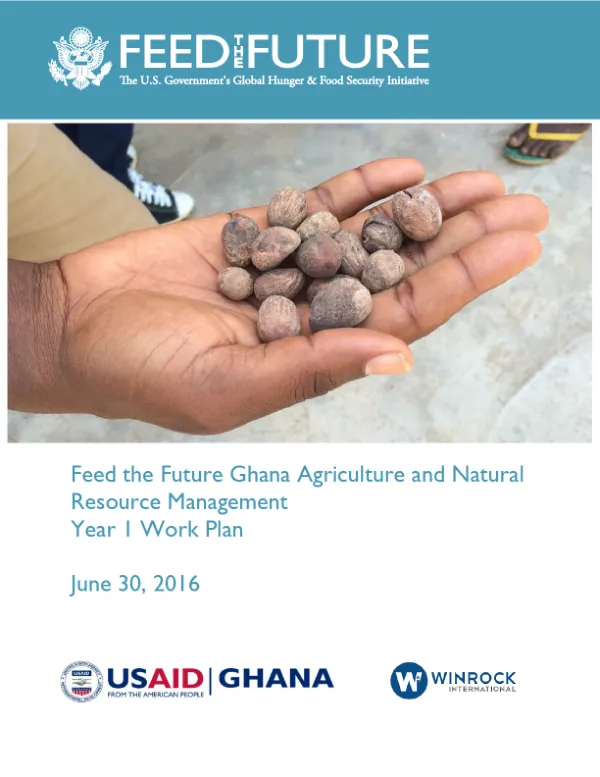
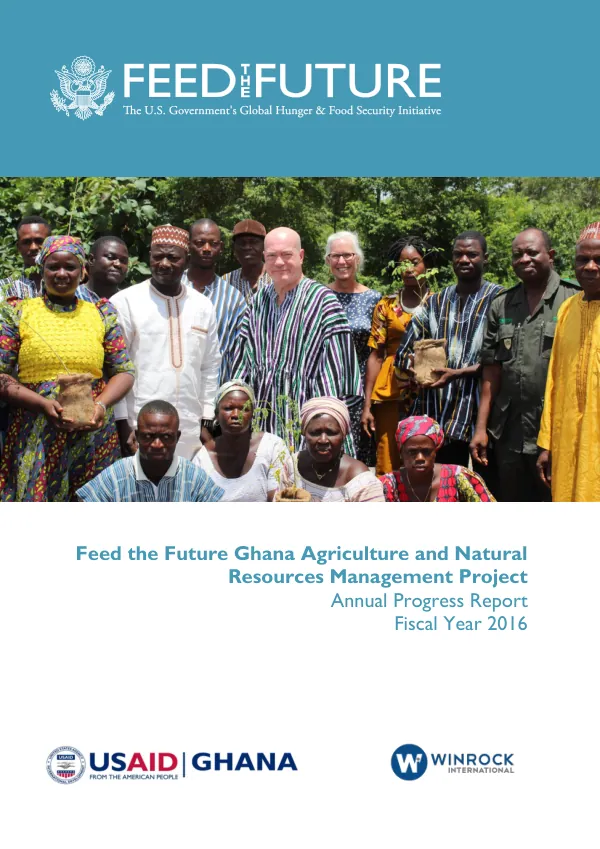
Feed the Future Ghana Agriculture and Natural Resources Management Project Annual Progress Report Fiscal Year 2016
Sign inGOVERNMENT OF GHANA
Feed the Future Ghana Agriculture and Natural Resources Management Project Annual Progress Report Fiscal Year 2016
The Feed the Future Ghana Agriculture and Natural Resource Management Project (AgNRM) is a five-year program implemented by Winrock International in partnership with TechnoServe, Nature Conservation Research Centre, and Center for Conflict Transformation and Peace Studies.
2016 · 19 pages
Sign in to readA free account is required to download.
Abstract
The project aims to address environmental and natural resource management issues in northern Ghana, with a focus on poverty reduction through sustainable increases in wealth and nutrition from natural and non-traditional agriculture products. The project is supported by USAID|Ghana's Development Objective 2 and the Ghana FtF Multi-Year Strategy. Winrock's AgNRM approach builds on USAID's resilience strategy and its investments in the FtF Zone of Influence (ZOI). The project's conceptual model adds health as a fourth dimension to the Nature, Wealth and Power (NWP) framework, ensuring integration of food security and water systems and highlighting the importance of these factors to nutrition and resilience. The AgNRM project interventions are expected to result in transformative change, including adoption of improved practices, technologies, and behaviors; better functioning value chains and governance structures; more equitable access to land and resources; and increased capacity of organizations to improve natural resource management, address drivers of environmental degradation, and enhance rural livelihoods. The project activities are being implemented under four project outcomes: 1) Increased Incomes from Natural Resource Products; 2) Improved Food and Nutritional Security; 3) Increased Farmer and Community Security/Access to Land and Natural Resources; and 4) Strengthened Environmental Stewardship. The project is being implemented in the Upper East, Upper West, and Northern Regions of Ghana, with a focus on the Government of Ghana's Food and Agriculture Sector Development Policy and the Nature, Wealth and Power (NWP) framework. The project's approach is based on mutually reinforcing, systemic changes that align with and augment the Government of Ghana's policies and frameworks. The project's implementation progress during the first five months (May 2, 2016, to September 30, 2016) has been focused on project start-up actions and activities. The project team has established a strong partnership with the Government of Ghana, including the Ministry of Food and Agriculture and the Forestry Commission. The project has also established a robust monitoring and evaluation system, including a monitoring and evaluation plan and a geographic information system (GIS) to track project progress and outcomes. The project has made significant progress in integrating cross-cutting issues, including stakeholder engagement and partnerships, communications, and gender integration. The project has also established a strong team, including a chief of party, a deputy chief of party, and a team of technical experts. The project's planned activities for the next reporting period include continued implementation of project interventions, including farmer training programs, infrastructure development, and market linkage facilitation. The project will also continue to monitor and evaluate project progress and outcomes, using a robust monitoring and evaluation system. The project's budget expenditures for FY 2016 and FY 2017 Q1 are projected to be $5,000,000 and $3,000,000, respectively. The project's projected expenditures for the next reporting period are expected to be $2,000,000. The project's deliverables for FY 2016 include the establishment of a strong partnership with the Government of Ghana, the development of a robust monitoring and evaluation system, and the implementation of project interventions, including farmer training programs, infrastructure development, and market linkage facilitation. The project's progress on its operations plan is also being tracked, including the mobilization of project staff and the procurement of project equipment. Overall, the AgNRM project is making significant progress in addressing environmental and natural resource management issues in northern Ghana, with a focus on poverty reduction through sustainable increases in wealth and nutrition from natural and non-traditional agriculture products. The project's approach is based on mutually reinforcing, systemic changes that align with and augment the Government of Ghana's policies and frameworks.