USAID DEC
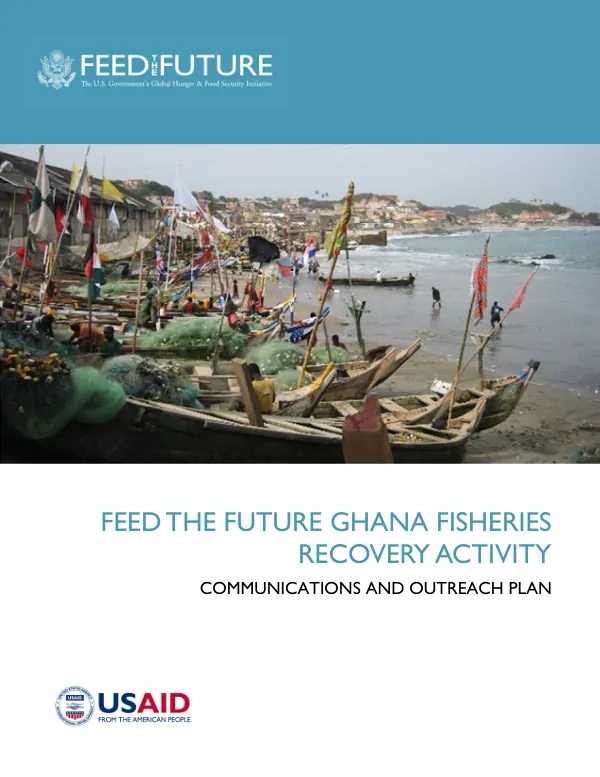
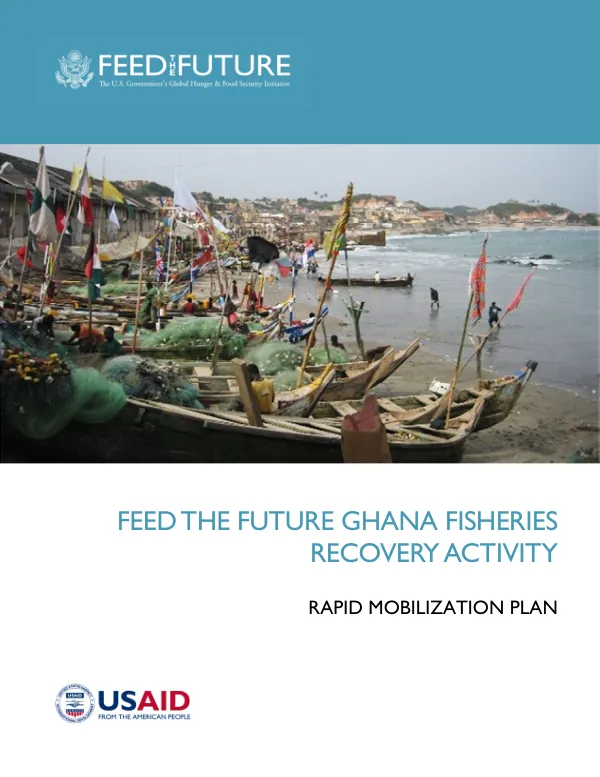
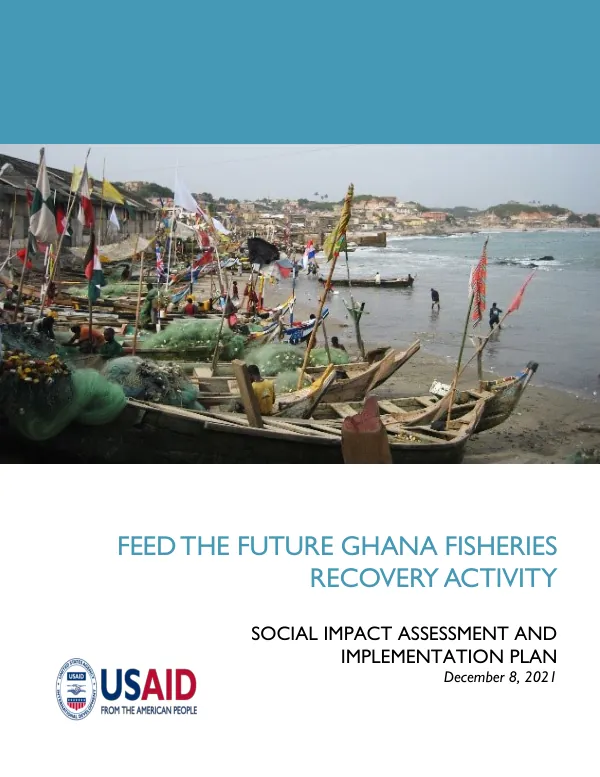
Feed the Future Ghana Fisheries Recovery Activity: Social Impact Assessment and Implementation Plan
Sign inTETRA TECH
Feed the Future Ghana Fisheries Recovery Activity: Social Impact Assessment and Implementation Plan
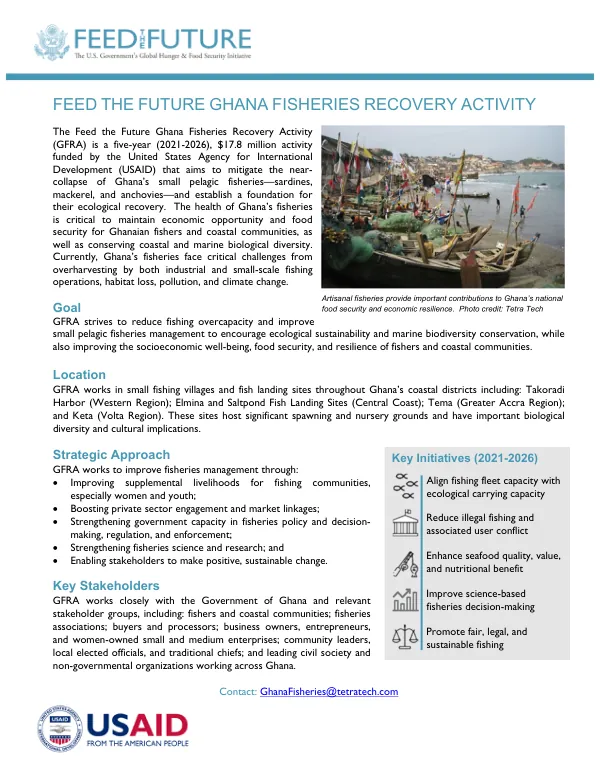
The Feed the Future Ghana Fisheries Recovery Activity (GFRA) is a project aimed at improving the livelihoods of fishing communities in Ghana.
2021 · 50 pages
Sign in to readA free account is required to download.
Abstract
The project is part of the Feed the Future initiative, a global effort to reduce poverty and hunger through sustainable agriculture and fisheries development. The GFRA project focuses on the recovery of the Ghanaian fisheries sector, which has been impacted by various challenges, including overfishing, habitat degradation, and climate change. The project's objectives are to improve the productivity and sustainability of the fisheries sector, enhance the livelihoods of fishing communities, and promote the adoption of sustainable fishing practices. To achieve these objectives, the project will implement various interventions, including the development of fisheries management plans, the establishment of landing beach enforcement committees, and the provision of training and capacity-building programs for fishing communities. The social impact assessment (SIA) for the GFRA project was conducted to identify and analyze the potential social impacts of the project's interventions. The SIA involved a comprehensive review of the project's objectives, activities, and expected outcomes, as well as consultations with stakeholders, including fishing communities, government agencies, and non-governmental organizations. The SIA identified several key social impacts that are likely to result from the project's interventions. These include improved livelihoods for fishing communities, increased access to markets and resources, and enhanced capacity for sustainable fishing practices. However, the SIA also identified potential negative social impacts, including displacement of fishing communities, loss of traditional fishing practices, and increased competition for resources. To mitigate these negative social impacts, the project will implement various measures, including the establishment of community engagement and participation mechanisms, the provision of training and capacity-building programs for fishing communities, and the development of fisheries management plans that take into account the needs and concerns of fishing communities. The project will also establish a monitoring and evaluation system to track the social impacts of the project's interventions and make adjustments as needed. This system will include regular surveys and assessments of fishing communities, as well as monitoring of project activities and outcomes. The GFRA project is expected to have a positive impact on the livelihoods of fishing communities in Ghana, while also promoting the adoption of sustainable fishing practices and contributing to the recovery of the Ghanaian fisheries sector. The project's social impact assessment and implementation plan provide a framework for ensuring that the project's interventions are socially responsible and beneficial to the communities they serve. The project's geographic focus is on the coastal regions of Ghana, where the majority of the country's fishing communities are located. The project will work with fishing communities, government agencies, and non-governmental organizations to implement its interventions and achieve its objectives. The project's timeframes are as follows: the project will be implemented over a period of three years, with the first year focused on project planning and preparation, the second year focused on project implementation, and the third year focused on project evaluation and closure. The project's recommendations are based on the social impact assessment and implementation plan, which provide a framework for ensuring that the project's interventions are socially responsible and beneficial to the communities they serve.
Related documents