TETRA TECH
Feed the Future Ghana Fisheries Recovery Activity
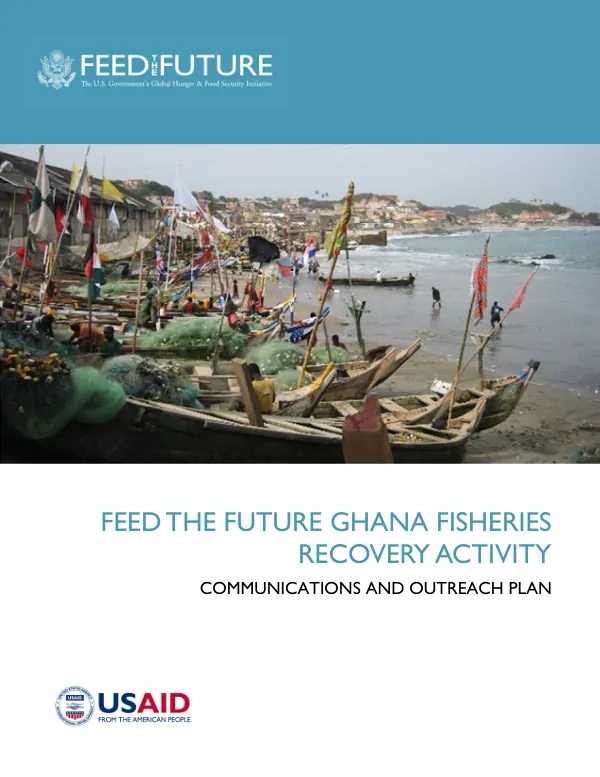
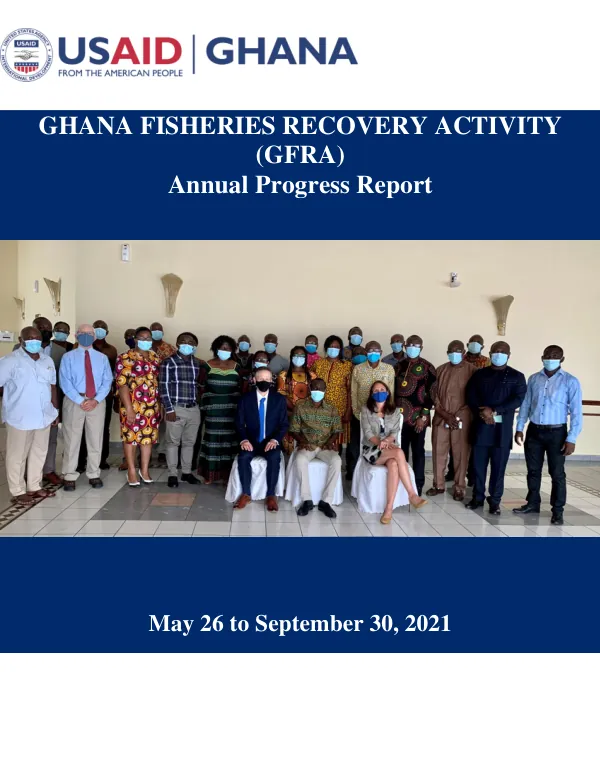
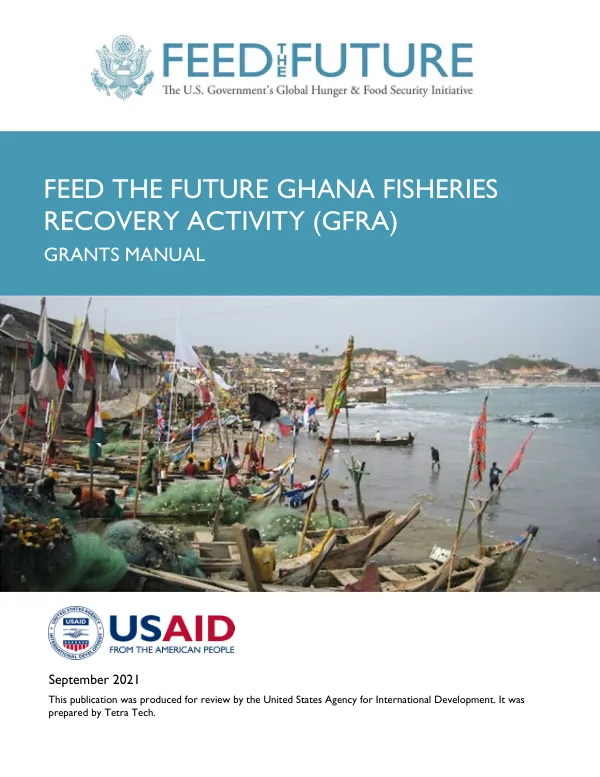
The Feed the Future Ghana Fisheries Recovery Activity (GFRA) is a five-year initiative aimed at mitigating the near-collapse of Ghana's small pelagic fisheries.
2021 · 1 pages
Sign in to readA free account is required to download.
Abstract
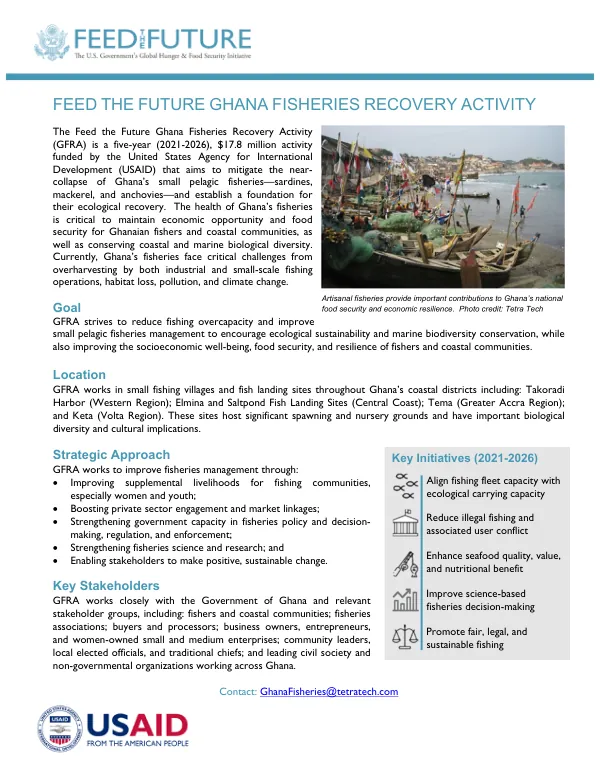
Funded by the United States Agency for International Development (USAID) with a budget of $17.8 million, the activity seeks to establish a foundation for the ecological recovery of sardines, mackerel, and anchovies. The health of Ghana's fisheries is crucial for maintaining economic opportunity and food security for Ghanaian fishers and coastal communities, as well as conserving coastal and marine biological diversity. Ghana's fisheries face critical challenges from overharvesting by both industrial and small-scale fishing operations, habitat loss, pollution, and climate change. To address these issues, GFRA strives to reduce fishing overcapacity and improve small pelagic fisheries management to encourage ecological sustainability and marine biodiversity conservation. The activity also aims to improve the socioeconomic well-being, food security, and resilience of fishers and coastal communities. GFRA operates in small fishing villages and fish landing sites throughout Ghana's coastal districts, including Takoradi Harbor, Elmina and Saltpond Fish Landing Sites, Tema, and Keta. These sites host significant spawning and nursery grounds and have important biological diversity and cultural implications. The activity works to improve fisheries management through a strategic approach that includes improving supplemental livelihoods for fishing communities, boosting private sector engagement and market linkages, strengthening government capacity in fisheries policy and decision-making, regulation, and enforcement, strengthening fisheries science and research, and enabling stakeholders to make positive, sustainable change. GFRA collaborates closely with the Government of Ghana and relevant stakeholder groups, including fishers and coastal communities, fisheries associations, buyers and processors, business owners, entrepreneurs, and women-owned small and medium enterprises, community leaders, local elected officials, and traditional chiefs, as well as leading civil society and non-governmental organizations working across Ghana. The activity's key initiatives include aligning fishing fleet capacity with ecological carrying capacity, reducing illegal fishing and associated user conflict, enhancing seafood quality, value, and nutritional benefit, improving science-based fisheries decision-making, and promoting fair, legal, and sustainable fishing practices. The artisanal fisheries sector provides important contributions to Ghana's national food security and economic resilience. GFRA's efforts aim to address the critical challenges facing Ghana's fisheries and promote sustainable fishing practices that benefit both the environment and the communities that depend on them. By improving fisheries management and promoting sustainable fishing practices, GFRA seeks to contribute to the long-term health and resilience of Ghana's fisheries and the communities that rely on them.