USAID DEC
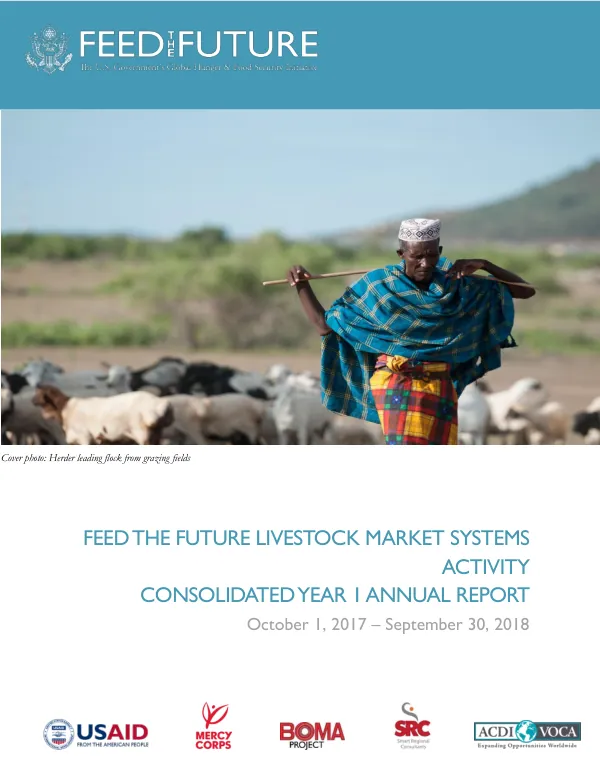
Feed the Future Kenya Livestock Market Systems Activity: Consolidated Year 1 Annual Report
Sign inACDI/VOCA
Feed the Future Kenya Livestock Market Systems Activity: Consolidated Year 1 Annual Report
The Feed the Future Livestock Market Systems Activity in Kenya began in October 2017 with a five-year period of activity.
2018 · 85 pages
Sign in to readA free account is required to download.
Abstract
The initiative aimed to expand economic opportunities for smallholder livestock farmers and their families. The activity was led by ACDI/VOCA, with funding from the United States Agency for International Development (USAID). The activity focused on three main objectives: expanded economic opportunities, strengthened institutions, systems, and governance, and collaborative action and learning for market systems change. Key activities included the establishment of a grants facility to support smallholder livestock farmers, the development of a ward development planning process to enhance community capacities, and the implementation of a climate change fund to support adaptation and resilience. In Year 1, the activity made significant progress in achieving its objectives. The grants facility provided support to over 1,000 smallholder livestock farmers, with a total value of $1.5 million. The ward development planning process was implemented in 15 wards, with a total of 30 community development plans developed. The climate change fund supported 10 projects, with a total value of $250,000. The activity also made progress in strengthening institutions, systems, and governance. The establishment of a grants facility and the development of a ward development planning process helped to enhance the capacity of local institutions to support smallholder livestock farmers. The activity also worked with government agencies to strengthen their capacity to support market systems development. In addition to its main objectives, the activity also focused on several cross-cutting objectives, including gender and female empowerment, youth, nutrition-sensitive agriculture, and water, sanitation, and hygiene (WASH). The activity implemented several initiatives to support these objectives, including the establishment of a girls' empowerment model and the implementation of a nutrition-sensitive agriculture program. The activity faced several challenges in Year 1, including delays in the implementation of the ward development planning process and difficulties in accessing funding for the climate change fund. However, the activity was able to adapt to these challenges and make significant progress in achieving its objectives. The activity's achievements in Year 1 were significant, with over 1,000 smallholder livestock farmers benefiting from the grants facility and 30 community development plans developed through the ward development planning process. The activity also made progress in strengthening institutions, systems, and governance, and in achieving its cross-cutting objectives. The activity's success was due in part to its strong partnerships with local institutions, government agencies, and other stakeholders. The activity also made significant progress in adapting to changing circumstances and in addressing the challenges it faced. Overall, the Feed the Future Livestock Market Systems Activity in Kenya made significant progress in Year 1, achieving its main objectives and making progress in its cross-cutting objectives. The activity's success was due in part to its strong partnerships and its ability to adapt to changing circumstances.