ABT. GLOBAL
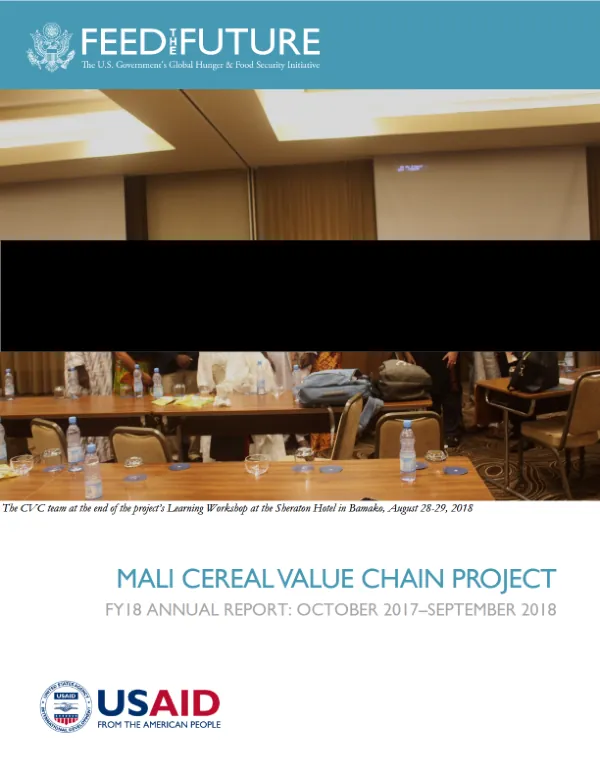
Mali Cereal Value Chain Project FY18 Annual Report
The Mali Cereal Value Chain Project is a USAID-funded initiative aimed at increasing agricultural productivity, expanding markets and trade, and strengthening local capacities and systems.
2018 · 54 pages
Sign in to readA free account is required to download.
Abstract
The project's primary objective is to improve the livelihoods of rural communities in Mali by enhancing their access to quality inputs, markets, and financial services. Agricultural productivity in irrigated and dryland systems was a key focus area for the project. Technology development, dissemination, and management were critical components of this effort. During the 2017/2018 cropping season, the project disseminated technologies through diffusion plots and farmers' field days. This approach enabled farmers to learn about and adopt new agricultural practices, leading to improved crop yields and increased income. The project also supported the development of economically viable irrigation systems, which expanded access to water for farmers. Soil and water management techniques were improved through the implementation of conservation agriculture practices, such as crop rotation and cover cropping. These efforts resulted in increased crop yields and improved soil health. Market expansion and trade were also key components of the project. Market-driven, value-added products were introduced, and sustainable farm-to-market linkages and access to markets were strengthened. Post-harvest handling and processing were improved, and access to demand-driven support services was enhanced. These efforts resulted in increased market access and improved prices for farmers. The project also focused on increasing the resilience of vulnerable communities and households. Income streams were diversified, and asset-building strategies were employed. Drought-resilient cropping systems were adopted at scale, and appropriate food storage facilities were made available. Community literacy, numeracy, and nutrition practices were also improved. Capacity building was a critical component of the project. Local organizations were strengthened to receive USAID funds, and the capacity of producer groups and water user associations was improved. Capacity building of financial services providers and extension and advisory service providers was also undertaken. These efforts resulted in improved local capacities and systems. Gender mainstreaming was a cross-cutting component of the project. Women's engagement and participation in project activities were increased, and awareness was created on the gender approach and nutritional value of cowpea and Moringa. Female agro-entrepreneurship was promoted, and coaching was provided to mixed producer organizations and female cereal processors. Monitoring and evaluation were critical components of the project. The project's annual work plan was shared with implementing partners, and progress was regularly monitored and evaluated. Communication and project management were also key components of the project, with regular updates and reports provided to stakeholders. The Mali Cereal Value Chain Project has made significant progress in improving agricultural productivity, expanding markets and trade, and strengthening local capacities and systems. The project's efforts have resulted in increased crop yields, improved market access, and improved livelihoods for rural communities in Mali.