USAID DEC
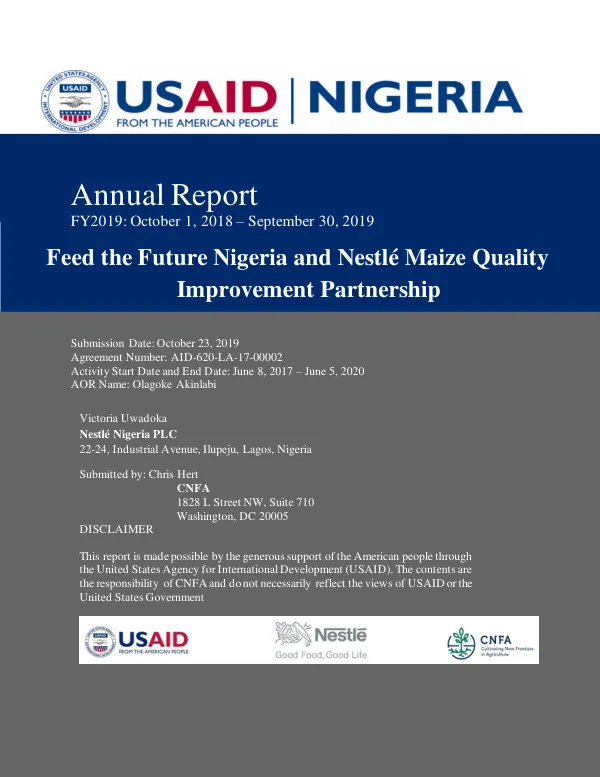
Feed the Future Nigeria and Nestlé Maize Quality Improvement Partnership 2019 Annual Report
Sign inCNFA, INC.
Feed the Future Nigeria and Nestlé Maize Quality Improvement Partnership 2019 Annual Report
The Feed the Future Nigeria and Nestlé Maize Quality Improvement Partnership aims to enhance quality, safety, and transparency in Nigeria's grain supply chain through a whole-of-supply-chain approach.
2019 · 14 pages
Sign in to readA free account is required to download.
Abstract
The project works with multiple stakeholders, including smallholder farmers, input suppliers, grain aggregators, Nestlé, and local governments to improve the quality and quantity of maize and soy in Kaduna State by decreasing levels of aflatoxins, fumonisins, and aluminum. The project's comprehensive mapping exercise identifies areas of high levels of contaminants followed by training and support at each level of the supply chain to reduce levels of contamination to meet high quality standards set by Nestlé. Training curriculums were developed in conjunction with Nestlé and partner Purdue University. Over 30,000 beneficiaries are being trained by project staff and local volunteers in effective mitigation measures to reduce the levels of targeted contaminants in maize and soy, increasing the available supply of safe, high quality maize and soy. During the fourth quarter of FY 2019, the activity continued with the training of beneficiaries on various ways of mitigating aflatoxin, fumonisins, and aluminum. A total of 1,067 new beneficiaries were trained, comprising 845 farmers, 73 community-based organization members, 25 staff of non-Nestlé aggregators, 38 staff of agro-input dealers, 61 farm laborers, and 25 staff of grain merchants. The trainings were on strategies for mitigating contaminants, method of application of Aflasafe, and controlling major pest and diseases of maize and soybeans. The team also continued farm visits to beneficiaries as an additional way of empowering them. A total of 6,341 beneficiaries were visited by Extension Agents during this quarter to ensure that they were following the trainings they received on Good Agricultural Practices (GAP), especially on weed control as well as pest and disease control. The beneficiaries visited included 2,341 new beneficiaries and 4,000 continuing beneficiaries. The project continued with the implementation of 48 demonstration plots, which were established in the third quarter. BASF is collaborating with the activity on 18 of the plots. The broadcast of the Hausa sensitization radio program on the dangers of contaminants on humans was continued. During the fourth quarter, a total of 1,627,118 people were projected to have listened to the program regularly. The activity also continued with dissemination of technical messages on GAP and other topics to beneficiaries through WhatsApp and text messages. Over 4,600 recipients were reached through these channels. The focus in year 2 for the project was the reduction of the levels of contaminants in both maize and soybeans. It was noted this year that aggregators were not able to source sufficient quantities of soybeans in the project area to meet Nestlé needs. To accommodate this, the project increased its geographic focus to include three additional soybean-producing LGAs in Maigana zone and three LGAs in Samaru zone. The total number of beneficiaries (years 1 and 2) is 33,590, comprising 22,733 males and 10,857 females. The project's geographic coverage includes Kaduna State, Nigeria, with a focus on maize and soy value chains. The reporting period for this report is October 1, 2018 – September 30, 2019. The project's implementing partner is CNFA, with Nestlé as the major counterpart organization. The project's activity start date and end date are June 8, 2017 – June 5, 2020, with an agreement number of AID-620-LA-17-00002.