CNFA, INC.
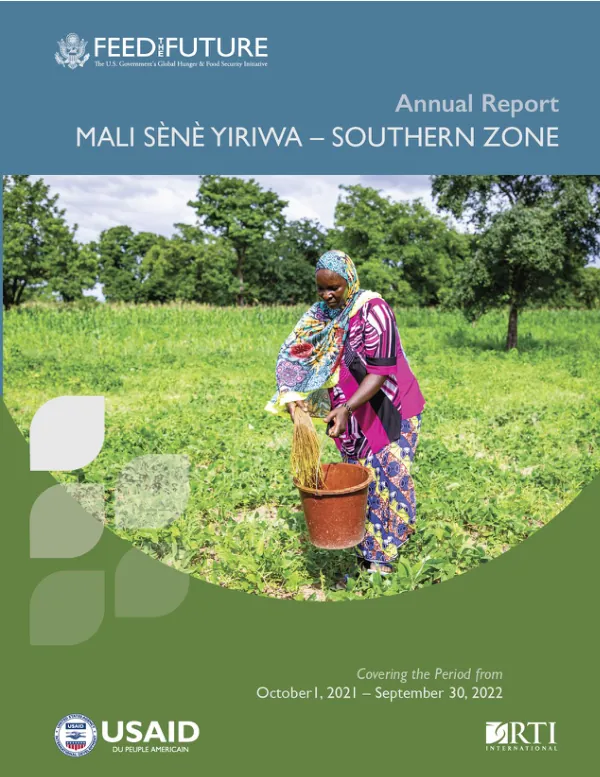
FY 2022 Annual Report- Feed the Future Mali Sene Yiriwa -Southern Zone
The Feed the Future Mali Sènè Yiriwa – Southern Zone cooperative agreement, funded by the United States Agency for International Development (USAID), aimed to strengthen cooperatives in delivering inclusive, diversified extension and nutrition advisory services.
2022 · 76 pages
Sign in to readA free account is required to download.
Abstract
The initiative began on January 13, 2021, and concluded on January 12, 2026. Cooperative identification and evaluation were key components of the program. Training and capacity building for Cooperative Village Extension Agents (VEAs) and leaders were also essential in developing agricultural service teams. By the end of the fiscal year 2022, more than 2,500 farmers had received training in sustainable agriculture techniques. The program focused on three main objectives: strengthening cooperatives, increasing adoption of conservation agriculture (CSA) technologies and practices, and improving farmers' decision-making with digital, field-based solutions. To achieve these objectives, the program implemented various sub-objectives, including developing extension service packages, offering training and services by cooperatives, and establishing early warning services for pests, diseases, and weather events. In terms of geographic focus, the program targeted the Southern Zone of Mali, with a specific emphasis on the Bougouni Circle. The initiative also prioritized women's economic and social empowerment, youth empowerment and engagement in agriculture, nutrition-sensitive agriculture, research, technology, and innovation, and resilience. The program's implementation involved various stakeholders, including cooperatives, Sugu Yiriwa (CNFA), Relais Communautaires (ReComs), and other actors. The initiative also collaborated with key partners and stakeholders to integrate nutrition-sensitive activities and provide nutritional counseling services to members. The program's digital framework design aimed to collect digital data and provide data-driven services to cooperatives. Deployment in the field involved integrating digital tools and local technical resources to support decision-making. Monitoring for Results (M4R) data integration between Sènè and Sugu Yiriwa in the Southern Zone was also a key component of the program. The program's achievements in fiscal year 2022 included the identification and commitment of cooperatives to develop and self-manage agricultural service teams. Cooperatives also developed services that linked producers to the market and facilitated the provision of nutritional counseling services to their members. The program's adoption of CSA technologies and practices showed significant progress, with a 27% increase in household income among program participants compared to the control group. The program's geographic focus and context were critical in achieving its objectives. The Southern Zone of Mali presented unique challenges, including soil degradation and limited market access. However, the program's implementation and partnerships helped to address these challenges and improve the lives of farmers and their families. The program's timeframes and recommendations were critical in ensuring its success. The initiative's five-year duration allowed for sustained implementation and evaluation. Recommendations for future programs included continued support for cooperatives, increased adoption of digital solutions, and a focus on women's economic and social empowerment. Overall, the Feed the Future Mali Sènè Yiriwa – Southern Zone cooperative agreement demonstrated significant progress in achieving its objectives. The program's implementation and partnerships helped to strengthen cooperatives, increase adoption of CSA technologies and practices, and improve farmers' decision-making with digital, field-based solutions.