USAID DEC
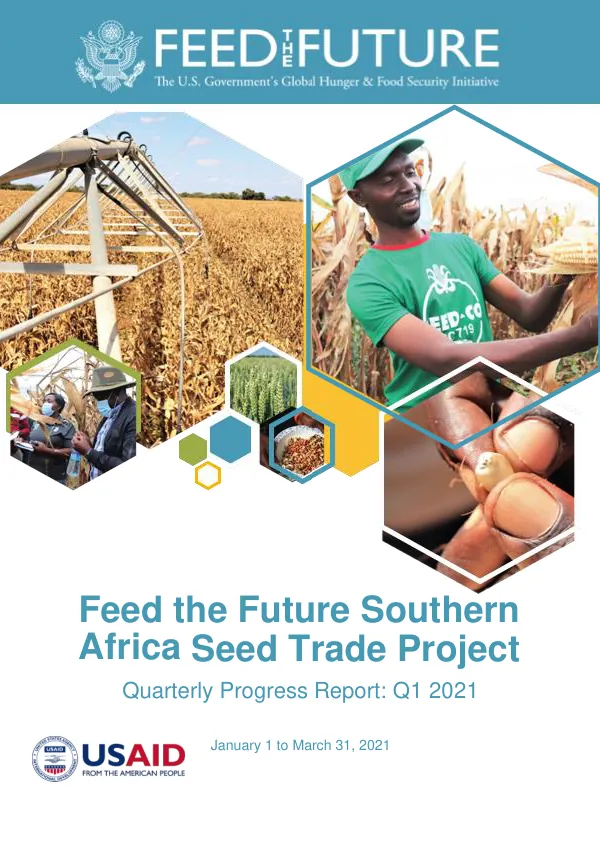
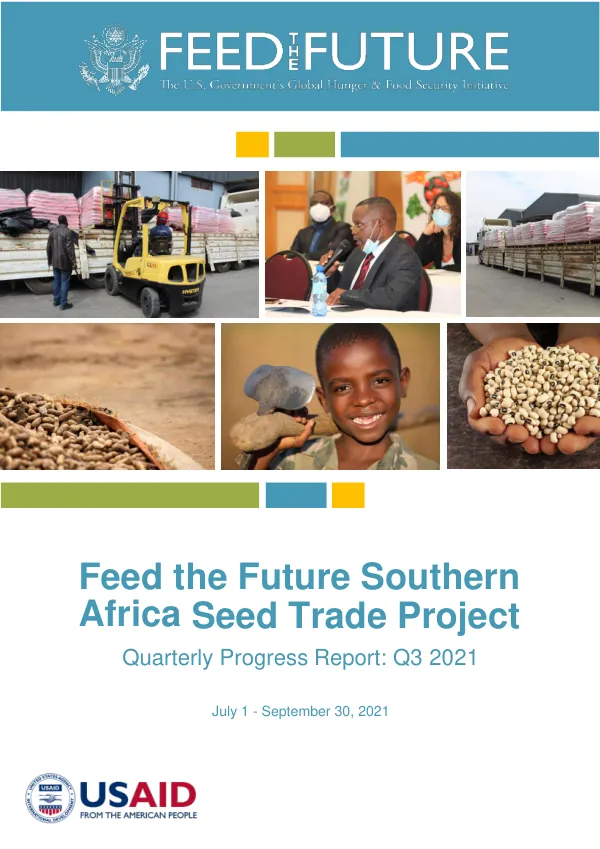
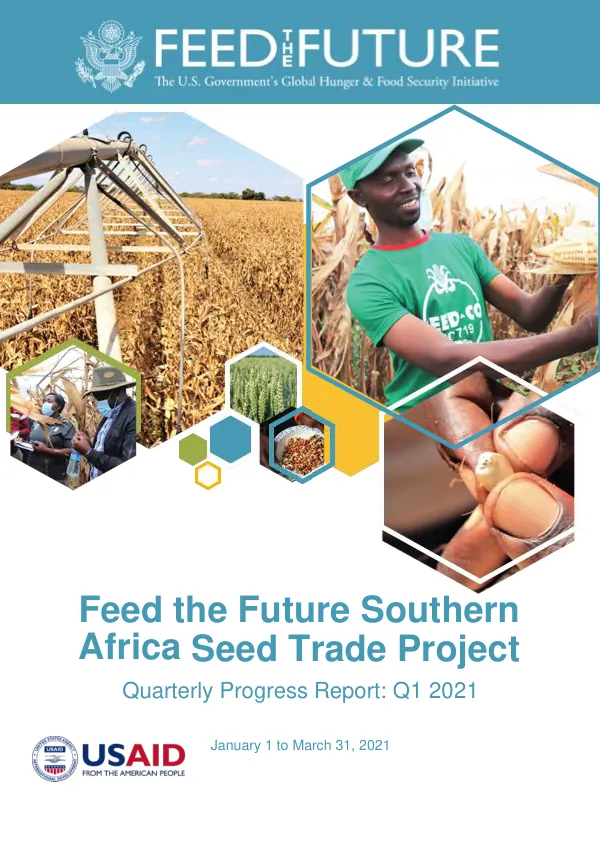
Feed the Future Southern Africa Seed Trade Project Quarterly Progress Report: Q1 2021
Sign inDAI GLOBAL, LLC
Feed the Future Southern Africa Seed Trade Project Quarterly Progress Report: Q1 2021
The Feed the Future Southern Africa Seed Trade Project is a five-year initiative with a one-year extension, funded by the United States Agency for International Development (USAID) and implemented by DAI Global, LLC.
2021 · 59 pages
Sign in to readA free account is required to download.
Abstract
The primary goal of the project is to improve the availability of and access to high-quality seed in the Southern African Development Community (SADC) countries. The project aims to support SADC and Member States' leadership in harmonizing policies and regulations governing seed trade in the region. It facilitates seed trade across the region, integrating small and isolated national markets into one larger SADC-wide market for seeds. The project focuses on four main objectives: increasing the availability of improved seeds, increasing the availability of technologies, management practices, and innovation, improving regional policies to support agricultural growth, and promoting a more efficient seed system and subsequent farming systems. The project's work has spill-over effects in the remaining 12 SADC Member States, in addition to its focus countries, Malawi, Mozambique, Zambia, and Zimbabwe. It shares technologies, innovations, and management practices with target countries to improve seed value chains and promote a more efficient seed system and subsequent farming systems. Private seed companies have demonstrated confidence in the SADC Harmonized Seed Regulatory System (HSRS) by committing to scale-up production and trade of high-quality seed under the system during the 2020/21 planting season. In Q1 2021, Seed Co Zambia Ltd. planted hybrid maize seed in Serenje and Mkushi districts, while Lake Agriculture planted in Lusaka, Kabwe, and Mkushi districts. The success of these pilots has led to increased access to all 16 SADC markets and ease of trade across borders. The project has also made progress in ensuring the sustainability of the SADC HSRS, which will be the ongoing focus for the remainder of the project. The project's major partners include the SADC Food, Agriculture, and Natural Resources Directorate, SADC Plant Genetic Resources Centre, SADC Seed Centre, and other regional and national institutions. The project's cross-cutting issues include private-public partnerships, gender and disadvantaged groups mainstreaming, civil society and partner institution engagement, and adherence to the Feed the Future principles. The project's work has the potential to increase agricultural productivity and profitability, resiliency, and subsequent food and nutrition security in the SADC region. In Q1 2021, the project continued to make progress in implementing its work plan, with a focus on ensuring the sustainability of the SADC HSRS. The project's progress is expected to have a positive impact on the seed trade sector in the SADC region, leading to increased access to high-quality seed and improved agricultural productivity and profitability. The project's success is dependent on the continued commitment of its partners, including private seed companies, regional and national institutions, and other stakeholders. The project's work is expected to have a lasting impact on the seed trade sector in the SADC region, leading to improved agricultural productivity and profitability, and subsequent food and nutrition security. The project's focus on harmonizing policies and regulations governing seed trade in the region is expected to lead to increased access to all 16 SADC markets and ease of trade across borders. The project's work is also expected to promote a more efficient seed system and subsequent farming systems, leading to improved agricultural productivity and profitability. The project's progress in Q1 2021 is a significant step towards achieving its goals and objectives. The project's continued commitment to ensuring the sustainability of the SADC HSRS is expected to have a positive impact on the seed trade sector in the SADC region, leading to improved agricultural productivity and profitability, and subsequent food and nutrition security.