USAID DEC
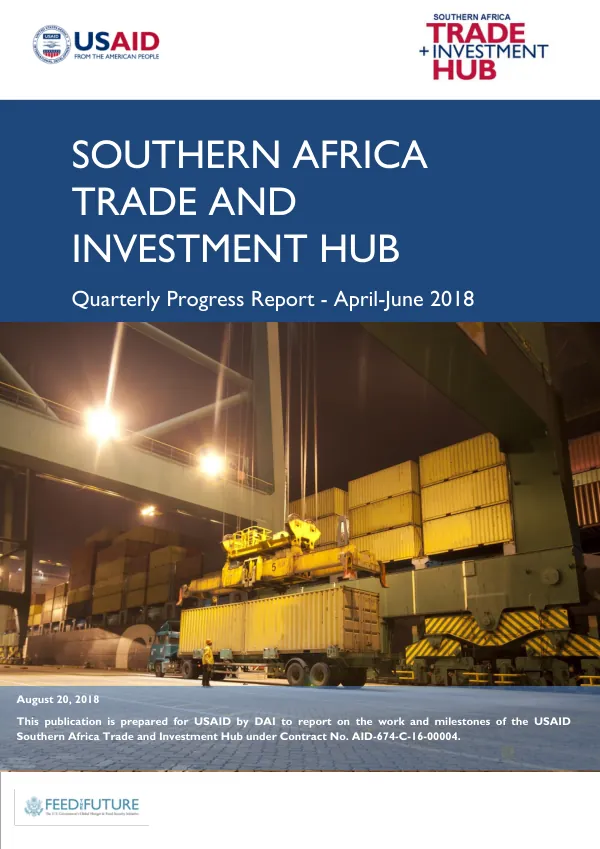
Southern Africa Trade and Investment Hub Quarterly Progress Report - April-June 2018
Sign inDAI
Southern Africa Trade and Investment Hub Quarterly Progress Report - April-June 2018
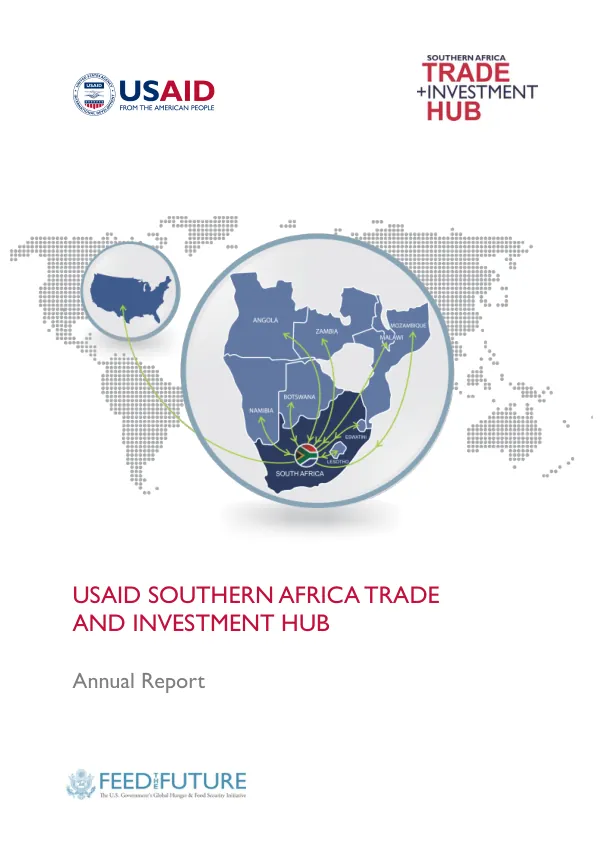
The Southern Africa Trade and Investment Hub is a USAID-funded project aimed at strengthening regional and multi-lateral trade and investment agreements and support institutions in the Southern African Development Community (SADC) countries.
2018 · 59 pages
Sign in to readA free account is required to download.
Abstract
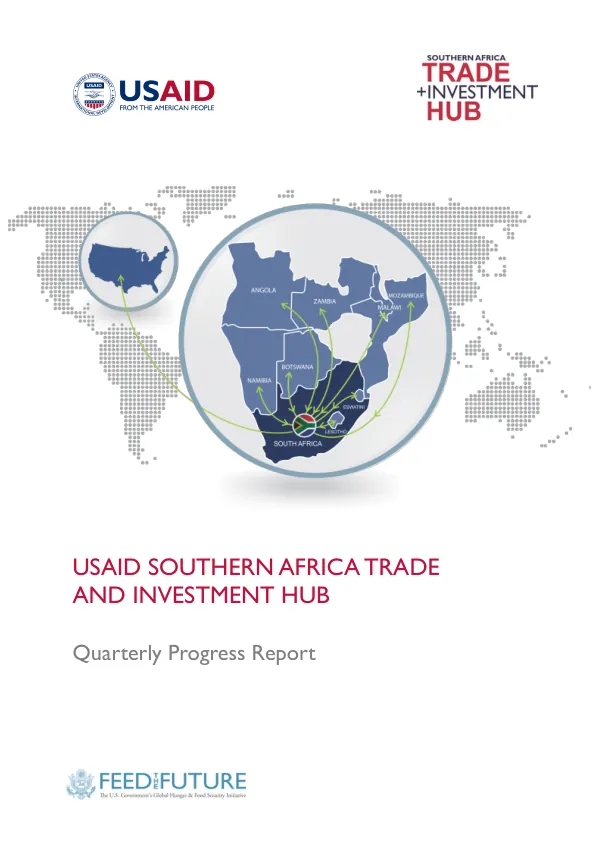
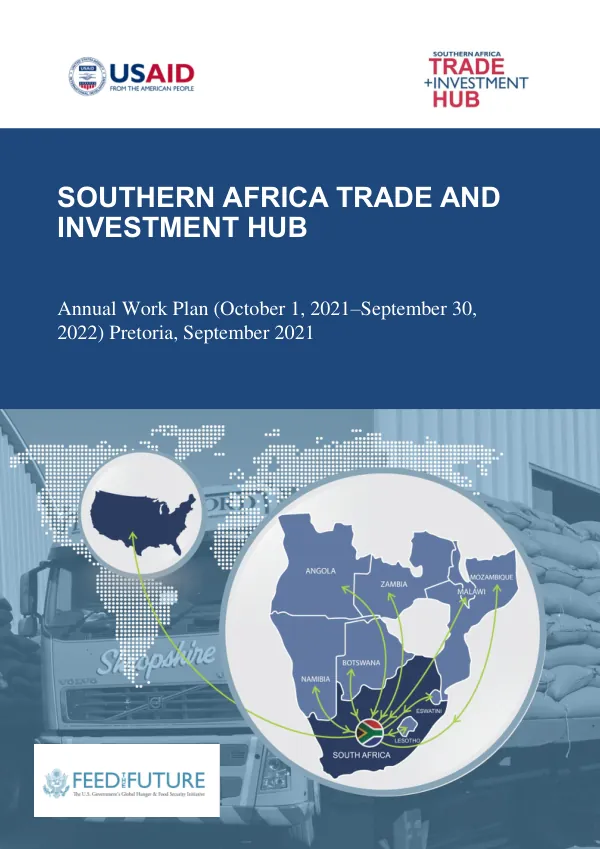
The project has four components: Finance and Investment, Export Competitiveness, Agribusiness Trade, and Enabling Environment and Trade Facilitation. The Finance and Investment component focuses on banking, structured trade, finance, and investment, as well as finance and investment policy, and investment facilitation and funding platform development. The Export Competitiveness component implements activities to achieve results through trade and export promotion, and building capacity to increase utilization of the African Growth and Opportunity Act (AGOA). The Agribusiness Trade component implements four strategies to achieve results, including supporting structured trading of staple food crops, improving trade of inputs and services, facilitating systemic use of new agricultural technologies, and supporting trade in key non-staple value chains. The Enabling Environment and Trade Facilitation component implements activities through harmonizing the application of Sanitary and Phytosanitary (SPS) and Technical Barriers to Trade (TBT) measures, measuring and intervening to improve the time and costs to trading along key SADC regional corridors, enabling the private sector to overcome trade, logistics, and business development constraints, and supporting the implementation of measures to facilitate trade. The project locations include SADC countries such as South Africa, Botswana, Zambia, Namibia, Eswatini, Malawi, Mozambique, and Lesotho. The project aims to improve regional trade and investment enabling environment, increase competitiveness of target value chains, and increase non-oil exports under AGOA. In the third quarter of 2018, the project implemented various activities and accomplishments, including finance and investment activities, export competitiveness activities, agribusiness trade activities, and enabling environment and trade facilitation activities. The project also reported on lessons learned, finance and investment, export competitiveness, agribusiness trade, and enabling environment and trade facilitation. The project's quarterly progress report highlights the importance of regional and multi-lateral trade and investment agreements and support institutions in promoting economic growth and development in the SADC region. The report also emphasizes the need for a conducive business environment that supports trade and investment, and the importance of addressing non-tariff barriers to trade and improving trade facilitation measures. The project's activities and accomplishments in the third quarter of 2018 demonstrate its commitment to achieving its project goals and expected accomplishments. The project's focus on finance and investment, export competitiveness, agribusiness trade, and enabling environment and trade facilitation is expected to contribute to improved regional trade and investment enabling environment, increased competitiveness of target value chains, and increased non-oil exports under AGOA. The project's geographic focus is on the SADC countries, with a specific emphasis on South Africa, Botswana, Zambia, Namibia, Eswatini, Malawi, Mozambique, and Lesotho. The project's timeframes are not explicitly stated, but it is expected to continue until its completion. The project's recommendations are not explicitly stated, but it is expected that the project's findings and recommendations will inform future trade and investment policies and programs in the SADC region. The project's overall goal is to promote economic growth and development in the SADC region through improved regional trade and investment enabling environment, increased competitiveness of target value chains, and increased non-oil exports under AGOA.