DAI
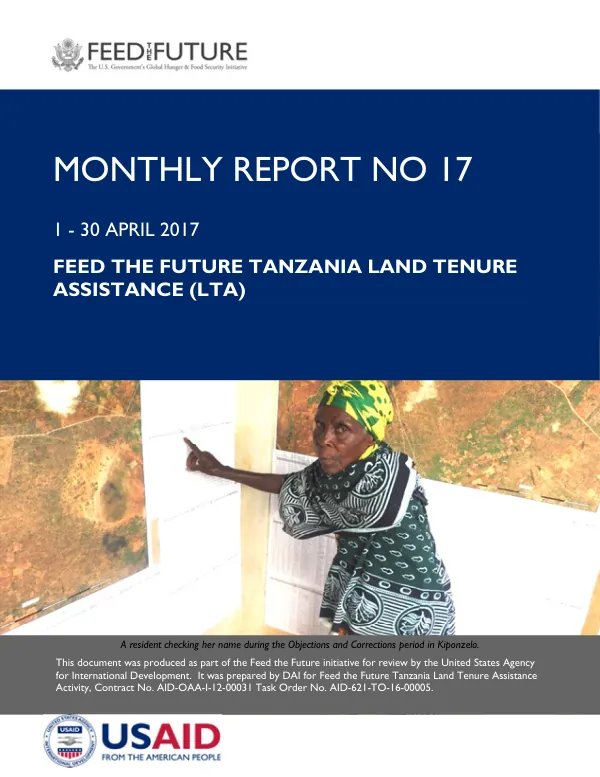
Feed the Future Tanzania Land Tenure Assistance (LTA) Monthly Report April 2019
Land Tenure Assistance (LTA) in Tanzania is a key component of the Feed the Future initiative, aimed at improving agricultural productivity and food security.
2019 · 39 pages
Sign in to readA free account is required to download.
Abstract
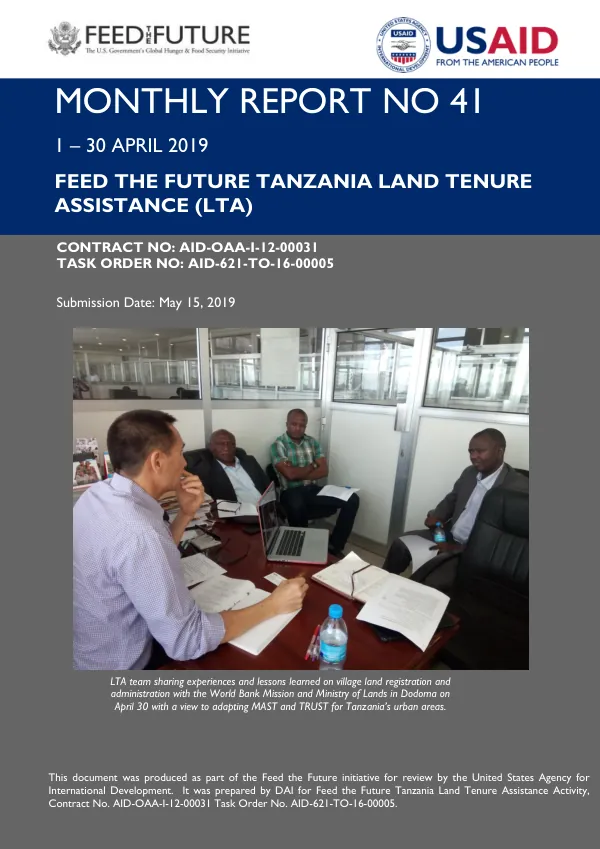
The LTA program is implemented by DAI for the United States Agency for International Development (USAID) in Tanzania. The program focuses on strengthening land tenure security, improving land use planning, and enhancing the capacity of local governments to manage land administration. The LTA team has been working closely with the World Bank Mission and the Ministry of Lands in Dodoma to adapt the Master and Sub-registry (MAST) and Technical Register Under Social Tenure (TRUST) systems for Tanzania's urban areas. This collaboration aims to improve the efficiency and effectiveness of land administration in Tanzania. In April 2019, the LTA team conducted a series of activities to support the implementation of the program. These activities included training for farmers, infrastructure development, and market linkage facilitation. The team also worked with regional and district land officials, village representatives, and residents to rectify village boundaries and establish detailed village settlement plans. The LTA program has made significant progress in improving land tenure security and enhancing agricultural productivity in Tanzania. The program has also contributed to the development of the country's land administration system, with a focus on improving the efficiency and effectiveness of land registration and administration. The LTA team has been working closely with local stakeholders, including farmers, village leaders, and local government officials, to ensure that the program is responsive to the needs of the communities it serves. The team has also been working to address implementation challenges and administration and management issues that have arisen during the program. The LTA program has been monitoring and evaluating its progress through a range of indicators, including the number of village land use plans and detailed village settlement plans completed, the number of village boundary rectifications, and the number of disputes resolved. The program has also been tracking its progress against its key performance indicators (KPIs), including the number of farmers trained in sustainable agriculture practices and the number of households benefiting from improved land tenure security.