USAID DEC
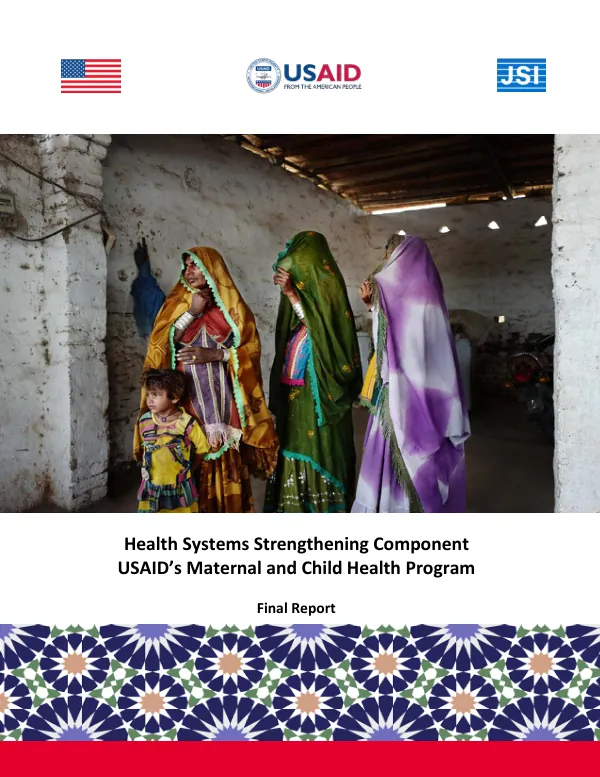
Final Report: Health Systems Strengthening Component of USAID's Maternal and Child Health Program
Sign inDEPARTMENT OF HEALTH
Final Report: Health Systems Strengthening Component of USAID's Maternal and Child Health Program
Health Systems Strengthening Component of USAID's Maternal and Child Health Program in Pakistan was a five-year project (2013-2018) implemented by JSI Research & Training Institute, Inc.
2018 · 51 pages
Sign in to readA free account is required to download.
Abstract
with partners CONTECH International, the Rural Support Program Network (RSP), and Heartfile Health Financing. The project aimed to strengthen the health systems in Pakistan, particularly in Sindh province, to improve maternal and child health services. The project focused on five key areas: increasing accountability and transparency of health systems, improving health management capacity, strengthening the role of the private sector, health systems strengthening at the federal level, and key performance indicators. The project also aimed to support the Pakistani government in decentralizing the country's health system, giving provinces a greater role in setting health sector strategies, policies, and financing. In Sindh, the project worked with the Department of Health to improve its ability to manage how RMNCH services are provided to citizens. The project also supported the establishment of the Sindh Health Care Commission, which aimed to regulate and improve the quality of healthcare services in the province. Additionally, the project supported the development of the Sindh Health Information System, which aimed to provide accurate and timely data on health services in the province. The project also implemented several interventions to improve health services in Sindh, including the establishment of a health financing model, which aimed to increase access to healthcare services for the poor. The project also supported the development of a health facility assessment tool, which aimed to improve the quality of healthcare services in public and private facilities. The project achieved several key achievements, including a 95% increase in tetanus toxoid vaccination coverage among pregnant women in four districts of Sindh. The project also supported the development of a health information system, which provided accurate and timely data on health services in the province. Additionally, the project supported the establishment of a health financing model, which aimed to increase access to healthcare services for the poor. The project also supported the development of a health facility assessment tool, which aimed to improve the quality of healthcare services in public and private facilities. The project also supported the establishment of a health systems strengthening unit at the federal level, which aimed to provide technical support to provinces in strengthening their health systems. The project also supported the development of a health information system, which provided accurate and timely data on health services in the province. The project also supported the establishment of a health financing model, which aimed to increase access to healthcare services for the poor. The project's key performance indicators included the increase in tetanus toxoid vaccination coverage among pregnant women, the increase in the number of health facilities with improved quality of services, and the increase in the number of health workers trained in maternal and child health services. The project also supported the development of a health information system, which provided accurate and timely data on health services in the province. The project's lessons learned included the importance of engaging with stakeholders at all levels of government, the need for a strong and effective health information system, and the importance of supporting the development of a health financing model. The project also highlighted the need for a sustained commitment to health systems strengthening, particularly in the context of decentralization. The project's way forward included the continued support for the health systems strengthening unit at the federal level, the continued development of the health information system, and the continued support for the health financing model. The project also recommended the establishment of a health systems strengthening unit at the provincial level, which would provide technical support to districts in strengthening their health systems.
Related documents