USAID
Final Report: Nuevo Relleno Sanitario Municipal
The municipal solid waste management project in Viacha, Bolivia, was initiated in response to concerns about the environmental and health impacts of the existing waste disposal site.
2013 · 2 pages
Sign in to readA free account is required to download.
Abstract
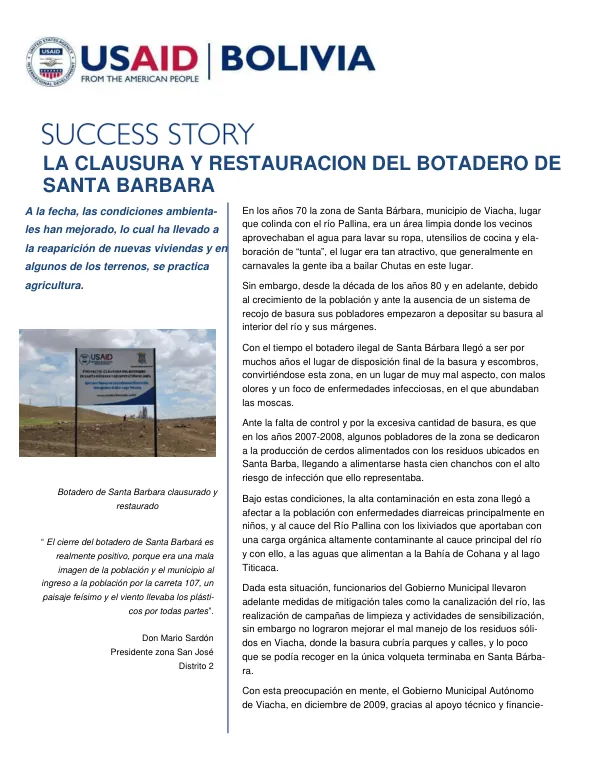
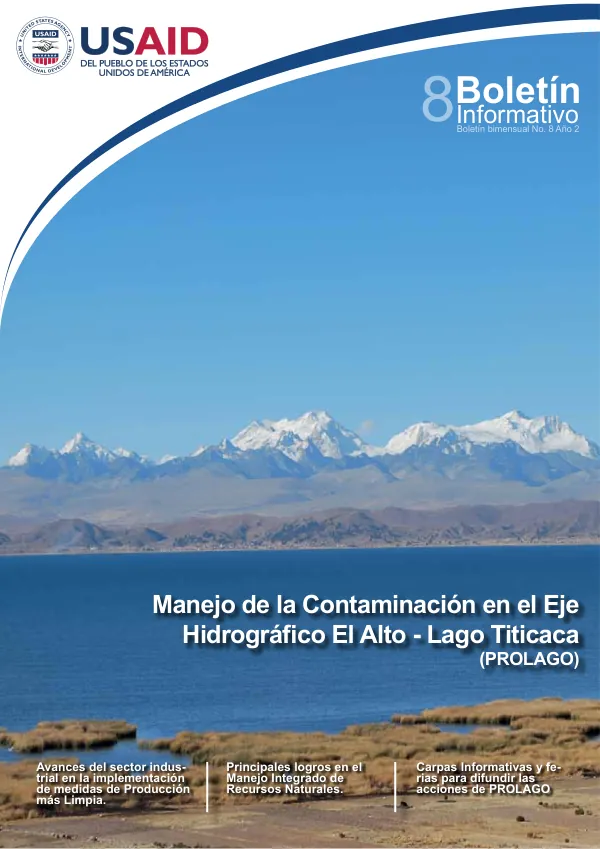
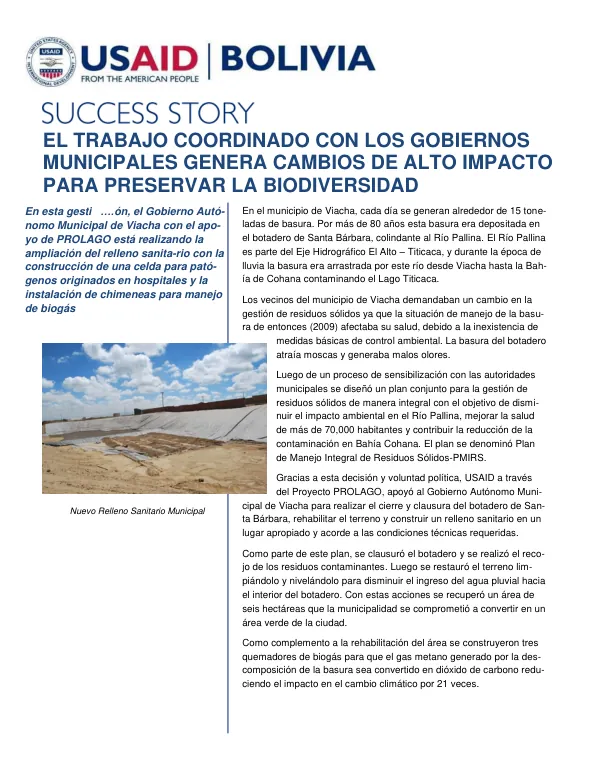
The site, located near the Río Pallina, had been in operation for over 80 years and was contaminating the lake through runoff during the rainy season. The local population demanded a change in waste management practices, citing the lack of basic environmental controls and the presence of disease-carrying insects. A joint plan was developed between the municipal government and USAID's PROLAGO project to manage solid waste in an integrated manner. The goal was to reduce the environmental impact on the Río Pallina, improve the health of over 70,000 residents, and contribute to the reduction of pollution in Bahía Cohana. The plan, known as the Plan de Manejo Integral de Residuos Sólidos (PMIRS), involved the closure and rehabilitation of the existing waste site, construction of a new sanitary landfill, and implementation of measures to reduce the environmental impact of waste disposal. The new sanitary landfill was constructed in a suitable location, with the support of PROLAGO, and equipped with geo-membranes to prevent contamination of the groundwater. The municipal government was also assisted in acquiring the necessary equipment for waste coverage. The landfill began operating efficiently, receiving approximately 15 metric tons of solid waste per day. Additionally, organic waste was processed through vermicomposting, and the municipal government implemented a system for classifying and processing waste. As part of the PMIRS plan, the municipal government and PROLAGO are currently expanding the sanitary landfill by constructing a cell for hospital waste and installing chimneys for biogas management. This will help to reduce methane emissions into the atmosphere. The project has resulted in the municipal government of Viacha becoming a national model for integrated solid waste management, avoiding the annual transportation of 1,500 tons of waste to Bahía Cohana of Lake Titicaca through the Río Pallina, and improving the living conditions and health of an estimated 70,000 residents.
Related documents