INTERNATIONAL RESEARCH & EXCHANGES BOARD
Final Report: Strengthened Media for Transparent Elections in Liberia
The Civil Society and Media Leadership Program in Liberia was implemented by the International Research and Exchanges Board (IREX) with funding from the United States Agency for International Development (USAID).
2012 · 68 pages
Sign in to readA free account is required to download.
Abstract
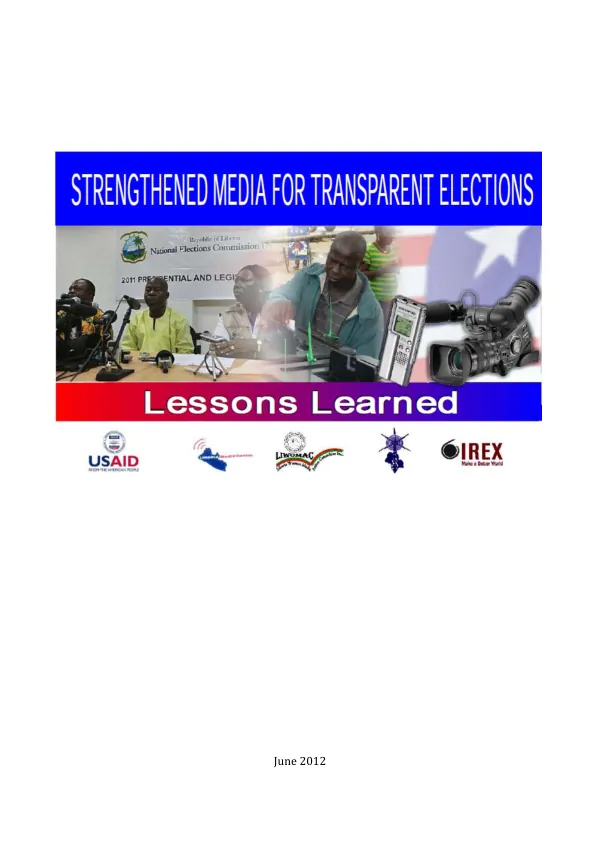
The program aimed to build the capacity of civil society and media through training, mentoring, grants, equipment, and resources, with the goal of sustaining peace in Liberia through greater inclusion and citizen engagement. This objective aligns with Liberia's Strategic Objective of enhancing citizen participation in government policy formulation and implementation. The program's focus on media development was crucial in supporting the 2011 presidential and legislative elections. In mature democracies, the media plays a vital role in informing citizens about electoral processes, explaining party and candidate platforms, and ensuring that electoral processes are fair and transparent. IREX's Liberian media partners and civil society organizations were key in promoting peace and transparency during the elections. The program's design and implementation involved several key components. The Liberia Media Center was established to provide training and resources to journalists and media professionals. The Elections Reporting Center was a key component of the media center, providing journalists with the necessary tools and training to report on the elections. The center also provided a platform for journalists to share their experiences and best practices. The Liberia Women Media Action Committee was another key component of the program. The committee's Voice for Peace initiative aimed to promote peace and reconciliation through drama and theater. The initiative involved the creation of a drama script written in Liberian parlance, which was performed in various communities to promote peace and reconciliation. The Press Union of Liberia was also a key partner in the program. The union's Dialogue for Democracy initiative aimed to take candidates to the people through a series of debates and town hall meetings. The initiative provided a platform for citizens to engage with candidates and discuss key issues affecting the country. The program also involved additional activities, including referendum forums, voter education, and a symposium. These activities aimed to promote citizen participation and engagement in the electoral process. The program's results were significant, with a notable increase in outreach to the electorate. The Elections Reporting Center played a crucial role in providing journalists with the necessary tools and training to report on the elections. The center also provided a platform for journalists to share their experiences and best practices. The program's support to reporters was also significant, with the Elections Reporting Center providing journalists with the necessary tools and training to report on the elections. The center also provided a platform for journalists to share their experiences and best practices. The program's impact assessment survey revealed significant findings, including an increase in citizen participation and engagement in the electoral process. The survey also highlighted the importance of media development in promoting peace and transparency during elections. The program's lessons learned highlighted the importance of building the capacity of civil society and media organizations. The program's success was attributed to the strong partnerships between IREX, the Liberia Media Center, the Liberia Women Media Action Committee, and the Press Union of Liberia. The program's results demonstrate the importance of media development in promoting peace and transparency during elections, and provide a guide for supporting electoral processes through media development in other countries in West Africa and beyond.