MERCY CORPS INTERNATIONAL
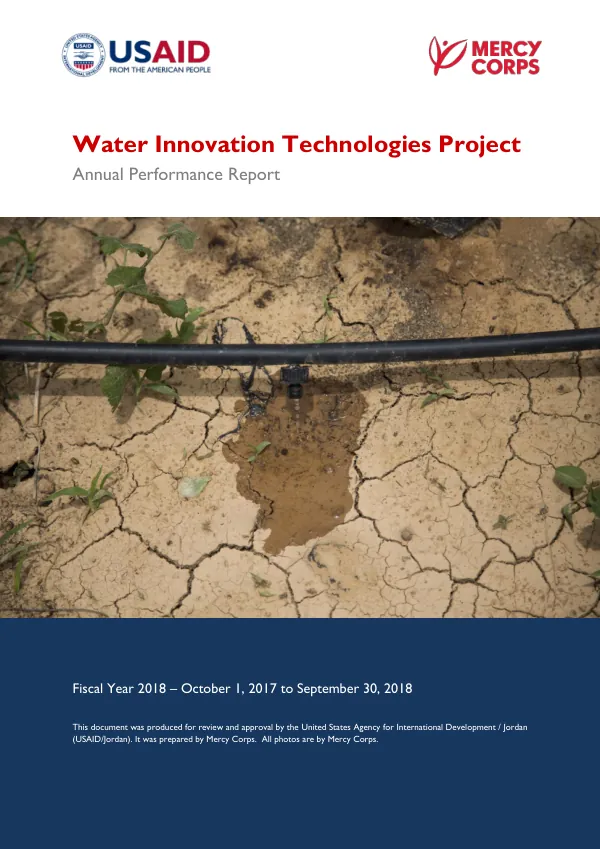
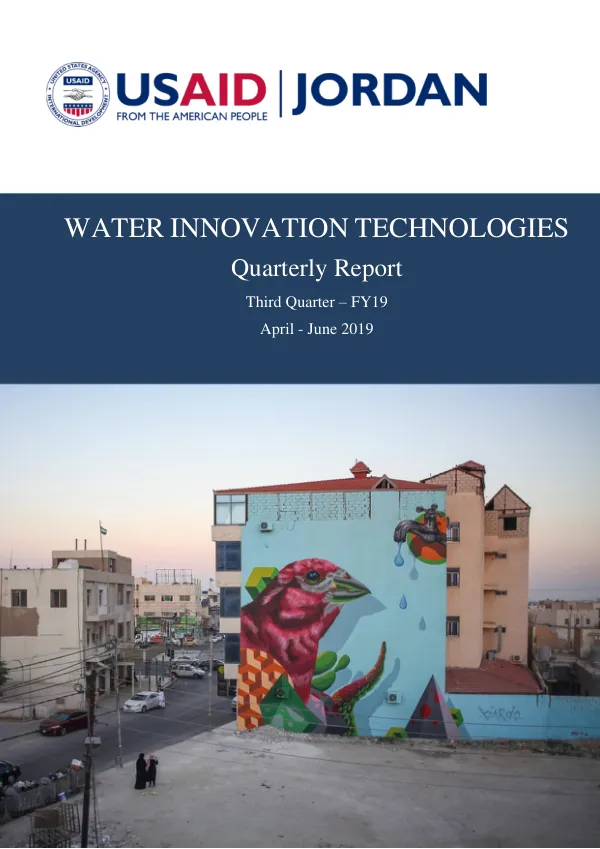
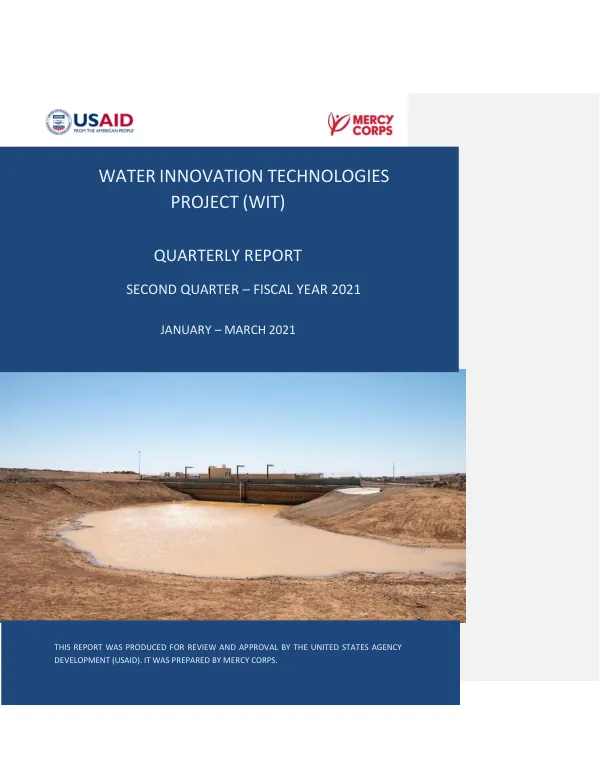
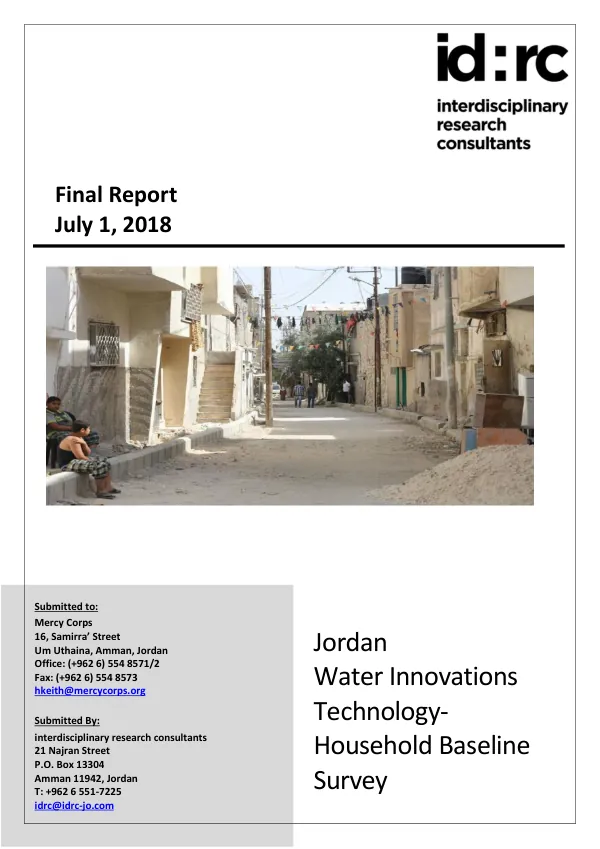
Final Report: USAID /Jordan Water Innovations Technology – MC
The Water Innovations Technologies (WIT) project was awarded to Mercy Corps by the United States Agency for International Development (USAID) in March 2017.
2018 · 164 pages
Sign in to readA free account is required to download.
Abstract
The project aims to increase water conservation in Jordan by focusing on water efficiency in the agricultural sector, household, and community levels. The purpose of the project is to increase the adoption of water conservation technologies and practices by farmers, households, and communities. The project will implement broad-scale change by focusing on water conservation, improving access to finance for water-saving technology adoption, strengthening local institutions, expanding opportunities for women, youth, and Syrians, partnering with the private sector, and promoting water consumption behavioral change. The overall goal of the study is to conduct a Knowledge, Attitude, and Practice (KAP) household baseline survey. The findings of the KAP household/baseline survey will mark the first stage of data gathering to serve as a prelude to education and changing public behavior in the water sector. The study aims to design the survey methodology, develop comprehensive tools for data collection, collect information on the agreed tools, and present and discuss the data collected with the Mercy Corps team. The study also aims to submit weekly updates to the Mercy Corps team, disseminate the results through a presentation to stakeholders, and submit the final KAP household baseline survey report. The technical approach used by the id:rc team consists of a qualitative and quantitative research approach. The qualitative research approach includes focus group discussions, while the quantitative research approach involves a survey instrument. The survey instrument was finalized after reviewing the project log-frame, previous questionnaires, and outcome indicators. The study team developed a work plan, developed the sampling and methodology for the KAP/baseline, and reviewed and finalized the methodology and tools with the Mercy Corps team. The data collection tools were developed, and the data collection methodology was reviewed and finalized. The study team used digital data collection tools, tested the data collection tools on Mercy Corps staff, and trained data collectors on the use of the questionnaire and data collection methodology. The data collection activity included conducting surveys and focus group discussions. The data collected included GPS coordinates, and the data was verified and validated. The study team presented and discussed the data collected with the Mercy Corps team and provided technical assistance to stakeholders. The study aims to promote water saving technology and practices by households and communities. The findings of the study will help identify barriers to adoption and incentives to promote water saving technology. The study aims to promote water saving technology and practices by promoting water conservation, improving access to finance, strengthening local institutions, and promoting water consumption behavioral change. The study will provide information on the list of behaviors to be addressed by the WIT project, barriers to adoption of water saving technology, and list of incentives to incentivize the adoption of water saving technology. The study aims to provide a baseline for the WIT project and inform the planning of behavior change campaigns. The findings of the study will help identify areas for improvement and provide recommendations for improving water efficiency and reducing water consumption. The study will provide a comprehensive understanding of the knowledge, attitudes, and practices of households in Jordan. The findings of the study will help identify areas for improvement and provide recommendations for improving water efficiency and reducing water consumption. The study aims to provide a baseline for the WIT project and inform the planning of behavior change campaigns. The study will provide information on the current state of water use and conservation practices in Jordan. The findings of the study will help identify areas for improvement and provide recommendations for improving water efficiency and reducing water consumption. The study aims to provide a comprehensive understanding of the knowledge, attitudes, and practices of households in Jordan. The study will provide information on the barriers to adoption of water saving technology and the incentives to promote water saving technology. The findings of the study will help identify areas for improvement and provide recommendations for improving water efficiency and reducing water consumption. The study aims to provide a comprehensive understanding of the knowledge, attitudes, and practices of households in Jordan.