CHEMONICS
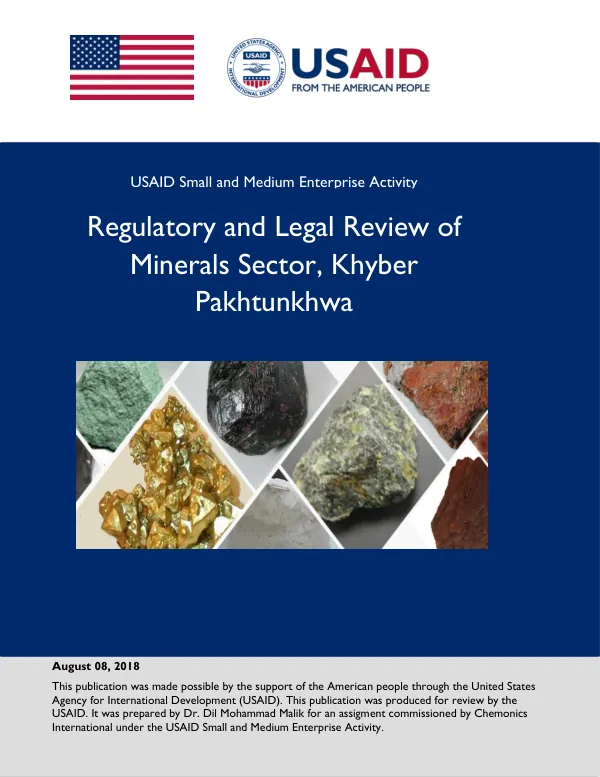
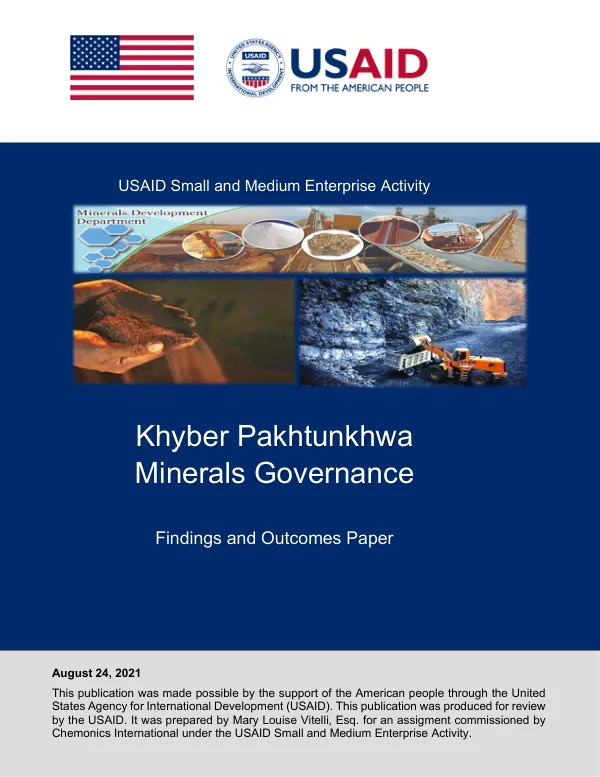
Findings and Outcomes Paper: Khyber Pakhtunkhwa Minerals Governance
The USAID Small and Medium Enterprise Activity in Khyber Pakhtunkhwa, Pakistan, focused on minerals governance.
2021 · 47 pages
Sign in to readA free account is required to download.
Abstract
The activity aimed to strengthen the Mines and Minerals Department, update license holder requirements, and clarify institutional arrangements and authorities. The project also sought to harness development benefits from the mining sector. The project's methodology involved research and stakeholder consultations. A Short Position Paper was the first deliverable, followed by a Roundtable on June 15, 2021, and the presentation of an Options and Recommendations Paper. The final deliverable was the Findings and Outcomes Paper, which reviewed the project's findings and outcomes based on the entirety of the consultancy. Key findings included the need to strengthen the Mines and Minerals Department, update license holder requirements, and clarify institutional arrangements and authorities. The project also identified the importance of legislative strengthening and clarifying institutional arrangements and authorities. The project's outcomes included the development of a comprehensive policy framework for the mining sector, the establishment of a minerals governance committee, and the implementation of a technical reporting code. The project's near-, mid-, and long-term actions included the development of a minerals governance strategy, the establishment of a minerals governance unit, and the implementation of a minerals governance information system. The project also recommended the development of a minerals governance training program and the establishment of a minerals governance advisory committee. The project's findings and outcomes were based on the context of Khyber Pakhtunkhwa's minerals governance and international industry practice. The project's methodology involved research and stakeholder consultations, and the project's outcomes were developed in consultation with key stakeholders. The project's recommendations included the development of a comprehensive policy framework for the mining sector, the establishment of a minerals governance committee, and the implementation of a technical reporting code. The project also recommended the development of a minerals governance training program and the establishment of a minerals governance advisory committee. The project's findings and outcomes were presented in a comprehensive report, which included an executive summary, an introduction, and a detailed analysis of the project's findings and outcomes. The report also included a list of tables and figures, which provided additional information on the project's methodology and outcomes. The project's recommendations were developed in consultation with key stakeholders, including government officials, industry representatives, and civil society organizations. The project's outcomes were designed to be sustainable and to contribute to the long-term development of the mining sector in Khyber Pakhtunkhwa. The project's methodology involved research and stakeholder consultations, and the project's outcomes were developed in consultation with key stakeholders. The project's recommendations included the development of a comprehensive policy framework for the mining sector, the establishment of a minerals governance committee, and the implementation of a technical reporting code.